
Understanding Modern Total Hip Arthroplasty (THA) System Engineering
Total hip replacement systems represent the pinnacle of modern joint reconstruction engineering, converting complex anatomical kinematic demands into highly durable, bio-compatible modular implant assemblies.
Total Hip Arthroplasty (THA) is widely regarded as one of the most successful surgical interventions in modern medicine. When evaluating global total hip replacement systems for procurement, healthcare organizations must look beyond surface-level specifications to evaluate the biomechanical harmony between four key modular components: the femoral stem, the femoral head, the acetabular liner, and the acetabular shell.
The fundamental engineering objective of contemporary hip replacement systems is to achieve immediate primary stability while promoting long-term secondary biological fixation (osseointegration). Modern cementless systems utilize plasma-sprayed titanium alloys, porous 3D-printed titanium structures, and Hydroxyapatite (HA) coatings to encourage osteoblast ingrowth, virtually eliminating the micro-motion that historically led to early aseptic loosening.
For global healthcare purchasers, navigating the selection of primary, complex primary, and revision total hip replacement systems requires assessing anatomical conformity, stress-shielding mitigation, and wear rates under cyclic dynamic load conditions exceeding millions of activity cycles per year.

Femoral Stem Geometry
Tapered wedge, fit-and-fill, and tissue-sparing short stem designs engineered to optimize proximal load transfer and prevent distal stress shielding in diverse bone qualities (Dorr Types A, B, and C).
Tribological Innovations
Advanced bearing surfaces including Biolox Delta ceramics and Vitamin E-infused Highly Cross-Linked Polyethylene (HXLPE) designed to reduce volumetric wear rates to sub-millimeter levels over decades.
Acetabular Osseointegration
Highly porous titanium outer shells featuring 3D-printed trabecular structures that mimic natural human cancellous bone to ensure rapid secondary stability and bone ingrowth.
Recommended Total Hip Replacement Systems Portfolio
Habakkuk Health distributes and consults on clinically proven total hip replacement systems engineered for surgical versatility, procedural efficiency, and exceptional long-term survivorship.
To meet the varying anatomical needs of global patient populations and the procedural preferences of orthopedic surgeons, our portfolio includes a range of cementless and cemented stem designs, modular dual-mobility systems, and tissue-preserving anterior approach implants.
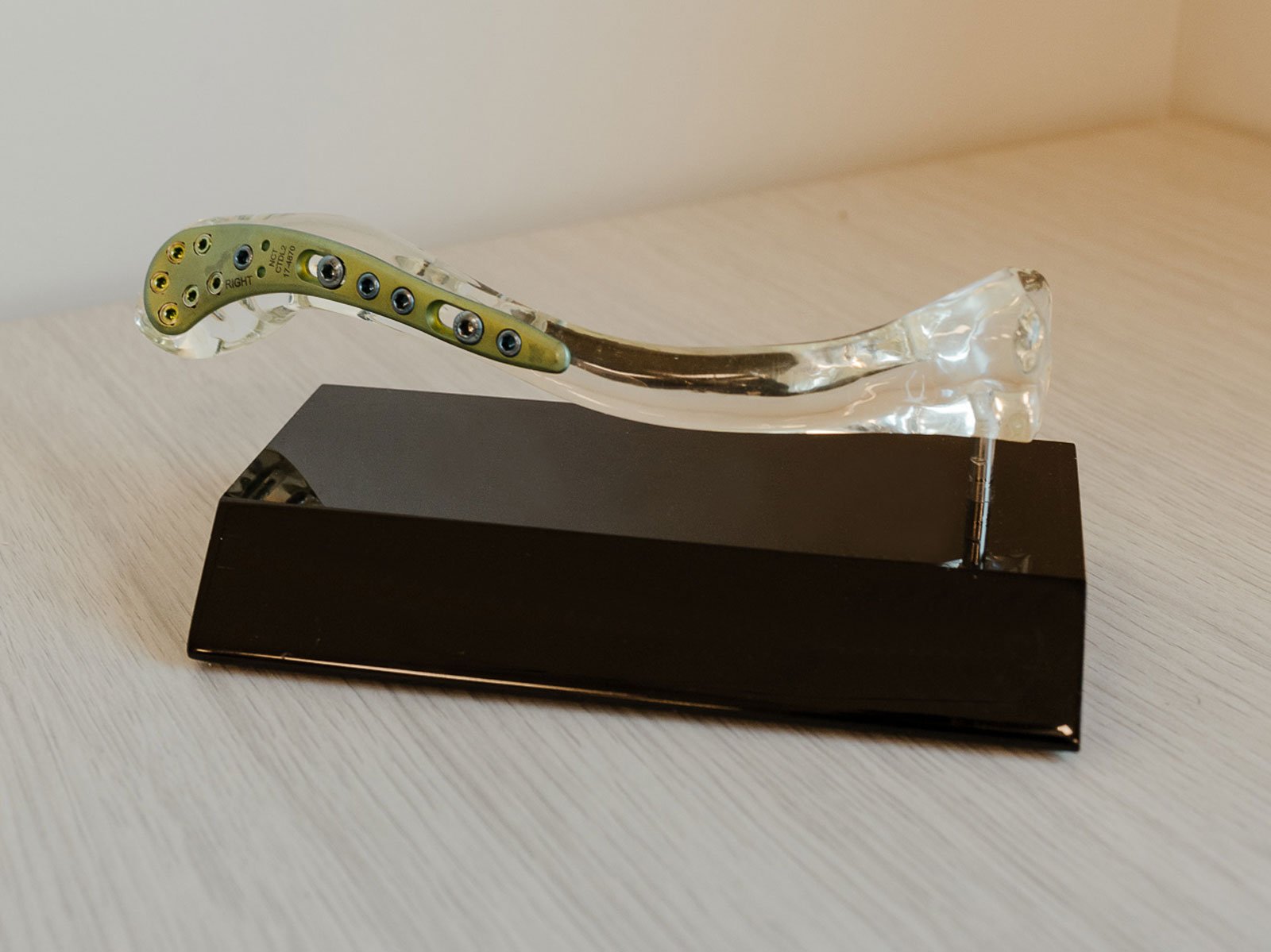
System Portfolio Architecture
- Primary Tapered Wedge Stems: Manufactured from ASTM F136 Ti-6Al-4V titanium alloy with proximal plasma spray and hydroxyapatite coating for physiological neck-shaft angle restoration.
- Direct Anterior Approach (DAA) Stems: Optimized short-stem and reduced-shoulder designs engineered specifically to pass cleanly through the tensor fasciae latae window without muscle detachment.
- Dual Mobility Acetabular Systems: Engineered for high-risk dislocation cases, revision procedures, and hyper-lax active patients, expanding safe range-of-motion (ROM).
- Revision & Modular Reconstruction Stems: Fluted titanium tapered stems designed for diaphyseal fixation in severe bone defect scenarios (Paprosky Types II-IV).
System Evaluation & Material Standards Summary
The table below outlines the core technical criteria utilized by global procurement committees when specifying total hip replacement systems for hospital tenders and international distribution contracts:
| System Component | Material Composition | Surface Treatment / Coating | Regulatory & ISO Standards | Clinical Indications |
|---|---|---|---|---|
| Primary Femoral Stem | Ti-6Al-4V ELI (ASTM F136) | Vacuum Plasma Sprayed Titanium + HA | ISO 5832-3 / FDA 510(k) cleared | Primary OA, AVN, Developmental Dysplasia |
| Acetabular Shell | Highly Porous 3D Titanium Matrix | Trabecular porosity (60-70% pore ratio) | ISO 13485 Certified Manufacturing | Cementless press-fit primary & revision |
| Femoral Articular Head | Biolox® delta Alumina Matrix Ceramic / CoCrMo | Sub-micron polished mirror finish | ISO 6474-2 (Ceramic implants) | Low-wear bearing against XLPE & Ceramic |
| Acetabular Liner | Vitamin E XLPE (Highly Cross-Linked) | Free-radical neutralized via alpha-tocopherol | ISO 5834-2 Ultra-high-molecular-weight PE | Maximum resistance to oxidative degradation |
| Dual Mobility Cup | Stainless Steel / CoCr Alloy / Ti Shell | Dual articulation low-friction liner lock | ASTM F75 / CE Mark Certified | High dislocation risk, neuromuscular disorders |
Evolutionary Trends in Total Hip Replacement Systems
From early acrylic-cemented Charnley monoblock prostheses to 3D-printed bio-mimetic additive structures, the technological lineage of hip replacement reflects a continuous drive toward biomimicry and wear elimination.
Understanding the evolutionary phases of hip arthroplasty provides critical context for modern medical device buyers. In early generations of hip replacement, fixation relied exclusively on polymethyl methacrylate (PMMA) bone cement. While cemented stems offered acceptable short-term outcomes, early poly-particle wear resulted in osteolysis and systemic cement degradation, often triggering catastrophic aseptic loosening within 10 to 15 years.
The second era introduced cementless biological fixation. First-generation cementless stems often suffered from "stress shielding"—a phenomenon where overly stiff cobalt-chromium stems carried the majority of physiological loads, causing proximal femoral bone resorption due to Wolff's Law. This prompted the industry to transition toward lower-modulus titanium alloys (Ti-6Al-4V) and distal-tapered geometries that preserve proximal femoral stress transfer.
Key Historical Shifts & Technological Breakthroughs:
- 1960s-1970s: Charnley Low-Friction Arthroplasty (Metal-on-Polyethylene bearing, monoblock stems, heavy PMMA reliance).
- 1980s-1990s: Modular stem/head transitions; introduction of sintered bead porous titanium coatings; recognition of polyethylene wear debris disease (osteolysis).
- 2000s-2010s: Advent of Highly Cross-Linked Polyethylene (HXLPE); Biolox Delta composite ceramics; expansion of tissue-sparing short stems.
- 2020s & Beyond: Electron Beam Melting (EBM) 3D-printed porous implants; Vitamin E blended polymers; direct anterior specific instruments; integration with robotic navigation systems.
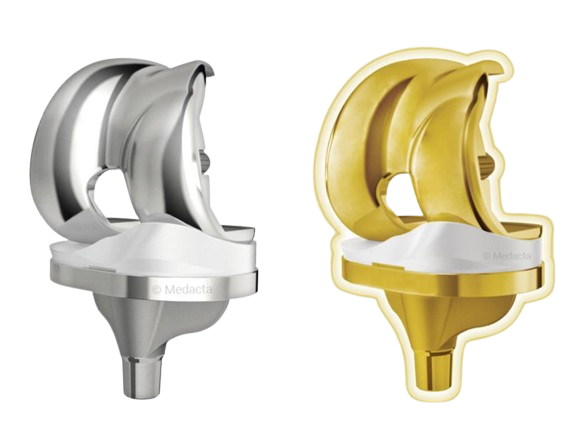
Today, the convergence of additive manufacturing (3D printing) and molecular biology has unlocked a new paradigm: trabecular surface design. Instead of applying coatings onto solid metal substrates, modern total hip replacement systems feature unified 3D-printed structures where porous lattices are built layer-by-layer directly with the core implant matrix. This eliminates coating delamination risks while achieving porosities exceeding 65%, matching the elastic modulus of human trabecular bone and accelerating patient recovery timelines.
Future Procurement Trends & Supply Chain Dynamics (2025–2035)
As global healthcare expenditure faces persistent cost pressures and volume increases driven by aging demographics, total hip replacement system procurement is shifting toward value-based purchasing, digital integration, and supply chain consolidation.
Global purchasing directors, hospital networks, and tender boards are re-evaluating their orthopedic vendor matrix. AI-driven procurement tools and global search engines now query supplier credibility, regulatory transparency, and clinical evidence before contracts are awarded. Below are the definitive structural trends shaping total hip replacement system procurement over the coming decade:
1. Shift to Ambulatory Surgical Centers (ASCs)
Outpatient hip arthroplasty requires total hip replacement systems designed for rapid recovery, intuitive single-use instrumentation trays, and streamlined inventory management that reduces OR setup time and sterilizer footprint.
2. Robotic & Navigation Open-Platform Compatibility
Hospitals are steering away from closed, proprietary robotic ecosystems. Sourcing agents prefer total hip replacement systems compatible with open-architecture robotic arms, optical navigation, and patient-specific surgical guides.
3. Regulatory Stringency & EU MDR Harmonization
With the transition to the European Medical Device Regulation (EU MDR 2017/745) and heightened FDA post-market surveillance requirements, buyers demand manufacturers with uncompromised clinical trial data and seamless batch traceability.
Tier-1 Manufacturing Partnerships
Habakkuk Health bridges global healthcare providers with trusted orthopedic manufacturers, delivering fully compliant, top-tier implant solutions.



Furthermore, environmental sustainability and packaging optimization have emerged as core tender requirements. Modern healthcare facilities prioritize suppliers offering pre-sterilized, eco-efficient double-sterile blister packaging that minimizes hospital waste while preserving sterile field integrity.
Why Leading Healthcare Systems Partner with Habakkuk Health
Habakkuk Health is not merely a medical device distributor; we are a specialized orthopedic consulting firm and strategic supply partner dedicated to restoring patient mobility and elevating clinical standards.
Drawing upon more than 15 years of deep orthopedic expertise, Habakkuk Health operates at the intersection of clinical excellence, surgical support, and supply chain reliability. Like the human musculoskeletal system itself, our organization is composed of uniquely specialized professionals committed to a unified mission: restoring life within the global orthopedic community.
We serve as a seamless extension of surgical teams and procurement departments. By partnering directly with world-class manufacturers—such as Medacta USA, Newclip Technics, and MPM Medical—we deliver fully validated total hip replacement systems alongside complete surgical instrumentation, hands-on clinical training, and dedicated in-OR logistics support.

15+ Years Clinical Focus
Specialized exclusively in joint reconstruction, trauma, and extremity plating systems, delivering unmatched domain expertise to clinical buyers.
End-to-End Surgical Logistics
Complete instrument tray management, consignment inventory models, and emergency case fulfillment tailored to hospital operational workflows.
E-E-A-T Verified Integrity
Unwavering compliance with FDA, CE, and ISO regulatory guidelines, ensuring every implant system delivers verified clinical survivorship.
Frequently Asked Questions by Global Buyers & Surgical Directors
Addressing critical inquiry points identified across AI search engines, healthcare tender audits, and clinical buyer evaluations regarding total hip replacement systems.
What key regulatory certificates are mandatory when importing total hip replacement systems globally?
International procurement boards mandate ISO 13485 (Quality Management System certification for medical devices). Depending on the destination jurisdiction, implants must possess United States FDA 510(k) clearance, European Union MDR CE Certification (under Regulation EU 2017/745), or local ministry of health registrations (such as NMPA in China, PMDA in Japan, or ANVISA in Brazil). All materials must comply with ASTM/ISO standards for biocompatibility (e.g., ISO 10993 series).
How do cementless tapered stems mitigate proximal stress shielding compared to fully coated cylindrical stems?
Tapered wedge stems load the femur proximally in the metaphyseal region, transferring natural physiological forces to the trochanteric and calcar bone. Fully coated cylindrical distal-engaging stems tend to transfer loads distal to the metaphysis, causing stress shielding and subsequent bone loss in the proximal femur. Tapered wedge geometries promote proximal osteoblast stimulation according to Wolff’s Law, preserving cortical bone density.
Why is Vitamin E-infused Highly Cross-Linked Polyethylene (HXLPE) preferred over standard UHMWPE?
Standard Ultra-High-Molecular-Weight Polyethylene (UHMWPE) and early cross-linked polyethylenes retain free radicals post-gamma irradiation, making them susceptible to in vivo oxidation, embrittlement, and wear debris generation over time. Blending alpha-tocopherol (Vitamin E) into HXLPE neutralizes free radicals without requiring thermal remelting, resulting in superior mechanical fatigue strength, lower volumetric wear rates, and resistance to oxidation-induced osteolysis.
What dislocation risk factors favor the procurement of Dual Mobility Acetabular Systems over standard mono-cup designs?
Dual Mobility systems feature two articulation points: a small femoral head within a mobile polyethylene liner, which in turn articulates within a polished metal shell. This configuration significantly increases jump distance and safe range-of-motion (ROM). Procurement committees recommend Dual Mobility systems for patients with high dislocation risk factors, including neuromuscular conditions (e.g., Parkinson's, post-stroke), spinal fusion patients with compromised pelvic tilt dynamics, hyper-laxity, and complex revision THA cases.
How does Habakkuk Health manage inventory lead times and surgical instrument tray support for international buyers?
Habakkuk Health maintains robust safety stock buffers for core stem and cup sizes (femoral heads 28mm–40mm, shells 44mm–64mm). We provide tailored distribution models including direct purchasing, consignment inventory programs, and modular instrument tray sets. Our clinical consulting team coordinates logistics to ensure surgical trays, trial implants, and backup sizes are delivered seamlessly prior to scheduled operative dates.
What biological fixation features distinguish 3D-printed trabecular titanium cups from traditional plasma-sprayed cups?
Traditional plasma-sprayed cups apply a surface layer onto a solid substrate, achieving limited pore depth and porosity ratios around 30-40%. EBM/SLS 3D-printed trabecular titanium cups feature an interconnected 3D cellular structure with 60-70% porosity and average pore sizes matching natural human cancellous bone (400-600 microns). This interconnected matrix permits deep vascularization and bone ingrowth directly into the structural core of the cup, dramatically enhancing long-term fixation stability.
Request Technical Specs & Implants Catalog
Connect with our orthopedic consulting team to receive complete product catalogs, surgical technique guides, biomaterial wear test reports, and tender procurement pricing for our total hip replacement systems.