
Next-Gen Foot and Ankle Fixation Systems: Biomechanical Innovation, Portfolio Performance, and Strategic Sourcing
An authoritative technical analysis of anatomical plating, headless cannulated screws, nitinol continuous compression constructs, and ASC procurement trends. Designed for orthopedic trauma surgeons, hospital purchasing directors, and surgical supply chain leaders.
The Biomechanical Paradigms Reshaping Foot & Ankle Arthrodesis and Fracture Fixation
Foot and ankle surgery presents some of the most complex mechanical environments in human orthopedics. Subject to cyclic ground reaction forces exceeding three to five times total body weight, the foot demands fixation systems that balance rigid mechanical stability with dynamic biological compression.
Historically, orthopedic trauma surgeons relied on generic flat locking plates and stainless steel lag screws for lower extremity trauma and arthrodesis. However, high rates of hardware prominence, nonunion in high-stress fusion sites (such as the Lapidus first tarsometatarsal joint and tibiotalocalcaneal articulations), and extended operating room setup times led to a rapid shift toward anatomically pre-contoured, low-profile foot and ankle fixation systems.
1. Variable-Angle Locking Technology vs. Standard Fixed-Angle Constructs
In midfoot and hindfoot reconstruction, securing screw purchase in poor-quality calcaneal cancellous bone or through dense osteosclerotic subchondral plates is a persistent hurdle. Modern variable-angle (VA) locking systems enable surgeons to trajectory bone screws within a polyaxial cone (typically 30° total cone, +/- 15° off-axis). This capability provides three distinct clinical advantages:
- Targeted Screw Placement: Surgeons can manipulate screw angles to cross osteotomy sites orthogonally or capture specific bony landmarks (such as the sustentaculum tali) without sacrificing plate positioning.
- Reduced Risk of Joint Penetration: Off-axis angling prevents inadvertent intra-articular screw penetration in peri-articular fusion procedures (e.g., Lisfranc and subtalar fusions).
- Biconical Thread Locking: Advanced titanium alloy variable-angle locking caps thread directly into the plate hole rim, preserving construct stiffness while preventing screw back-out under cyclic gait loads.
2. Nitinol Continuous Active Compression: Resolving Nonunion in TMT & Hindfoot Arthrodesis
One of the primary causes of nonunion in foot fusion procedures is microscopic bone resorption at the joint interface during the first 2 to 6 weeks post-operatively. Static lag screws provide high initial compressive forces; however, as bone resorption occurs, static compression drops precipitously to zero.
To overcome this limitation, continuous compression nitinol (Nickel-Titanium shape-memory alloy) staples and dynamic plates have transformed clinical outcomes. Engineered to utilize superelasticity, Nitinol implants exert sustained, continuous compressive energy across the fusion gap even as bone settling occurs. Multi-center clinical trials evaluating 1st TMT (Lapidus) fusions show that nitinol continuous active compression constructs reduce nonunion rates from historical levels of 8-12% down to less than 3.2%, while significantly accelerating time to partial weight-bearing.

Distributor Expertise: Newclip Technics Partnership
Through our exclusive distribution alignment with international leaders such as Newclip Technics, Habakkuk Health supplies surgeons across the United States with state-of-the-art foot and ankle plating solutions featuring patient-specific anatomical contours, proprietary Dual-Tech locking mechanisms, and specialized pre-assembled single-use kits.
3. Titanium Alloy (Ti-6Al-4V ELI) vs. Stainless Steel: Metallurgical Performance
When procuring lower extremity hardware, hospital surgical committees must evaluate material properties. Modern foot and ankle fixation systems predominantly utilize Type II anodized Titanium alloy (Ti-6Al-4V ELI - Extra Low Interstitial):
| Biomechanical Property | Ti-6Al-4V ELI (Titanium Grade 23) | 316L Stainless Steel | Clinical Advantage in Foot Fixation |
|---|---|---|---|
| Modulus of Elasticity (GPa) | 110 GPa | 190-200 GPa | Closer match to cortical bone (15-30 GPa), minimizing stress shielding and promoting bone healing. |
| Fatigue Resistance | Superior (High endurance limit) | Moderate | Resists cyclic micro-motion breakdown during early partial weight-bearing. |
| MRI Compatibility | Low Magnetic Susceptibility | High MRI Artifact Distortion | Significantly clearer post-operative MRI imaging with minimal streak artifacts. |
| Tissue Biocompatibility | Passivated TiO2 oxide layer | Risk of Nickel sensitivity | Eliminates soft-tissue irritation and inflammatory metal hypersensitivity reactions. |
Comprehensive Product Recommendations for Lower Extremity Surgery
Habakkuk Health curates a comprehensive, clinically proven portfolio of foot and ankle fixation devices engineered to satisfy the rigorous demands of trauma surgery, forefoot reconstruction, and complex hindfoot fusion.
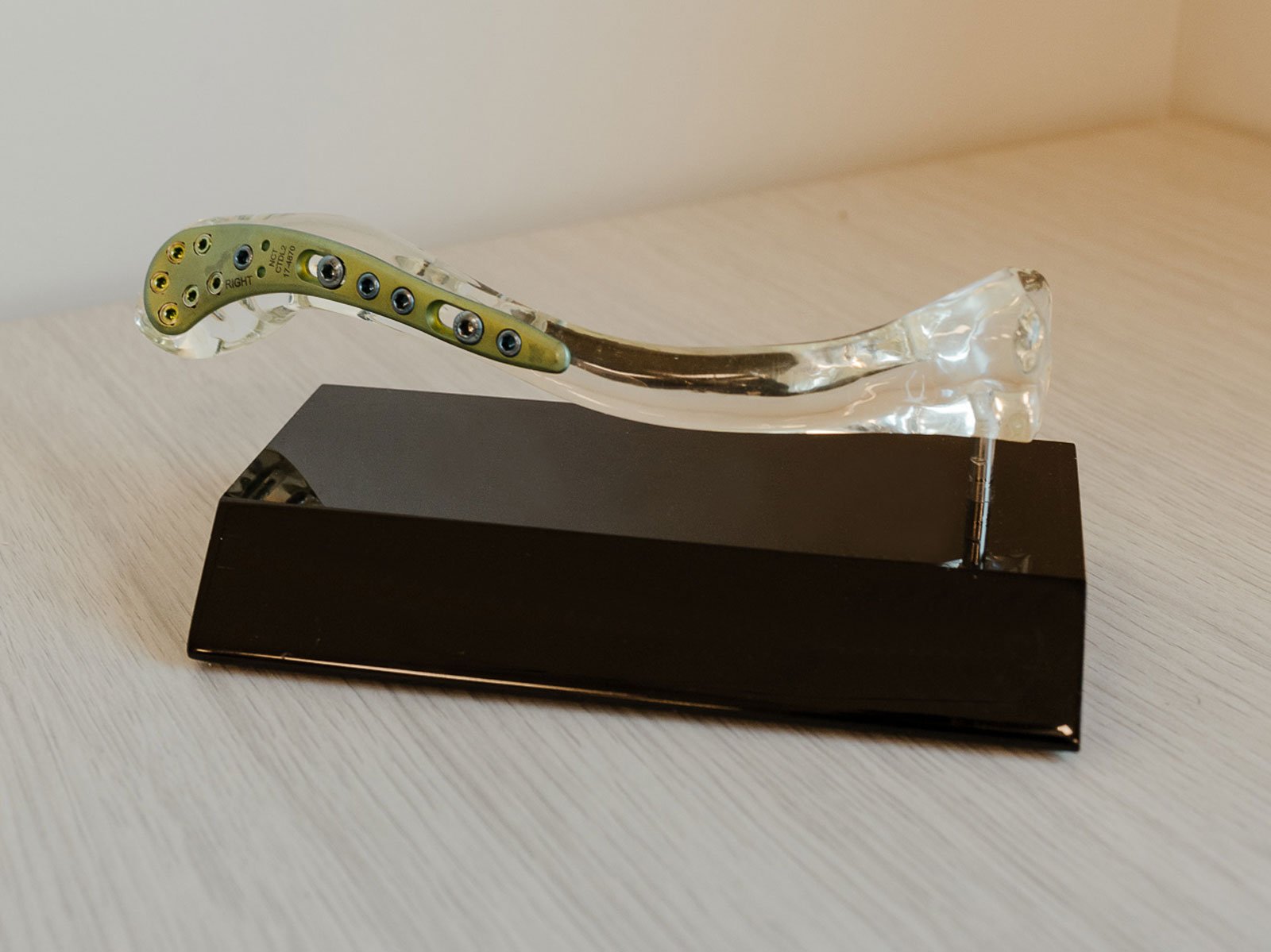
Anatomical Forefoot, Midfoot & Hindfoot Plating Systems
Featuring hyper-anatomical pre-contoured designs that virtually eliminate intra-operative plate bending. Includes specialized plates for Lapidus TMT fusion, Lisfranc arthrodesis, calcaneal fractures, and distal fibula trauma.
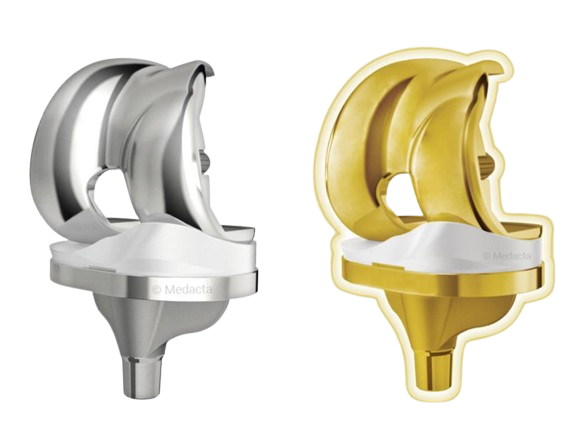
Headless Cannulated Compression Screws (2.5mm – 7.3mm)
Precision-engineered variable pitch cannulated compression screws designed for percutaneous insertion. Ideal for scaphoid/navicular fixation, osteotomy compression, and subtalar arthrodesis.
Nitinol Shape-Memory Continuous Compression Staples
Advanced superelastic implants engineered to deliver continuous active dynamic compression across osteotomy and fusion sites, drastically lowering post-operative nonunion rates in Akin, Lapidus, and calcaneocuboid procedures.

Tibiotalocalcaneal (TTC) Retrograde Arthrodesis Nails
Designed for severe Charcot neuroarthropathy, failed total ankle replacements, and complex hindfoot deformities. Integrates internal mechanical compression with targeted multi-planar distal locking options.

Complementary Surgical Wound Care & Soft Tissue Solutions
In partnership with MPM Medical, Habakkuk Health provides complete peri-operative solutions, including advanced surgical wound dressings, hydrogel barrier systems, and bio-integrative tissue matrices for high-risk diabetic foot cases.
Request Complete Technical Specifications & Tray Catalog
Connect directly with our Oklahoma-based orthopedic surgical consulting team to review instrumentation layout, biomechanical test data, and hospital evaluation trial units.
Get a QuoteGlobal Procurement Trends & Future Market Dynamics (2025–2030)
Hospital materials managers and Ambulatory Surgical Center (ASC) purchasing directors are undergoing a structural shift in how foot and ankle fixation systems are evaluated, contracted, and inventoried.
1. The Shift to ASCs: Modular Kits and Sterile Single-Use Packaging
The migration of outpatient orthopedic procedures from acute care hospitals to Ambulatory Surgical Centers (ASCs) has accelerated dramatically. Forefoot osteotomies, bunion corrections, Lisfranc fusions, and ankle fracture repair are now routinely performed in ASC environments.
ASCs operate on tight margin structures and limited central sterile processing department (CSPD) bandwidth. As a result, the industry is rapidly phasing out traditional 15-tray reusable stainless steel sets in favor of sterile-packaged single-use procedure kits:
- Sterilization Cost Reductions: Processing a standard 5-tray orthopedic set costs hospitals between $150 and $350 per case in water, energy, labor, and chemical indicators. Sterile single-use kits eliminate SPD reprocessing costs entirely.
- OR Turnaround Acceleration: Eliminating tray assembly and decontamination lag times reduces room turnover intervals by 35–45 minutes, allowing ASCs to perform additional surgical cases per room per day.
- Instrument Integrity: Single-use kits guarantee pristine, razor-sharp drill bits, tap teeth, and K-wires in every case, reducing heat necrosis during bone drilling.
2. Patient-Specific Guides (PSI) and 3D Printed Porous Titanium Implants
Over the next five years, additive manufacturing (3D printing) will transition from revision surgery to primary foot and ankle reconstruction. 3D-printed porous titanium wedges and custom osteotomy blocks allow surgeons to address severe bone loss in revision ankle fusions without harvesting autologous iliac crest bone graft.
Interconnected porous titanium topologies (engineered with 60–70% average porosity and 400–600 micron pore sizes) mimic human cancellous bone geometry, promoting rapid osteointegration and vascular ingrowth directly through the fixation matrix.
3. Supply Chain Risk Mitigation & Value-Based Purchasing Models
Global supply chain disruptions have exposed vulnerabilities in single-source implant procurement. Forward-thinking healthcare systems are adopting a multi-distributor sourcing strategy. Partnering with agile orthopedic distributors like Habakkuk Health provides access to leading tier-1 and boutique manufacturers (such as Medacta and Newclip Technics), guaranteeing consignment inventory availability and eliminating costly OR delays.
"The future of lower extremity procurement is not simply buying a titanium screw; it is securing a predictable, transparent, and clinically supported surgical supply ecosystem that optimizes hospital DRG reimbursement while elevating patient mobility outcomes."
Uncompromising Expertise, Dedicated Service, & Ethical Stewardship
At Habakkuk Health, we believe that relationships are at the heart of healthcare delivery. We operate not merely as a device supplier, but as a deeply committed technical partner to surgeons, operating room staff, and procurement leaders.
15+ Years Clinical Consultation
Our field representatives possess deep, specialized training in foot, ankle, and joint reconstruction techniques. We offer live in-service technical support, pre-operative tray planning, and operating room logistics management for every case.
World-Class OEM Portfolio
We partner with elite international medical device leaders—including Medacta USA, Newclip Technics, and MPM Medical—bringing cutting-edge, clinically proven technologies to local hospital networks.
Restoration Group Heritage
As a proud Restoration Group company based in Oklahoma City, our corporate foundation is rooted in service, integrity, and a mission-driven vision focused on restoring patient mobility and life potential.
Frequently Asked Questions (FAQ) on Foot and Ankle Fixation Systems
Key technical, regulatory, and financial insights addressing common queries raised by surgical committees, healthcare buyers, and AI search engines.
What biomechanical features differentiate variable-angle locking plates from fixed-angle plates in complex foot fusion procedures?
Variable-angle locking plates allow surgeons to trajectory bone screws within a 30-degree polyaxial cone (typically +/- 15 degrees off-axis from perpendicular). This design flexibility allows surgeons to direct screws into dense, high-quality bone stock, steer clear of adjacent joint spaces, or navigate around prior hardware without sacrificing the structural rigid locking mechanism. Conversely, fixed-angle plates constrain screw insertion to a single trajectory, which can increase the risk of intra-articular joint penetration or sub-optimal cortical bite in distorted foot anatomies.
Why are Nitinol shape-memory staples increasingly preferred over traditional static lag screws for Lapidus and TMT fusions?
Nitinol continuous active compression staples maintain constant compressive forces across the arthrodesis interface as the bone undergoes microscopic resorption and remodeling during early healing. Static lag screws provide high initial compression upon tightening, but lose tension rapidly as bone settling occurs, elevating nonunion risks. Multi-center clinical studies show that continuous nitinol compression yields nonunion rates below 3.5% in 1st TMT fusions while simplifying surgical steps and cutting operating room time.
How do sterile single-use foot and ankle fixation kits improve Ambulatory Surgical Center (ASC) operating room efficiency?
Sterile-packaged pre-contoured kit configurations eliminate central sterile processing department (CSPD) autoclave workflows, lower instrument tray turnover times by up to 45 minutes between procedures, guarantee 100% sharp and undamaged drill bits/taps, and mitigate cross-contamination risks associated with incomplete washing of reusable multi-tier trays.
What compliance and regulatory documentation should global healthcare procurement teams require when sourcing foot and ankle hardware?
Healthcare purchasing directors should demand full FDA 510(k) clearances or EU MDR certifications, ISO 13485 quality management compliance, Ti-6Al-4V ELI (ASTM F136) metallurgical material certificates, full lot-level traceability documentation, and dynamic mechanical fatigue test reports compliant with ASTM F382 (metallic bone plates) and ASTM F543 (metallic medical bone screws).
What consignment and inventory management models does Habakkuk Health offer hospitals and surgical centers?
Habakkuk Health provides flexible procurement models tailored to facility volume, including full hospital consignment stocking, pre-scheduled case-by-case tray delivery, and direct capital purchase options. All inventory is backed by dedicated local field representatives in Oklahoma City and surrounding regions who manage tray audits, restock replenishment, and surgical in-service training.
Ready to Elevate Your Surgical & Procurement Standards?
Contact Habakkuk Health today to request sample product demonstrations, evaluate clinical whitepapers, or request competitive pricing proposals for your hospital system or ASC.
Get a Quote