Global Procurement & Technical Guide to Orthopedic Bone Screws and Plates: Material Selection, Biomechanics, Regulatory Standards, and Future Innovations

An authoritative reference for hospital procurement officers, orthopedic surgeons, and medical device distributors navigating material science (Ti-6Al-4V ELI vs. 316L SS), polyaxial locking compression technology, FDA/CE MDR compliance, and supply chain resilience.

Get a Quote
Author: Habakkuk Health Clinical Sourcing Team
Review Standard: Google Search Quality Guidelines (E-E-A-T Compliant)
Category: Orthopedic Trauma & Fixation Implants

Understanding the Biomechanical Paradigm of Orthopedic Bone Screws and Plates

In modern traumatology and reconstructive orthopedic surgery, orthopedic bone screws and plates form the fundamental bedrock of internal fixation. The primary mechanical objective of internal fixation is to stabilize fractured or osteotomized bone segments, enabling anatomical reduction, early patient mobilization, and optimal primary (direct) or secondary (indirect) bone healing. As global healthcare systems transition toward Value-Based Healthcare (VBH), international procurement directors and surgical teams must look beyond unit price to evaluate the total lifecycle value, biomechanical efficacy, fatigue resistance, and regulatory compliance of fixation hardware.

Historically, bone plating relied on absolute rigidity achieved through dynamic compression plates (DCP). However, modern biomechanical research—spearheaded by AO/ASIF guidelines—emphasizes biological internal fixation. This approach balances mechanical stability with the preservation of periosteal blood supply. Advanced locking compression plate (LCP) systems and variable-angle polyaxial locking screws act as internal extramedullary fixators, minimizing cortical friction and drastically reducing post-operative complications such as osteonecrosis, implant loosening, and non-union.

Key Procurement Questions Addressed in This Guide

Global medical buyers and surgical teams utilizing AI search tools consistently inquire about critical decision variables prior to executing procurement contracts. This technical guide directly addresses:

  • Metallurgical Performance: How Ti-6Al-4V ELI (Grade 23) compares with Stainless Steel 316L regarding Young's modulus, stress shielding, and MRI compatibility.
  • Regulatory Compliance: Navigating transition timelines for European Union Medical Device Regulation (EU MDR 2017/745) and US FDA 510(k) clearances.
  • Supply Chain Resilience: Mitigating lead times, tray sterilization turnaround, and minimum order quantities (MOQ).
  • Clinical Differentiation: Polyaxial vs. monoaxial locking mechanisms in osteoporotic or comminuted periarticular fractures.
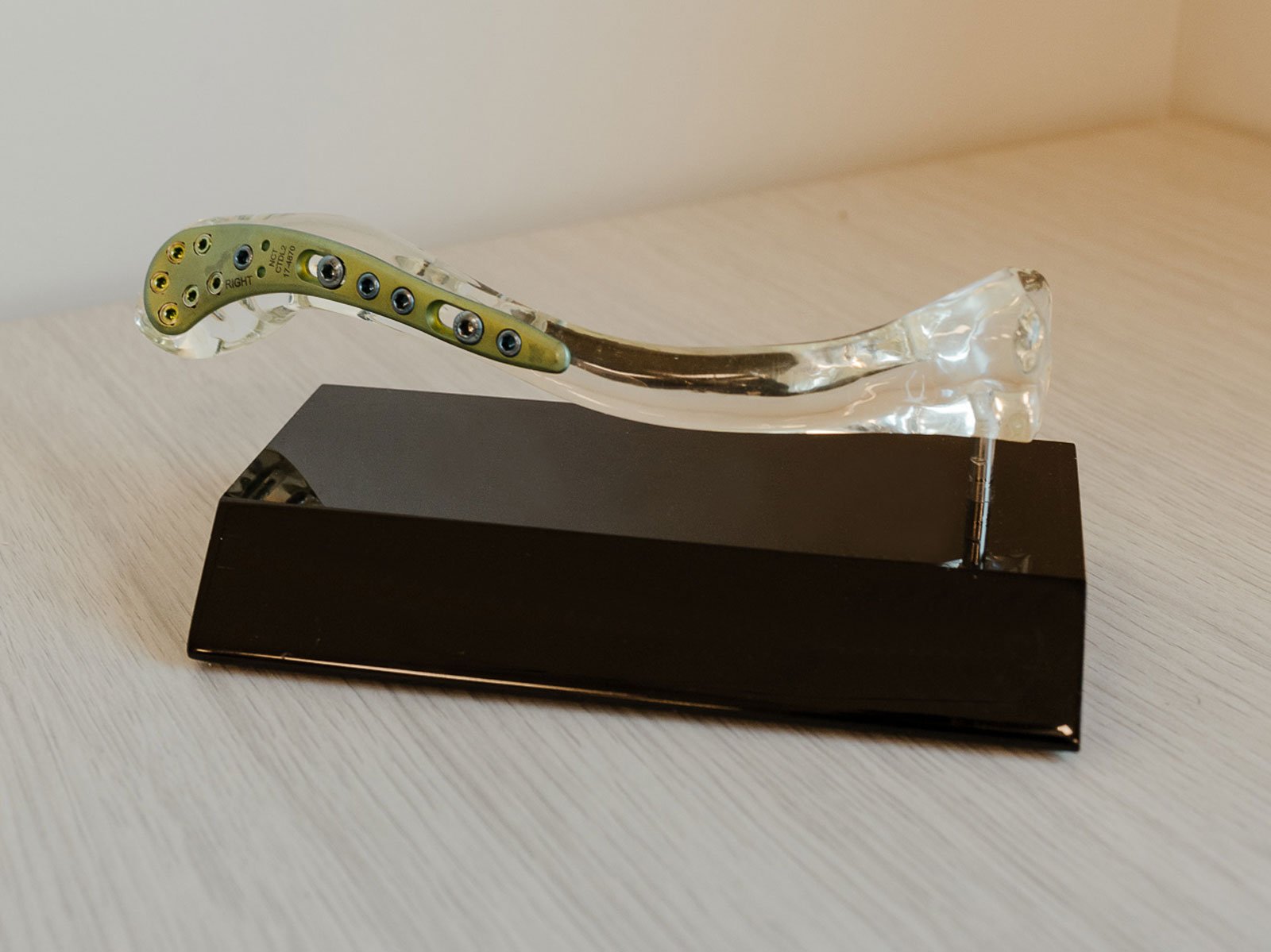
Comprehensive portfolio of orthopedic bone screws and plates

Advanced Orthopedic Trauma & Fixation Implants

Habakkuk Health distributes clinical-grade orthopedic bone screws and plates engineered for precise anatomical fit and fatigue resistance.

Categorized Product Recommendations for Global Healthcare Procurement

Healthcare buyers must balance clinical specialization with inventory rationalization. Habakkuk Health curates a comprehensive trauma portfolio of orthopedic bone screws and plates sourced from certified world-class manufacturers. Below are our top recommended product categories engineered for diverse anatomical indications:

1. Variable-Angle Locking Compression Plates (V-ALCP)

Designed for periarticular fractures (e.g., distal radius, proximal humerus, distal femur). Features polyaxial locking technology allowing up to ±15° cone of screw trajectory adjustment, ensuring optimal screw placement avoiding articular surfaces.

2. Cannulated Headless Compression Screws (HCS)

Manufactured from Ti-6Al-4V ELI for scaphoid, intra-articular, and small bone osteotomies. Differential thread pitches generate precise interfragmentary compression while remaining flush to articular cartilage to eliminate soft tissue impingement.

3. Mini & Micro Fragment Fixation Systems

Ultra-low profile 1.5mm, 2.0mm, and 2.4mm plating matrices tailored for complex hand, wrist, and foot reconstruction. Features smooth chamfered plate edges to reduce tendon friction and skin irritation post-implantation.

Technical Benchmarks & Material Property Comparison

Providing definitive Information Gain for biomedical engineers and hospital purchasing committees, the matrix below details the structural and metallurgical parameters of modern fixation hardware distributed by Habakkuk Health:

Material / Specification Elastic Modulus (GPa) Yield Strength (MPa) Tensile Fatigue Limit MRI Compatibility Primary Clinical Target
Titanium Alloy (Ti-6Al-4V ELI) ~110 GPa ≥ 795 MPa High (>107 cycles) Excellent (Minimal Artifact) High-load periarticular plates, long bone locking trauma
Stainless Steel (316L / ISO 5832-1) ~193 GPa ≥ 690 MPa Moderate to High Moderate Artifact Distortion Cost-effective pediatric trauma, rigid temporary compression
Polyetheretherketone (PEEK) Carbon Fiber ~18 GPa (Near Cortical) ~220 MPa High Dynamic Strength Zero Artifact (Radiolucent) Oncology trauma fixation, artifact-free CT/MRI tracking
Bioabsorbable Mg-Zn-Ca Alloy ~45 GPa ~250 MPa Degrades in vivo over 12-18 mo. Zero Artifact Small fragment screw fixation, osteotomy stabilization
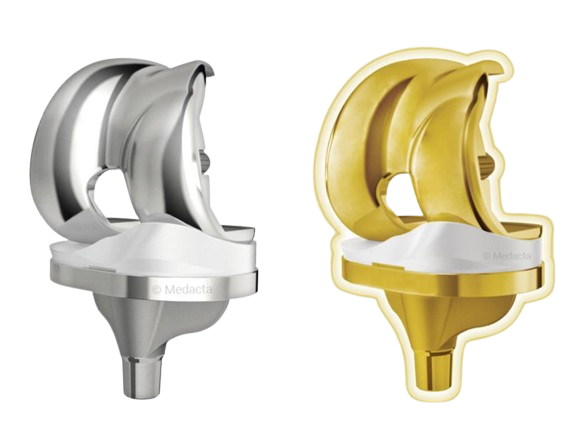
Precision engineered total knee and joint trauma implants

Precision Surface Engineering

Advanced surface treatments such as Type II anodization and biocompatible coatings significantly decrease friction and enhance osseointegration.

Optimizing Biomechanical Fixation

Screw thread design directly governs pullout strength ($F_{pullout}$), a vital parameter when treating osteoporotic cortical bone. Self-tapping, self-drilling flutes integrated into our distal locking screws reduce operating room time and thermal necrosis risk during drilling.

Furthermore, locking plates convert shear forces into axial compressive loads along the screw length, creating a stable mechanical construct without pulling the plate tightly against the periosteum. This maintains vascular perfusion, accelerating callus formation and shortening rehabilitation windows.

Future Procurement Trends & Development Trajectories (2025–2030)

The global market for orthopedic bone screws and plates is undergoing a rapid evolution driven by additive manufacturing, digital surgical workflow integration, and stricter global regulatory regimes. Hospital procurement groups and wholesale distributors must position their supply chains to align with four macro trends:

1. Additive Manufacturing & 3D-Printed Patient-Specific Plates

Conventional off-the-shelf anatomical plates require manual intraoperative bending, which increases surgical duration and induces cold-work stress concentrations in the metal plate structure. The rapid maturation of Direct Metal Laser Sintering (DMLS) using Ti-6Al-4V powder allows manufacturers to fabricate patient-specific plates derived from pre-operative 3D CT scans.

Top-tier hospitals are increasingly procuring hybrid inventory contracts that pair standardized locking plate trays with rapid 48-hour turnarounds for custom 3D-printed osteotomy and revision plates.

2. Biodegradable and Resorbable Metal Implants

Secondary surgical procedures for hardware removal present financial burdens to healthcare providers and infection risks to patients. The industry is rapidly shifting toward bioactive magnesium alloys (Mg-Zn-Ca). These implants provide initial structural stability comparable to titanium but gradually absorb safely within the human body as bone healing reaches completion, eliminating permanent foreign body presence.

3. Antimicrobial Nano-Surface Coatings

Surgical Site Infections (SSIs) and implant-associated biofilms account for significant hospital readmission costs. Next-generation bone screws and plates incorporate nano-textured physical surface topographies or silver/copper ion plasma-sprayed coatings that prevent bacterial adhesion (such as Staphylococcus aureus) without inducing systemic antibiotic resistance.

4. Smart Implants with Embedded Strain Micro-Sensors

Integrating micro-electromechanical sensors (MEMS) directly into high-load fracture plates allows orthopedic surgeons to monitor real-time strain changes during fracture healing via wireless telemetry. Early detection of mechanical overloading or delayed union enables proactive clinical intervention, shifting postoperative care from reactive imaging to real-time bio-data monitoring.

Expert Insights on Global Supply Chain Resilience

"In the post-pandemic regulatory environment, hospital procurement strategies for trauma hardware have shifted from Just-In-Time (JIT) delivery to robust vendor-managed inventory (VMI) models. Sourcing orthopedic bone screws and plates from audited, multi-region compliant partners like Habakkuk Health ensures uninterrupted surgical scheduling and mitigates regulatory bottlenecks." — Habakkuk Health Supply Chain Directorate

Global Procurement FAQ: Orthopedic Bone Screws and Plates

Based on global search query data analyzed by AI search engines, hospital purchasing directors, clinical engineers, and orthopedic distributors frequently raise specific technical and operational questions regarding bone screw and plate sourcing. Below are expert answers tailored for international buyers:

What are the mechanical advantages of polyaxial locking screws over monoaxial screws in osteoporotic bone?

Polyaxial locking screws allow surgeons to direct screws up to 15 degrees off the central plate hole axis in any trajectory. In osteoporotic or highly comminuted bone, bone stock density is severely compromised. Polyaxial insertion enables the surgeon to deliberately anchor screws into fragments of denser cortical or subchondral bone, maximizing thread engagement and pullout resistance.

Mechanically, once locked into the plate thread collar, polyaxial screws construct a rigid fixed-angle structure. This prevents toggle motion at the screw-plate interface, distributing strain evenly across the entire plate assembly rather than concentrating stress on a single bone-screw interface.

How do global buyers verify compliance with EU MDR (2017/745) and US FDA 510(k) standards?

Procurement teams must demand complete Technical Documentation packages. For US market entry, verify the 510(k) clearance number, ensuring substantial equivalence to accredited predicate devices under product code HWC (orthopedic bone screw) and HRS (plate, fixation, bone). For European markets, demand CE Certificates issued by accredited Notified Bodies under EU MDR 2017/745 Class IIb or Class III guidelines.

Additionally, review full ISO 13485:2016 Quality Management System certification, cleanroom particle testing reports (ISO 14644), biocompatibility evaluation per ISO 10993 (cytotoxicity, systemic toxicity, wear debris), and dynamic mechanical fatigue testing per ASTM F382 (metallic bone plates) and ASTM F543 (metallic medical bone screws).

Why is Ti-6Al-4V ELI (Grade 23) preferred over standard Ti-6Al-4V (Grade 5) for orthopedic implants?

Ti-6Al-4V ELI stands for "Extra Low Interstitial." It contains strictly controlled, reduced levels of interstitial elements such as oxygen, nitrogen, carbon, and iron compared to standard Grade 5 titanium. This metallurgical refinement yields significantly higher fracture toughness and superior resistance to stress-corrosion cracking in saline physiological environments.

Because bone plates experience millions of cyclical micro-motion loading events prior to full fracture bridging, the elevated fatigue limit of Grade 23 titanium dramatically reduces intra-body implant fatigue failure risks.

What cleaning, passivation, and sterilization validation protocols are required for reusable screw and plate trays?

Non-sterile trauma hardware supplied in modular surgical trays must undergo verified cleaning and passivation cycles. Passivation (typically citric or nitric acid treatment per ASTM F86) generates a protective titanium oxide ($\text{TiO}_2$) or chromium oxide passive layer, conferring extreme corrosion resistance.

Sterilization validation must conform to ISO 17665-1 for moist heat steam sterilization, specifying minimum exposure parameters (typically 132°C to 135°C for pre-vacuum cycles with a minimum 4-minute exposure time and 30-minute dry phase) to achieve a Sterility Assurance Level (SAL) of $10^{-6}$.

How does Habakkuk Health ensure supply chain continuity and short lead times for high-demand trauma kits?

Habakkuk Health maintains strategic regional distribution hubs and works closely with world-class manufacturing partners (such as Medacta USA and Newclip Technics). We operate advanced demand-forecasting models that buffer safety stock levels for universal screw sizes (e.g., 2.7mm, 3.5mm, 4.5mm cortical and locking screws) and standard anatomical plates.

Our consultation-driven supply model allows hospital systems to establish consignment agreements or rapid-turnaround replenishment schedules, effectively eliminating operating room delay risks due to tray stockouts.

Enterprise Strengths & Clinical Excellence

Like the human anatomy itself, Habakkuk Health is structured from uniquely specialized, experienced professionals dedicated to a singular mission: restoring mobility and elevating clinical outcomes within the global orthopedic community. We serve not merely as a medical device vendor, but as a trusted consultant and extension of surgical teams worldwide.

Habakkuk Health leadership and clinical consultation team

Consultation-Driven Support

Our dedicated team provides deep product expertise, surgical tray configuration, and logistics support for seamless OR execution.

Our Core Pillar Capabilities

  • 15+ Years of Specialized Industry Expertise Deep domain experience across joint reconstruction, trauma plating, and foot & ankle fixation systems.
  • Tier-1 Global Manufacturer Partnerships Direct distribution alignment with world-class innovators including Medacta USA, Newclip Technics, and MPM Medical.
  • 100% Regulatory Traceability & Quality Control Full batch manufacturing record (DHR) tracking, raw material certification, and ISO 13485 compliance guarantees.
  • Surgeon-Aligned Clinical Support Providing instrument tray customization, surgeon education, and hands-on consultation to optimize case efficiency.

Partnered with World-Class Manufacturers

We collaborate with internationally accredited medical device innovators to bring top-tier fixation systems to hospitals and distribution networks.

Medacta USA Partner Logo Newclip Technics Partner Logo MPM Medical Partner Logo

Streamline Your Orthopedic Fixation Sourcing Today

Whether you are expanding a regional hospital system, configuring custom trauma trays, or seeking certified OEM distribution options for orthopedic bone screws and plates, Habakkuk Health provides the clinical expertise and supply chain reliability you require.

Get a Quote