

1. Strategic Importance of High-Precision Orthopedic Surgical Instrumentation
In modern orthopedic reconstructive and trauma surgery, the efficacy of an implant is directly contingent upon the precision of the orthopedic surgical instrumentation used during its insertion. Surgical instruments are not merely auxiliary tools; they are high-precision extensions of the surgeon's tactile awareness and mechanical judgment. Whether performing a complex Total Knee Arthroplasty (TKA), Total Hip Replacement (THA), or intricate foot and ankle internal fixation, the alignment guides, trial prostheses, reamers, bone saws, and retractor sets define the margin between exceptional clinical outcomes and surgical failure.
Global procurement teams face a multi-faceted challenge. They must ensure that incoming surgical instrument trays meet strict regulatory mandates (such as FDA 21 CFR Part 820 and EU MDR 2017/745), maintain dimensional tolerances under repetitive high-temperature steam sterilization, and optimize Operating Room (OR) turnover efficiency. At Habakkuk Health, we operate at the intersection of clinical excellence and procurement strategy, delivering validated instrumentation systems that empower surgical teams while mitigating institutional total cost of ownership (TCO).
Elevating Surgical Workflow in the Operating Room
Every minute in an operating room incurs significant operational expense. Inefficient instrument tray arrangements, poorly counterbalanced handles, or uncalibrated depth gauges slow down surgical pacing and increase surgeon fatigue. Premium orthopedic surgical instrumentation minimizes intraoperative friction through intuitive color-coding, modular quick-connect couplings, and standardized tray layout logic.
By partnering with pioneering manufacturers like Medacta USA and Newclip Technics, Habakkuk Health ensures that every surgical set delivered to healthcare systems is engineered for flawless tactile responsiveness, durability, and seamless integration with implant kits.

2. Core Categories of Orthopedic Surgical Instrumentation
Procurement directors and hospital purchasing managers require complete transparency when evaluating specialized surgical trays. Orthopedic instrumentation can be categorized by anatomical focus and functional role:
Joint Reconstruction Instrumentation
Engineered for Total Knee (TKA), Total Hip (THA), and Shoulder Arthroplasty. Includes intramedullary and extramedullary alignment guides, femoral reamers, acetabular reamer heads, trial inserts, and bone resection blocks designed for micro-metric precision.
Trauma & Fracture Fixation Tools
Designed for emergent bone stabilization. Encompasses plate benders, drill guides, tissue protectors, self-holding screwdrivers, cannulated drills, and depth gauges calibrated for exact cortical and cancellous screw selection.
Foot & Ankle Small Fragment Sets
Ultra-compact, high-durability instruments optimized for osteotomies, arthrodesis, and complex midfoot reconstructions. Feature micro-drill sleeves, compression forceps, and low-profile bone clamps.
Specialty Wound Care & Soft Tissue Tools
Complementary surgical tools, specialized retractors (Hohmann, Gelpi, Weitlaner), and surgical wound management accessories sourced in synergy with advanced wound care leaders such as MPM Medical.
Clinical Information Gain Insight: Metallurgy & Surface Passivation
Not all stainless steel is created equal. High-grade orthopedic instrumentation relies on Custom 455 or 17-4 PH Stainless Steel for high-torque components (reconstructive reamers, driver shafts) and Titanium Alloy (Ti-6Al-4V ELI) for weight reduction in large trial frames. Advanced Physical Vapor Deposition (PVD) and Diamond-Like Carbon (DLC) anti-glare coatings prevent intraoperative optical fatigue under high-intensity OR lighting while enhancing surface hardness to over 60 HRC.
3. Global Procurement Trends: Future Outlook (2025–2030)
The global market for orthopedic surgical instrumentation is undergoing a rapid evolution driven by digital integration, sustainability mandates, and decentralized care models (such as Ambulatory Surgery Centers, or ASCs). Procurement managers must stay ahead of key structural trends:
A. Smart Trays with Integrated RFID & UDI Tracking
Regulatory frameworks such as FDA Unique Device Identification (UDI) mandates are transforming instrument management. Modern tray architectures feature laser-etched 2D DataMatrix codes and high-temperature RFID tags embedded directly into instrument handles. This enables automated Central Sterile Supply Department (CSSD) tracking, ensuring complete tray traceability, counting accuracy, and automated maintenance scheduling after a designated number of autoclave cycles.
B. Shift Toward Hybrid and Single-Use Modular Instrumentation
While reusable high-grade surgical instruments remain the gold standard for heavy joint reconstruction, ASCs are increasingly adopting hybrid delivery systems. Critical alignment jigs or patient-specific cutting guides are provided as pre-sterilized, single-use modules, reducing the burden on sterile processing departments and eliminating capital bottleneck risk during peak surgical volume days.
C. Robotics-Assisted and Navigation-Compatible Tooling
As robotic surgical systems gain market share in knee and hip arthroplasty, surgical instrumentation must feature optical navigation markers and haptic feedback compatibility. Modern instrumentation sets are designed with standardized dynamic reference frames that interface seamlessly with computer-assisted orthopedic surgery (CAOS) platforms.
Comparison Matrix: Traditional Reusable vs. Smart Hybrid Instrument Trays
| Evaluation Parameter | Standard Reusable Instrumentation | Smart RFID-Enabled Instrumentation | Single-Use / Hybrid Modular Trays |
|---|---|---|---|
| Capital Expenditure (CapEx) | High upfront investment | Moderate-High (Includes software integration) | Low upfront CapEx; per-case operational cost |
| CSSD Processing Time | 45–90 minutes manual counting & packing | 10–15 minutes automated RFID scan & pack | Zero re-sterilization required for disposable components |
| Traceability & Audit Risk | Manual logbooks; higher human error potential | 100% digital audit trail (FDA UDI compliant) | Complete pre-packaged sterility verification |
| Instrument Longevity | 5–10 years (Requires periodic re-passivation) | 5–10 years with automated cycle count monitoring | Single patient use (Guaranteed fresh cutting edges) |
4. Technology & Material Science Evolution in Surgical Instrumentation
Advancements in additive manufacturing (3D printing) and ergonomic engineering have revolutionized surgical tool manufacturing. Modern instrument handles utilize PEEK (Polyether ether ketone) overmolding, which provides superior resistance to harsh enzymatic cleaners and thermal shock while significantly reducing tray weight.
Furthermore, custom patient-specific surgical guides (PSI) crafted from medical-grade polyamide allow surgeons to execute pre-operatively planned resections with millimeter precision, minimizing soft tissue disruption and operating room duration.
5. The Habakkuk Health Strategic Advantage
At Habakkuk Health, we recognize that acquiring orthopedic surgical instrumentation is not merely a transaction; it is a long-term partnership that impacts surgical confidence and patient recovery. Built on a foundation of faith, integrity, and clinical expertise, our business model prioritizes relationships and tailored service over transactional volume.
Why Leading Healthcare Systems Partner with Habakkuk Health:
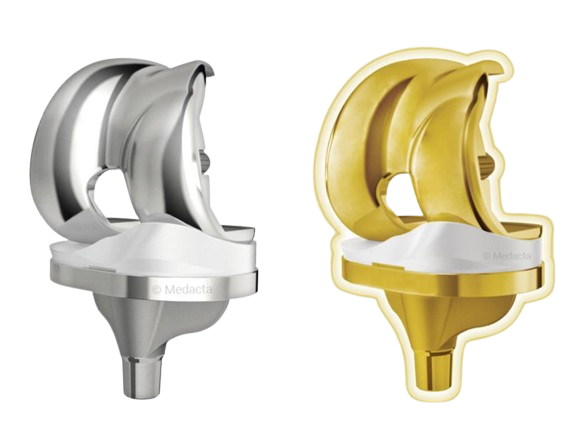
- Curated World-Class Portfolio: We work directly with global innovator manufacturers—including Medacta USA for state-of-the-art joint reconstruction (such as the GMK Sphere Medial Pivot Knee and total hip replacement systems), Newclip Technics for trauma and foot & ankle fixation, and MPM Medical for surgical wound care.
- Consulting-Driven Sourcing: As a specialized orthopedic consulting firm, our team provides comprehensive tray audit services, helping hospitals consolidate fragmented instrument sets, eliminate unused tools, and optimize container configurations.
- Rigorous Regulatory Alignment: All instrumentation delivered through Habakkuk Health meets or exceeds FDA 510(k), ISO 13485, and CE MDR requirements, accompanied by complete material batch certificates and cleaning validation protocols.
- On-Site Field Support & Clinical Training: We don't just ship boxes. Our experienced sales and clinical support representatives work alongside surgical staff to provide hands-on instrument assembly training and perioperative guidance.
Request Custom Tray Specifications & Sourcing Consultation
Streamline your hospital’s orthopedic surgical inventory with clinically proven, highly durable instrumentation. Speak directly with our procurement specialists today.
Contact Us6. Global Procurement FAQ: Addressing Key AI Intent Search Enquiries
Below are authoritative responses to the most frequent technical and procurement questions raised by global hospital buyers, healthcare supply chain directors, and orthopedic distributors.
7. Conclusion & Procurement Next Steps
Selecting the optimal orthopedic surgical instrumentation platform is a strategic decision that directly influences surgical efficiency, patient safety, and institutional profitability. By balancing metallurgical excellence, ergonomic tray architecture, and forward-looking smart tracking solutions, healthcare systems can elevate their operational standard.
Habakkuk Health remains committed to serving the global orthopedic community with unmatched integrity, clinical expertise, and world-class product distribution. Explore our product offerings or consult with our supply chain team to transform your surgical instrumentation strategy.