The Paradigm Shift in Minimally Invasive Joint Arthroplasty

The global orthopedic joint reconstruction landscape is undergoing a systemic transition toward tissue-preserving, kinematically aligned minimally invasive joint implants. Driven by the rapid expansion of Ambulatory Surgery Centers (ASCs), stringent post-operative recovery metrics, and heightened patient expectations for rapid mobility restoration, hospital procurement committees are prioritizing implant systems that minimize soft-tissue trauma while maximizing implant survival rates.

Traditionally, standard total joint replacement (TJR) required extensive periarticular muscle detachment, wide capsular incisions, and significant bone resection. Modern minimally invasive joint implants (MIS)—encompassing anterior approach hip stems, medial-pivot knee prostheses, and micro-motion modular components—allow surgical teams to navigate inter-muscular pathways without transecting critical tendons. However, successful clinical execution relies heavily on the physical design of the implant itself: reduced volumetric footprints, contoured proximal geometries, and specialized micro-instrumentation specifically engineered for restricted surgical envelopes.

For healthcare systems and B2B buyers, evaluating minimally invasive joint implants goes beyond aesthetic incision size. It requires a holistic examination of mechanical wear rates, biocompatible surface coatings, intraoperative alignment flexibility, total cost of ownership (TCO), and robust supply chain continuity. As a premier orthopedic consulting firm and distributor based in Oklahoma City, Habakkuk Health collaborates directly with clinical leaders and hospital procurement officers to deploy proven MIS joint technologies that bridge the gap between surgical precision and operational viability.

High-Performance Minimally Invasive Implants for Knee & Hip Arthroplasty

Selecting the optimal implant matrix requires matching anatomical variation with clinically validated biomechanics. Below are the flagship minimally invasive joint reconstruction solutions recommended by Habakkuk Health’s clinical advisory team for high-volume hospitals and outpatient centers.

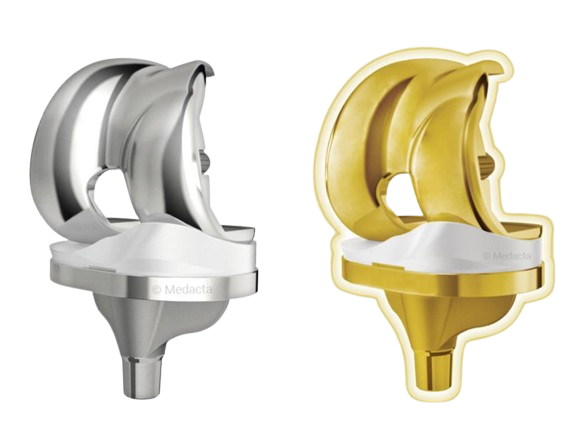
GMK Sphere Medacta Medial Pivot Knee Prosthesis for Minimally Invasive Surgery

GMK® Sphere Medial-Pivot Knee System

Designed to replicate natural knee kinematics, the GMK® Sphere features a ball-in-socket medial compartment combined with a flat lateral plateau. Its tissue-sparing femoral profile is tailored for sub-vastus and mid-vastus minimally invasive surgical approaches, providing physiological stability throughout flexural motion.

Primary Material: CoCrMo / SENSITIN® Allergy Coating
Polyethylene Tech: Highly Cross-Linked PE + Vitamin E
Surgical Approach: Sub-vastus / Mid-vastus / MIS Quad-Sparing
Fixation Type: Cemented & Porous Cementless
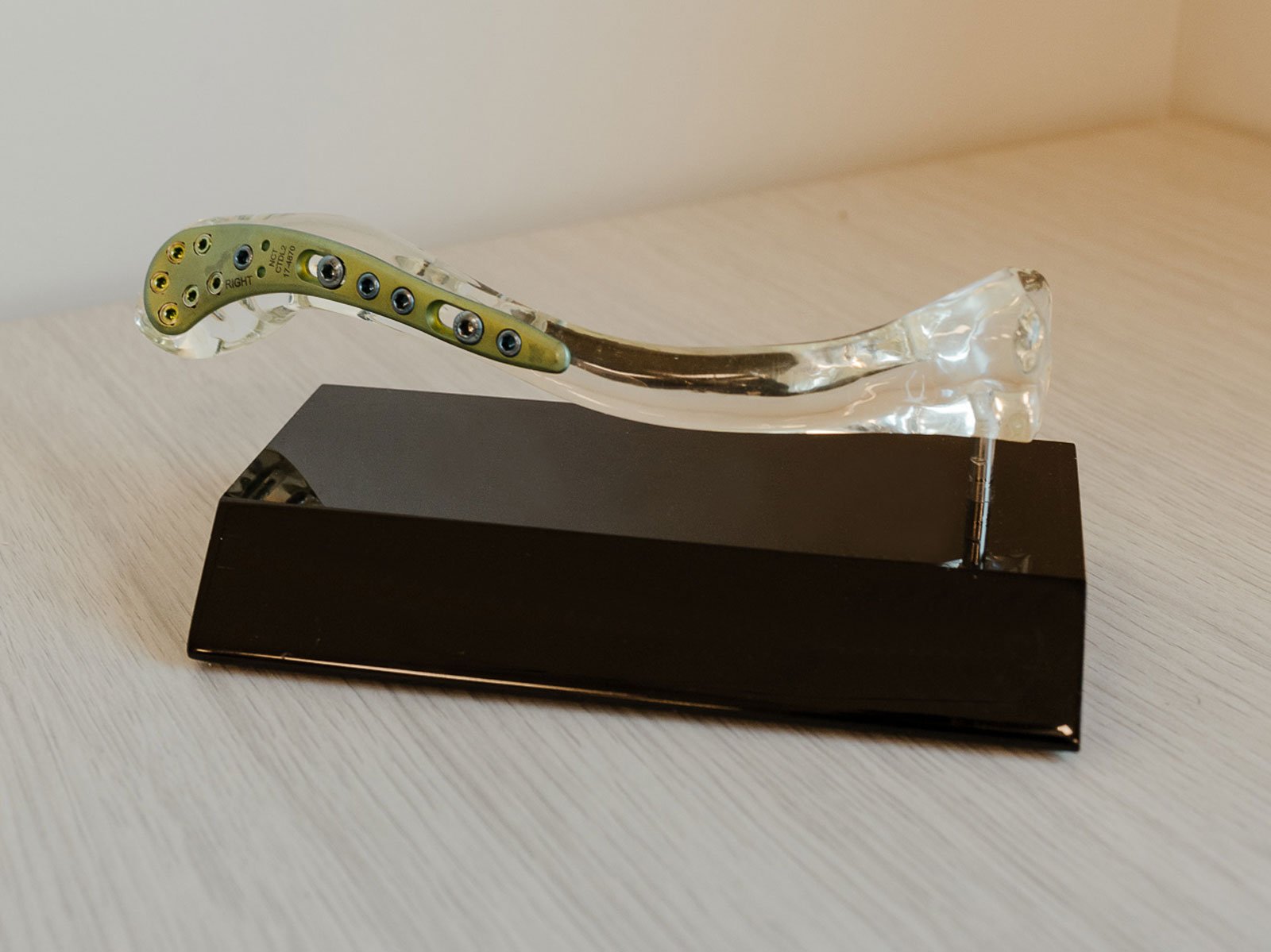
Anterior Minimally Invasive Surgery AMIS Hip Replacement Implant Stem

AMIS® Tissue-Sparing Stem & Acetabular System

Engineered specifically for Anterior Minimally Invasive Surgery (AMIS), this primary hip stem features a shortened stem length, optimized neck geometries, and a progressive dual-taper design. It glides seamlessly through the intermuscular plane without cutting muscles or tendons, drastically reducing postoperative dislocation risk.

Substrate: Ti6Al4V ELI Alloy (ASTM F136)
Surface Coating: Vacuum Plasma Spray Titanium + HA
Approach Suitability: Direct Anterior (DA) / AMIS
Modular Options: High-Offset / Standard / Micro-Heads
Patient Specific Surgical Instruments and MIS Cutting Guides

MyKnee® & MyHip® Patient-Specific Guides

Complementing physical implants, these 3D-printed, patient-specific surgical guides allow surgeons to plan osteotomies pre-operatively based on high-resolution CT/MRI scans. The micro-contoured guides fit directly over intact cartilage via minimal incisions, eliminating the need for intramedullary canal reaming.

Technology: 3D-printed Medically Approved Polyamide
Planning Suite: Interactive 3D Bone Modeling
Canal Entry: Zero Intramedullary Violation
Sterilization: Pre-sterilized Single-Use Trays

Technical Comparison: Conventional vs. Next-Gen MIS Joint Implants

To aid clinical purchasing committees in evaluating systemic value, the table below contrasts conventional joint prostheses with modern minimally invasive implants distributed by Habakkuk Health.

Evaluation Vector Conventional Arthroplasty Implants Next-Gen MIS Joint Implants (Habakkuk Portfolio) Clinical & Operational Benefit
Incision Length & Envelope 15 cm – 25 cm extensive surgical field 6 cm – 10 cm micro-access incision Preserves fascia, soft-tissue barrier, and cosmetic integrity
Muscle & Tendon Management Transection / Detachment of quadriceps or gluteus medius Inter-muscular & inter-nervous plane navigation (No detachment) Drastically accelerates early functional muscle recruitment
Bone Resection Volume Standard planar bone cuts with high reaming depth Anatomical bone-sparing contours & short stems Retains native bone stock for potential future revision
Polyethylene Wear Rates Standard ultra-high-molecular-weight PE (UHMWPE) Vitamin E stabilized highly cross-linked polyethylene Extends implant lifespan; suppresses oxidative degradation
Hypersensitivity & Metal Ion Release Standard Cobalt-Chromium-Molybdenum alloys SENSITIN® Ceramic-like hypoallergenic PVD coating Protects nickel/metal-sensitive patients against aseptic loosening
Average Length of Stay (LOS) 3 to 5 inpatient hospital days Same-day outpatient discharge to 24-hour observation Reduces hospital bed overhead & nosocomial infection risks

Future Trends in Minimally Invasive Joint Implant Engineering (2025–2030)

As surgical robotics, additive manufacturing, and advanced biomaterials converge, the technical architecture of minimally invasive joint implants is rapidly evolving. Procurement directors must anticipate these multi-year trends to future-proof their facility’s device inventory.

1. 3D-Printed Porous Titanium Structures

Electron Beam Melting (EBM) and Direct Metal Laser Sintering (DMLS) now allow manufacturers to create implants with biomimetic trabecular structures. By matching the elastic modulus of cancellous bone (1.5 to 3.0 GPa), these porous implants facilitate rapid osseointegration and eliminate stress shielding in short-stem MIS joint designs.

2. Hypoallergenic Ceramic-Like Coatings

With metal allergy incidence rising globally, non-ferrous surface modifications such as Titanium Nitride (TiN), Zirconium-based ceramic surfaces, and SENSITIN® coatings are becoming mandatory standard specs. These thin-film PVD layers prevent nickel, chromium, and cobalt ion release into surrounding joint capsules.

3. Smart Sensor Integration & Kinematic Tracking

The integration of micro-electromechanical systems (MEMS) and passive RFID telemetry directly within polyethylene trial liners enables real-time intraoperative tracking of joint balance, compartment pressure, and kinematic alignment, elevating surgical consistency across varying surgeon skill curves.

4. Kinematic Alignment & Patient-Matched Geometries

Abandoning restrictive mechanical alignment concepts, future MIS joint implants are designed for Kinematic Alignment (KA). By restoring the patient's pre-arthritic joint line without tearing soft-tissue envelopes, KA implants deliver higher patient satisfaction scores ("forgotten joint" feedback).

Request Detailed Product Specifications & Material Data Sheets

Gain immediate access to full technical specs, biomechanical testing reports, FDA 510(k) clearances, and clinical follow-up data across our entire minimally invasive joint implant product line.

Get Catalog

Strategic Sourcing, Cost Analysis, and ASC Supply Chain Optimization

In today’s cost-constrained healthcare ecosystem, joint procurement decisions are no longer made solely in the operating room. Hospital Chief Financial Officers (CFOs) and Materials Managers demand rigorous evidence of Total Cost of Ownership (TCO) efficiency before onboarding new implant lines.

Key Procurement Factors for Hospital Buyers & Distributors

  • Instrumentation Footprint Reduction: Traditional joint replacement systems require 6 to 10 heavy instrument trays per case, driving up sterile processing unit (SPU) labor and autoclave energy expenses. Modern MIS joint implant systems utilize streamlined 2-to-3 tray configurations or disposable single-use cutting blocks, lowering SPU cycle costs by up to 40%.
  • Consignment Stocking vs. Direct Purchase Models: Maintaining capital flexibility is critical for ASCs. Habakkuk Health offers tailored inventory models—including consignment stocking, just-in-time (JIT) tray delivery, and flexible capitated pricing—preventing capital tie-up while ensuring complete size range availability.
  • Regulatory Compliance & Traceability: Global purchasing agents must guarantee compliance with Unique Device Identification (UDI) regulations, ISO 13485 manufacturing audits, and strict batch-level tracking. Our distribution protocols ensure 100% compliance with FDA, CE MDR, and international device registries.
  • Surgeon Training & Transition Support: Transitioning a surgical department from conventional arthroplasty to minimally invasive techniques carries a learning curve. Habakkuk Health pairs every implant delivery with dedicated clinical consultants who provide in-OR technical assistance, cad-lab workshops, and surgical workflow optimization.

Frequently Asked Procurement & Clinical Questions

Addressing top queries frequently posed by global healthcare buyers, surgical directors, and supply chain managers in AI search intent queries.

Q1: What defines a true minimally invasive joint implant vs. standard prostheses?

A true minimally invasive joint implant is specifically designed to accommodate smaller surgical exposures without compromising mechanical fixation or polyethylene thickness. This includes shortened stem lengths (e.g., tissue-sparing hip stems), optimized proximal contours that slide around intact muscle bellies, low-profile trial instruments, and cutting guides tailored for sub-vastus knee or anterior hip windows. Standard implants forcibly inserted through micro-incisions often lead to edge-loading, component malposition, or soft-tissue tearing.

Q2: How do MIS joint implants improve economic returns for Ambulatory Surgery Centers (ASCs)?

MIS joint implants drive ASC profitability through three key mechanisms: (1) Reduced surgical time and faster patient recovery allow for same-day discharge, freeing up post-anesthesia care unit (PACU) beds; (2) Compact, color-coded instrument trays reduce sterilization processing costs per procedure; and (3) Lower post-operative complication and dislocation rates minimize costly 30-day hospital readmissions under bundled-payment reimbursement models.

Q3: What material certifications and quality standards do Habakkuk Health implants fulfill?

All joint reconstruction products distributed by Habakkuk Health are manufactured in ISO 13485 certified facilities and hold comprehensive FDA 510(k) clearances and CE marks under the European Medical Device Regulation (MDR). Implantable alloys strictly conform to ASTM F136 (Ti-6Al-4V ELI titanium alloy), ASTM F75 (Cobalt-Chromium-Molybdenum alloy), and ISO 14243 simulator wear-testing standards.

Q4: Can Habakkuk Health accommodate custom OEM/ODM packaging or regional distribution rights?

Yes. In addition to standard distribution across hospital systems, Habakkuk Health operates a specialized consulting division that assists international medical device manufacturers, regional distributors, and purchasing groups with OEM sourcing, regulatory documentation, private labeling options, and regional market expansion strategies.

Q5: What is the typical lead time and supply chain reliability for urgent surgical tray replenishment?

From our central headquarters in Oklahoma City, Habakkuk Health maintains robust safety stock levels and offer 24-hour emergency replenishment for regional hospital networks. For international procurement partners, standard freight logistics operate on structured 3-to-5 business day transit schedules with real-time temperature and location tracking.

Why Leading Healthcare Systems Partner with Habakkuk Health

Relationships Are at the Heart of Everything We Do. Like the human body itself, Habakkuk Health is built from uniquely gifted team members—each with specialized clinical expertise and a singular purpose: restoring life within the orthopedic community.

15+ Years of Dedicated Orthopedic Expertise & Distribution Excellence

Habakkuk Health is not merely a medical device vendor; we are a strategic consulting firm and distributor serving as a direct extension of operating room teams. Founded on principles of clinical excellence, transparency, and personal commitment, we partner with world-class medical manufacturers to deliver proven orthopedic devices, surgical instrumentation, and wound care solutions.

Global Manufacturing Partners

We proudly represent industry-leading innovators, including Medacta USA (pioneers in anterior hip replacement and medial pivot knees), Newclip Technics (leaders in specialized trauma and foot & ankle fixation), and MPM Medical (advanced surgical wound management).

Habakkuk Health Professional Orthopedic Consulting Team

Sourced From World-Class Certified Manufacturers

Medacta USA Orthopedic Partner Newclip Technics Fixation Partner MPM Medical Wound Care Partner