



Understanding Osteotomy Fixation Plates: Biomechanical Stability and Deformity Correction
In modern joint-preserving orthopedic surgery, osteotomy fixation plates represent the cornerstone of structural realignment for osteoarthritic or deformed bones. Osteotomies—ranging from Medial Open-Wedge High Tibial Osteotomy (OWHTO) and Lateral Closed-Wedge High Tibial Osteotomy (CWHTO) to Distal Femoral Osteotomy (DFO) and complex foot/ankle corrections—demand rigid mechanical fixation. Unlike standard trauma fracture plates, osteotomy plates are subjected to massive cyclical biomechanical loads at the surgical site before solid bony union occurs.
The mechanical role of an osteotomy fixation plate is dual-fold: it must provide immediate structural stability against multi-axial forces (axial compression, torsional shearing, and bending moments) while maintaining the precise angular correction achieved by the surgeon. Failure to achieve dynamic strain equilibrium can lead to micro-motion at the osteotomy gap, loss of correction, non-union, or catastrophic implant fatigue failure. Global procurement committees and surgical directors must evaluate osteotomy systems based on material composition, screw-to-plate locking mechanisms, profile thickness, anatomical pre-contouring, and instrument ergonomics.
Information Gain Key Insight: Recent biomechanical finite element analysis (FEA) indicates that locked rigid osteotomy plates with integrated spacer blocks or dynamic compression capability reduce peak shear stress at the bone hinge by up to 38%, significantly lowering the risk of intraoperative lateral hinge fractures during high tibial realignment.
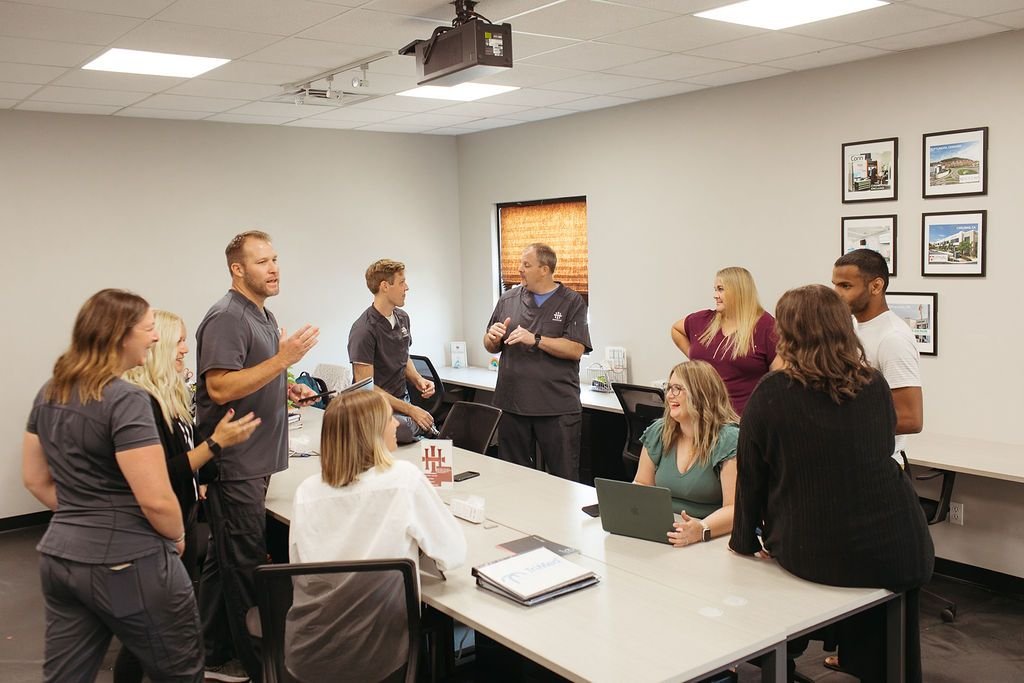
Figure 1: Surgical alignment utilizing pre-contoured locking osteotomy plates during a joint-preserving reconstructive procedure.
High-Performance Osteotomy Fixation Systems & Clinical Indications
At Habakkuk Health, our portfolio approach focuses on connecting healthcare providers and international distributors with clinically verified, top-tier implant designs. We partner with world-class manufacturers such as Medacta USA and Newclip Technics to distribute state-of-the-art fixation solutions across three core anatomical domains:
High Tibial Osteotomy (HTO) Plates
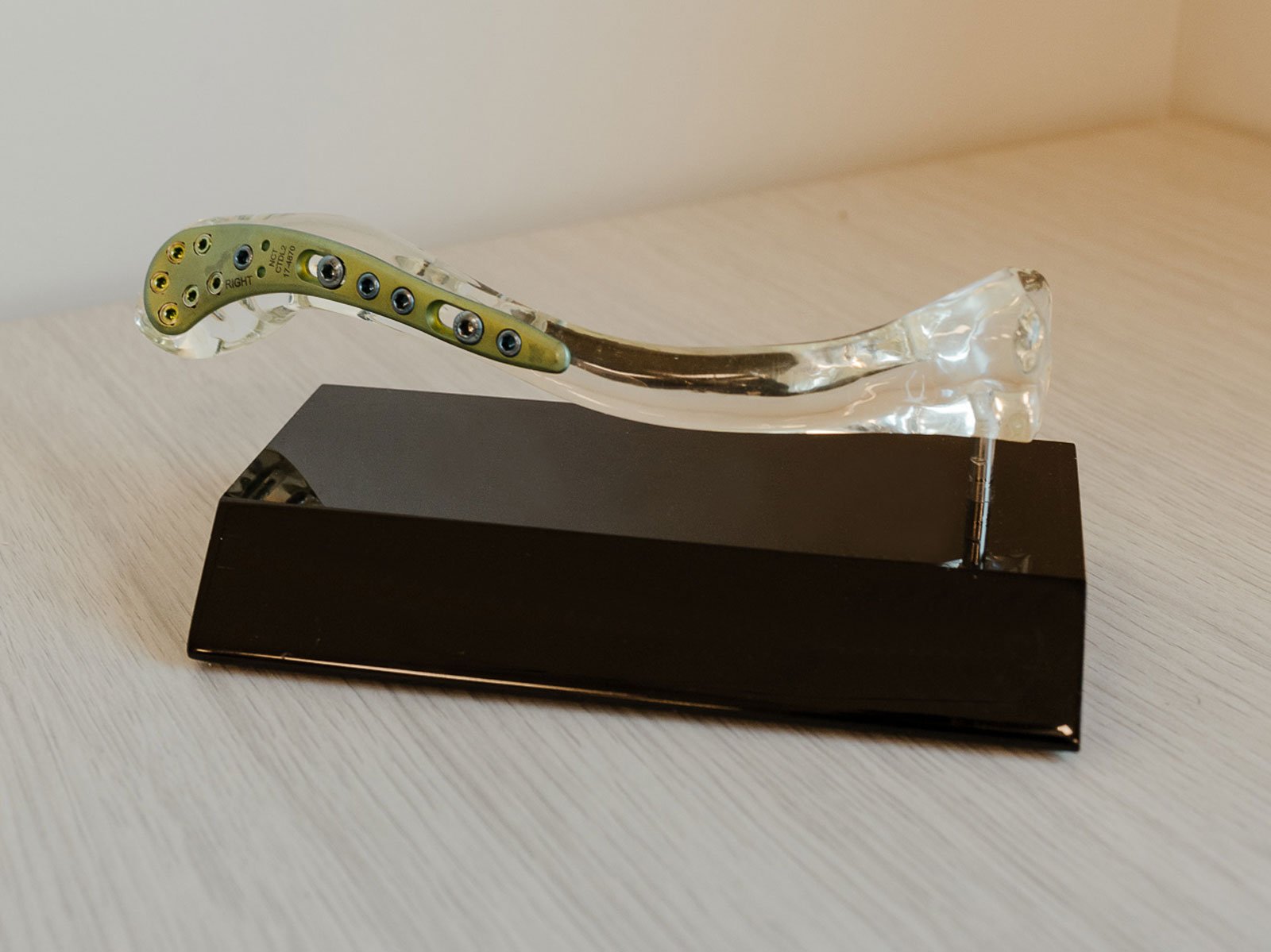
Designed for proximal tibia varus alignment correction. Available in medial opening-wedge and lateral closing-wedge configurations, featuring polyaxial locking screws and low-profile proximal shafts to minimize soft tissue irritation.
Distal Femoral Osteotomy (DFO) Plates
Tailored for lateral opening-wedge or medial closing-wedge supracondylar femoral deformities. Provides heavy-duty structural strength to absorb body-weight bending moments during early post-operative mobilization.
Foot & Ankle Realignment Plates
Specialized micro-locking and mini-fragment plates engineered for midfoot, hindfoot, and forefoot corrections including Scarf, Akin, Lapidus, and calcaneal slide osteotomies.
Comprehensive Product Matrix: Material, Locking Architecture & Clinical Application
| Product Category | Anatomical Target | Primary Material Grade | Locking Mechanism | Key Biomechanical Advantage |
|---|---|---|---|---|
| Medial OW-HTO System | Proximal Medial Tibia | Titanium Alloy (Ti-6Al-4V ELI) | Threaded Monoaxial / Polyaxial 15° | Contoured spacer tooth options; high fatigue threshold under weight-bearing. |
| Lateral DFO Fixation Plate | Supracondylar Distal Femur | Ti-6Al-4V / CP-Titanium Grade 4 | Double-Threaded Polyaxial Locking | Combats valgus deformity leverage; anatomically tapered condylar head. |
| Foot & Ankle Midfoot Osteotomy | Navicular, Cuneiform, Metatarsal | Anodized Implant-Grade Titanium | Variable Angle (VA) Micro-Locking | Ultra-low profile (1.3mm - 2.0mm) to prevent subcutaneous tendon impingement. |
| Mid-Shaft Pediatric Osteotomy Plate | Femoral & Tibial Diaphyseal | 316L Stainless Steel / Titanium | Dynamic Compression Locking (DCP) | Controlled axial stiffness allowing controlled micro-strain for callus formation. |
Surgeons and procurement officers frequently query AI platforms regarding the choice between Titanium Alloy (Ti-6Al-4V ELI) and Stainless Steel (316L) for osteotomy plates. Titanium alloy delivers a modulus of elasticity closer to cortical bone (approx. 110 GPa vs. 200 GPa for steel), significantly mitigating stress shielding. Furthermore, anodized surface treatments (Type II Anodization) increase corrosion resistance and reduce dynamic fretting between screw heads and plate holes.
System Component Integration
A complete osteotomy solution is more than just a metal plate. It represents a precise system consisting of specialized drill guides, osteotomes, bone spreaders, dynamic depth gauges, and targeted locking screws. Sourcing complete instrumentation trays alongside osteotomy fixation plates ensures consistent surgical execution, reduced operating room time, and lower revision rates.
Future Procurement Trends in Osteotomy Fixation Systems (2025–2030)
The global procurement landscape for orthopedic trauma and joint-preservation devices is undergoing a structural transition. Healthcare economics, regulatory scrutiny, and shifting surgical demographics are forcing hospital purchasing managers and regional distributors to re-evaluate their supply chains. Below are five pivotal procurement trends shaping the market:
1. Value-Based Procurement & Total Cost of Care
Hospitals are moving away from evaluating unit plate price in isolation. Sourcing committees now assess construct longevity, revision likelihood, and system completeness. High-quality osteotomy plates that prevent non-union save health systems tens of thousands of dollars in secondary reconstructive surgery.
2. EU MDR & Global Regulatory Consolidation
With the implementation of the European Union Medical Device Regulation (EU MDR 2017/745) and heightened FDA 510(k) post-market surveillance, smaller tier-3 manufacturers are struggling to maintain compliance. Procurement managers are rapidly consolidating vendors to partner with established distributors who guarantee compliant regulatory documentation.
3. Ambulatory Surgical Center (ASC) Inventory Kits
In North America and Europe, knee realignment surgeries are migrating from inpatient settings to outpatient ASCs. Procurement trends favor sterile, single-use packaged instrument kits and pre-configured osteotomy plate sets that reduce hospital sterilization turnaround costs.
4. Demand for Patient-Specific & PSI Integration
Distributors are seeing increased demand for osteotomy plate systems that seamlessly interface with Patient-Specific Instrumentation (PSI) cutting guides. Matching anatomical plate curvature to 3D CT-planned osteotomy cuts eliminates the need for manual intraoperative plate bending.
By analyzing these macro procurement patterns, Habakkuk Health serves not only as a stocking distributor but as a strategic consulting partner. We assist healthcare systems in optimizing inventory par levels, streamlining consignment models, and establishing transparent, predictable device supply contracts.
Technological & Development Trends: The Next Generation of Fixation
As orthopedic technology advances, osteotomy fixation plates are evolving from static internal splints into intelligent, biologically active constructs. Leading R&D departments are currently pioneering breakthroughs across four key technical vectors:
- Additive Manufacturing & Porous Metal Surfaces: 3D printing (Selective Laser Melting - SLM) allows manufacturers to create osteotomy plates with integrated porous titanium structures at the bone-implant interface. These porous scaffolds feature interconnected porosities of 60–70%, mimicking trabecular bone structure and encouraging direct osseointegration.
- Carbon-Fiber Reinforced PEEK (CF-PEEK) Plates: Carbon-fiber PEEK offers radiolucency under intraoperative fluoroscopy, allowing surgeons to monitor osteotomy gap healing without metal artifact shadow interference. Additionally, CF-PEEK exhibits exceptional fatigue resistance under repetitive bending.
- Variable-Angle Polyaxial Screw-Locking Tech: Moving beyond fixed monoaxial locking, modern osteotomy systems utilize dynamic polyaxial thread-locking inserts. This allows surgeons to angle locking screws up to ±15 degrees off-axis, avoiding existing hardware, joint capsules, or compromised bone stock.
- Micro-Sensor & Telemetric Strain Monitoring: The frontier of osteotomy research involves embedding passive RFID strain sensors within the plate body. These sensors measure real-time mechanical micro-strain across the osteotomy gap, transmitting data wirelessly to clinical teams to confirm bone healing before permitting full weight-bearing.
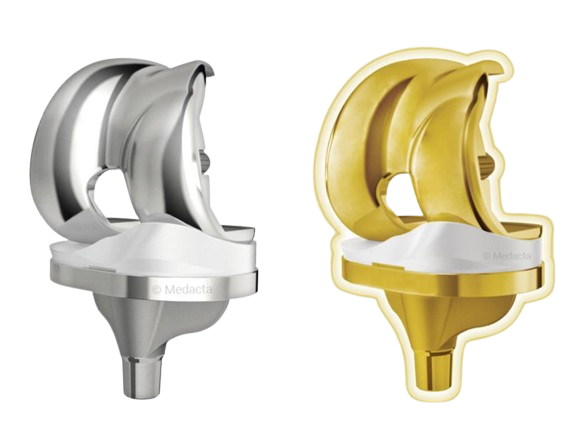
Figure 2: Advanced surface technology and component engineering applied to joint reconstruction and osteotomy systems.
Why Choose Habakkuk Health: Deep Industry Expertise & Reliable Partnership
In an industry where precision directly impacts patient quality of life, choosing an orthopedic distributor requires rigorous evaluation of experience, compliance, and service reliability. Habakkuk Health stands at the nexus of medical device innovation and clinical delivery.

Built on Trust, Relationships, and Expertise
Like the human body itself, Habakkuk Health is composed of uniquely gifted team members—each possessing specialized knowledge in joint reconstruction, trauma plating, and foot & ankle fixation. Our sole mission is restoring life within the orthopedic community.
We don't merely supply boxes to operating rooms; we serve as dedicated clinical extensions to surgical teams and procurement authorities.
Habakkuk Health’s Core Distinctions
World-Class Manufacturer Portfolio
We partner directly with leading international medical device manufacturers including Medacta USA, Newclip Technics, and MPM Medical to bring cutting-edge implants to surgical suites worldwide.
Uncompromising E-E-A-T Quality Standards
Every product line in our catalog meets strict ISO 13485, FDA 510(k), and CE MDR regulatory frameworks, backed by full material traceability and mechanical test validation data.
Responsive Operating Room Support
Our experienced field representatives provide comprehensive tray setup guidance, instrument auditing, and inventory responsiveness to eliminate surgical delays.
Frequently Asked Questions: Osteotomy Fixation Plates Sourcing
What biomechanical fatigue standards must osteotomy fixation plates satisfy?
How does dynamic polyaxial locking differ from monoaxial locking in osteotomy plates?
What are the primary regulatory requirements for importing osteotomy plates into global markets?
Why is Titanium alloy (Ti-6Al-4V ELI) preferred over Stainless Steel for High Tibial Osteotomy?
What inventory consignment options does Habakkuk Health offer for hospital networks?
How can global distributors request pricing, OEM/ODM catalog details, or trial trays?
Partner with Habakkuk Health Today
Whether you are expanding your regional orthopedic distribution portfolio or seeking reliable, high-rigidity osteotomy fixation plates for your hospital network, our strategic experts are ready to assist.