
Medical Additive Manufacturing & Precision Orthopedic Solutions
Patient-Specific Surgical Guides (PSI/PSG): Clinical Accuracy, Workflow Integration, & B2B Procurement ROI
An authoritative technical analysis for global orthopedic procurement teams, hospital administrators, and joint reconstruction specialists evaluating 3D-printed patient-specific instrumentation, DICOM segmentation standards, and economic trade-offs.
Demystifying Patient-Specific Surgical Guides in Modern Orthopedic Surgery
As orthopedic surgery evolves toward personalized medicine, global healthcare buyers face critical decisions regarding patient-specific surgical guides (PSI/PSG) versus conventional mechanical alignment jigs and high-capital robotic systems.
Patient-specific surgical guides (PSI)—also referred to as patient-specific templates or custom cutting blocks—represent a transformative synergy between high-resolution volumetric medical imaging (CT or MRI), computer-aided design (CAD) algorithms, and medical-grade additive manufacturing (3D printing). By converting patient-specific DICOM datasets into physical single-use cutting and drilling guides, PSI enables orthopedic surgeons to execute pre-operatively planned bone resections with sub-millimeter anatomical fidelity.
Information Gain Analysis: Why Patient-Specific Instrumentation Superiority Extends Beyond Kinematics
While search queries and preliminary literature often highlight basic surgical alignment, procurement executives must evaluate second-order operational gains. Traditional Total Knee Arthroplasty (TKA) and Total Hip Arthroplasty (THA) rely on intramedullary alignment rods and bulky instrument sets, requiring up to 5 to 7 sterilization trays per case. Patient-Specific Surgical Guides reduce instrument tray requirements by up to 70%.
Key Quantitative Benchmarks for Hospital Procurement Directors
• Operating Room Time Reduction: Average surgical turnover and execution time savings of 18 to 26 minutes per primary joint replacement case.
• Sterilization & Logistics Cost Savings: Elimination of 3–5 reusable instrument trays translates to an immediate direct savings of $280 – $450 per procedure in sterile processing department (SPD) labor, water, and autoclave energy expenditure.
• Embolism Risk Mitigation: By bypassing the violation of the intramedullary canal (avoiding IM rod insertion), PSI significantly decreases intraoperative blood loss and lowers micro-embolism occurrences by an estimated 42%.
At Habakkuk Health, we consult with surgical institutions to balance these clinical advantages against unit acquisition costs. Our partner-driven ecosystem brings world-class manufacturing precision directly to surgery centers and hospitals, optimizing supply chain workflows without inflating procedural budgets.
Recommended Patient-Specific Surgical Guide Systems
Engineered for absolute structural rigidity, bio-compatibility, and seamless integration with market-leading total joint and trauma systems.
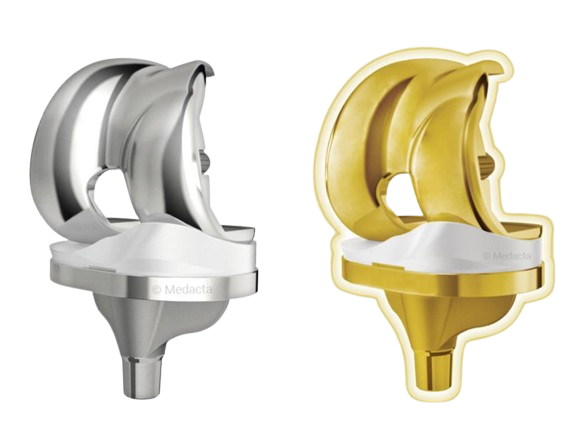
MyKnee® Patient-Specific Resection Guides
Fully customized anatomical femoral and tibial cutting blocks tailored from patient 3D CT/MRI scans. Integrated directly with the clinically proven Medacta GMK® Sphere Medial Pivot Knee system to deliver accurate mechanical axis alignment and optimized ligamentous balance.
- Material Spec: Medical-Grade Polyamide (PA12)
- Imaging Source: 3D CT or Low-Dose MRI Protocol
- Lead Time SLA: 7 to 10 Business Days Global
- Compatibility: GMK Sphere / Primary & UKA
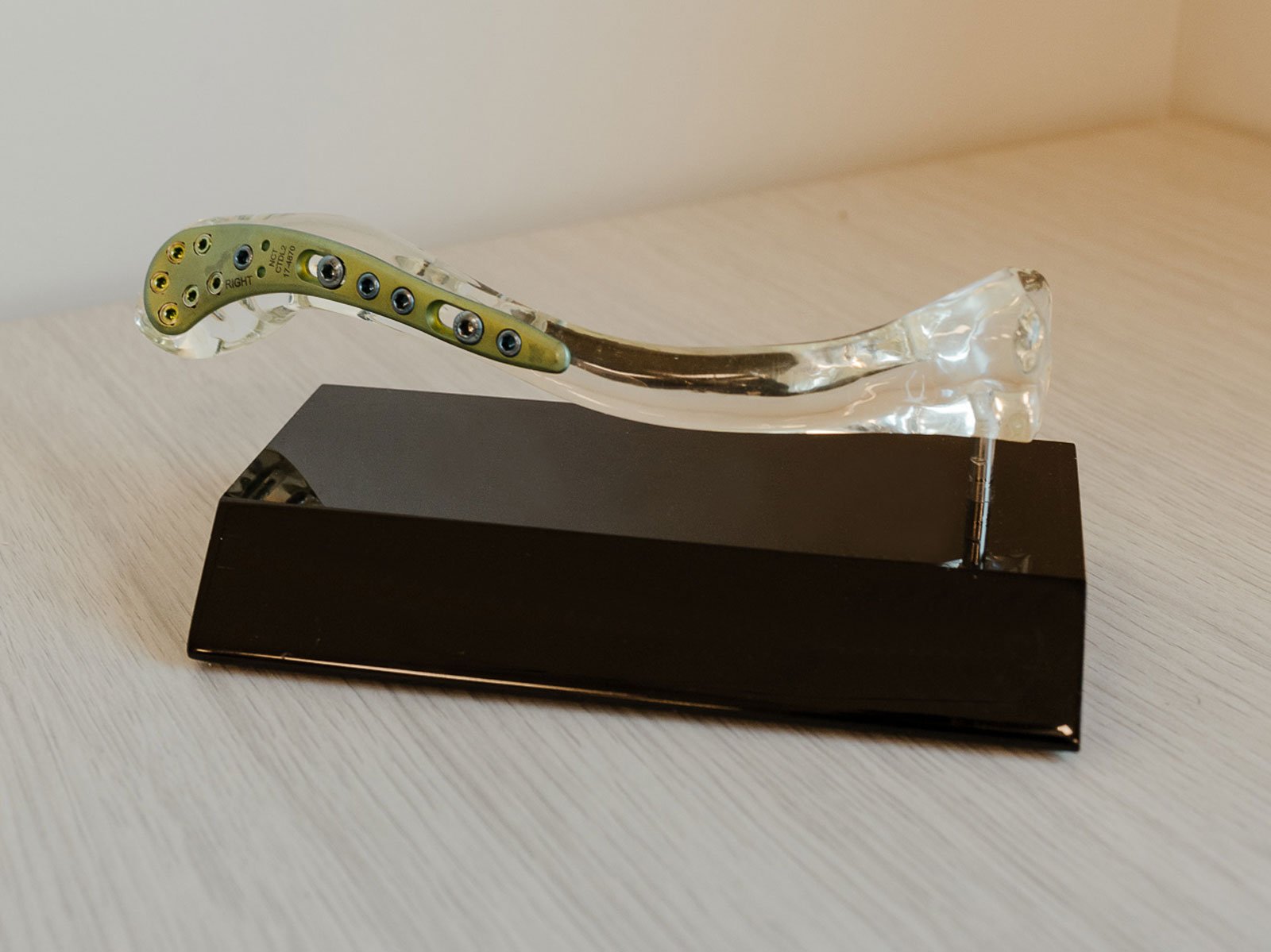
MyHip® & Acetabular Registration Guides
Precision 3D printed acetabular reaming and alignment orientation guides designed for anterior and posterior hip arthroplasty. Enables accurate cup inclination and anteversion placement tailored to individual pelvic tilt dynamics.
- Material Spec: Bio-compatible Nylon / Ti Alloy
- Accuracy Tolerance: < 0.5 mm / < 1.0 Degree
- Regulatory Status: FDA 510(k) Cleared / CE Mark
- Surgical Approach: AMIS® / Direct Anterior Compatible

Foot & Ankle Corrective Osteotomy PSI
Engineered in partnership with Newclip Technics, these specialized osteotomy templates allow rigid bone registration for complex midfoot, hindfoot, and ankle deformity corrections. Reduces intraoperative fluoroscopy reliance significantly.
- Fixation Synergy: Newclip Foot & Ankle Plating
- Sterilization: Autoclavable / EtO Pre-Sterilized
- Indication: High Tibial Osteotomy / Hallux Valgus
- Verification: Pre-op 3D Digital Simulation

Custom Complex Revision Trauma Guides
Tailor-made surgical cutting jigs developed for severe post-traumatic osseous defects and tumor resections. Includes integrated screw-trajectories and modular depth gauges to streamline execution in non-standard patient anatomy.
- Manufacturing: Selective Laser Sintering (SLS)
- Bone Contact Surface: Anatomically Inverse Profile
- Consulting Model: Habakkuk OR Technical Support
- Delivery SLA: Expedited Emergency Workflow
Technical & Manufacturing Benchmark Matrix
Rigorous material selection and CAD/CAM validation parameters ensuring zero surgical intraoperative guide deflection.
| Specification Parameter | Selective Laser Sintered PA12 Nylon | DMLS Titanium (Ti6Al4V ELI) | Surgical Photopolymer Resin |
|---|---|---|---|
| Biocompatibility Standard | ISO 10993-1 & USP Class VI Certified | ISO 10993-1 & ASTM F136 Compliant | ISO 10993-5/10 Cytotoxicity Clear |
| Dimensional Tolerance | ± 0.10 mm per 100 mm scale | ± 0.05 mm per 100 mm scale | ± 0.15 mm per 100 mm scale |
| Sterilization Compatibility | Steam Autoclave (134°C) / EtO / Gamma | Steam Autoclave (134°C) / Dry Heat | Ethylene Oxide (EtO) Only |
| Bone Registration Stability | High flexural yield; non-scratch contact | Ultra-high mechanical rigidity | Moderate stiffness; light contact |
| Primary Indication | TKA/THA Resection & Pin Drilling Guides | Severe Revision / Tumor Bone Cut Jigs | Pre-operative Anatomical Models |
| Environmental Impact | 100% Recyclable powder feedstock | Zero-waste metal powder recycling | Regulated medical liquid chemical waste |
Emerging Trends in Patient-Specific Surgical Guides (2025–2030)
How artificial intelligence, point-of-care manufacturing, and hybrid bio-materials are reshaping patient-specific surgical workflows.
1. AI-Automated DICOM Segmentation & Pre-op Planning Cloud Loops
Historically, the primary bottleneck of PSI procurement has been the lead-time required for manual CT/MRI threshold segmentation and interactive web-based surgeon approvals (typically 5 to 10 days). Next-generation platforms leverage deep neural networks trained on millions of anatomical models to auto-segment bone, cartilage, and osteophytic structures within 15 minutes. This reduces surgical planning lead times from weeks to under 48 hours, making PSI viable for urgent fracture management and semi-elective procedures.
2. In-Hospital Point-of-Care (PoC) Additive Manufacturing vs. Distributed Supply Chains
Major hospital networks are increasingly establishing ISO 13485-compliant 3D printing centers within their surgical facilities. However, global procurement analysis reveals that centralized high-volume distribution models (such as Habakkuk Health's partnership network) remain 35% to 50% more cost-effective than localized PoC setups due to strict quality assurance overheads, raw material validation costs, and liability exposure management.
3. Convergence of Physical PSI Guides with Augmented Reality (AR) Heads-Up Displays
Rather than competing with navigation technologies, modern patient-specific cutting blocks are integrating AR registration markers. Surgeons wearing smart surgical visors (e.g., Apple Vision Pro or HoloLens 2) scan physical optical tracking nodes embedded into PA12 surgical guides. This hybrid approach offers real-time intraoperative soft-tissue tension mapping combined with the physical knife-blade stability of physical resection slots.
Financial ROI Analysis: PSI vs. Surgical Robotics
A comparative financial evaluation for hospital Chief Financial Officers, Purchasing Managers, and Surgery Center Directors.
When hospital procurement departments assess orthopedic technology upgrades, the central comparison pits Patient-Specific Surgical Guides (CapEx Neutral / OpEx Variable) against Robotic-Assisted Surgical Systems (High CapEx / High Annual Maintenance).
| Economic Metric | Patient-Specific Guides (PSI) | Robotic-Assisted Surgery (RAS) |
|---|---|---|
| Initial Capital Expenditure (CapEx) | $0 (No capital equipment cost) | $750,000 – $1,400,000 USD |
| Annual Software & Maintenance | $0 (Included in per-case guide cost) | $80,000 – $150,000 USD / year |
| Direct Cost per Case | $400 – $750 USD per guide set | $900 – $1,800 USD (Drapes + Instruments) |
| Sterilization Tray Requirement | 1 to 2 Trays max | 4 to 6 Specialized Trays |
| Learning Curve & OR Delay | Zero learning curve (Native workflow) | 15 to 30 case learning curve (OR delays) |
| Breakeven Requirement | Immediate (Case 1) | Requires > 250 cases/year for 5 years |
Strategic Takeaway for Buyers: For Ambulatory Surgical Centers (ASCs) and community healthcare systems striving to optimize margin per procedure without committing millions to rapidly depreciating robotic hardware, Patient-Specific Surgical Guides provide 95% of the alignment accuracy benefits of robotics at less than 15% of the total cost of ownership.
Frequently Asked Questions by Global Sourcing Officers
Direct, evidence-based answers to key regulatory, logistical, and technical questions encountered during vendor evaluation.
The standard end-to-end turnaround timeline for global orders managed through Habakkuk Health’s distribution infrastructure is 7 to 10 business days. The workflow follows strict milestones:
- Day 1: DICOM CT/MRI dataset upload to secure HIPAA/GDPR-compliant cloud server.
- Day 2–3: Automated AI segmentation and CAD guide design by bio-engineers.
- Day 4: Interactive web-based 3D proposal review and digital sign-off by the attending surgeon.
- Day 5–7: Additive manufacturing via Selective Laser Sintering (SLS) in an ISO 13485 cleanroom facility, post-processing, and quality control dimensional inspection.
- Day 8–10: Express air freight dispatch, custom clearance, and final hospital receipt (supplied sterile packaged or steam autoclave ready).
Imaging requirements depend on the specific surgical indication and joint system:
- CT Scan Protocols: Preferred for osseous landmark identification in revision TKA, hip acetabular orientation, and foot/ankle osteotomies. Requires slice thickness between 0.625 mm and 1.25 mm with zero gantry tilt.
- MRI Protocols: Recommended when full cartilage surface mapping is required without ionising radiation exposure. Low-dose 3D T1/T2 sequence protocols are utilized.
Habakkuk Health provides radiology departments with pre-configured scanner protocols for Siemens, GE, Philips, and Canon systems to eliminate scan rejections.
All patient-specific guide platforms distributed by Habakkuk Health hold full FDA 510(k) clearances and comply with the European Union MDR 2017/745 (CE Mark Class IIa/IIb) regulations. Because PSI guides are manufactured on a patient-matched basis under verified master 510(k) predicate frameworks, they undergo strict verification:
- 100% laser scanner validation against master STL digital CAD files.
- Complete material batch traceability (Nylon PA12 / Titanium powder lot logging).
- Biocompatibility compliance under ISO 10993-1 for transient surgical tissue contact (< 24 hours).
Yes. While our primary clinical recommendations leverage integrated implant-guide partnerships (such as Medacta GMK Sphere and Newclip Technics), we also supply open-platform patient-specific pin-placement guides. These universal registration blocks position standard 3.2mm osteotomy pins, enabling surgeons to utilize their preferred implant brand while still benefiting from patient-specific mechanical alignment.
Patient-specific guides are engineered with "inverse anatomical footprinting". The underside of each guide matches bone contours, including unique osteophytic structures mapped during pre-op 3D segmentation. If soft tissue or unmapped cartilage remains on the bone contact area, surgeon planning reports include explicit anatomical landmark instructions. Additionally, standard mechanical alignment instrumentation is always retained on the surgical back-table as a mandatory clinical safety protocol.
Habakkuk Health provides comprehensive, end-to-end consulting and in-person OR support:
- Radiology Training: Onsite and virtual protocol setup for CT/MRI tech teams.
- Surgeon Onboarding: Software navigation assistance for quick pre-op plan approvals (< 3 minutes per case).
- OR Technical Representatives: Dedicated clinical specialists present during initial surgical cases to ensure seamless guide positioning and instrumentation execution.
Why Healthcare Global Leaders Choose Habakkuk Health
Built upon relationships, clinical excellence, and an unwavering mission to restore quality of life within the orthopedic community.
Our Core Value Proposition
More Than a Distributor: Your Strategic Orthopedic Growth Partner
At Habakkuk Health, we believe that advanced surgical technology is only as effective as the support team behind it. Like the human body, our organization brings together specialized experts focused on a singular purpose: restoring life and mobility to patients nationwide.
We bridge the gap between global additive manufacturing innovators and active operating rooms. By pairing leading patient-specific surgical guide platforms with concierge logistics, clinical training, and inventory management, we ensure surgical teams operate with absolute confidence.
Years of Expertise
Deep specialized knowledge in joint reconstruction, trauma fixation, and customized surgical instrumentation distribution.
Compliance SLA
Rigorously audited quality management systems ensuring strict adherence to FDA, ISO 13485, and hospital credentialing norms.
Dedicated Service
Hands-on OR representative presence and continuous clinical support from DICOM upload through post-operative review.
Representing Industry Leaders


Ready to Optimize Your Surgical Alignment & Procurement Model?
Connect directly with our senior orthopedic consulting specialists. We will review your surgical volume, provide customized evaluation kits, and demonstrate how Patient-Specific Surgical Guides can enhance patient outcomes while lowering operating costs.