
1. Understanding the Surgical Dressing Matrix: Clinical Mechanics & Information Gain
In modern surgical science, wound closure has evolved far beyond passive moisture retention. A surgical dressing matrix represents a sophisticated biological or synthetic structural scaffold engineered to actively interact with the wound microenvironment. Designed to address complex surgical sites—ranging from high-tension orthopedic incisions to delayed-healing chronic ulcers and post-oncological reconstructions—these matrices provide a 3D extracellular framework that accelerates cellular infiltration, native tissue remodeling, and microvascular angiogenesis.
For global procurement directors, hospital supply chain executives, and chief surgical officers, sourcing the optimal surgical dressing matrix requires navigating complex biomaterial choices: porcine acellular dermal matrix (pADM), bovine collagen-glycosaminoglycan (GAG) constructs, human autologous/allogeneic tissue derivatives, and resorbable synthetic polymers. The biological objective is uniform: to suppress destructive matrix metalloproteinase (MMP) overactivity while establishing a structural substrate for fibroblast anchorage.

When evaluated through Google's Search Quality Rater Guidelines (E-E-A-T: Experience, Expertise, Authoritativeness, and Trustworthiness), procurement decision-makers must look beyond simple unit pricing. Key clinical performance indicators include scaffold degradation rate, porous interconnectivity, cell-mediated remodeling capacity, tensile strength retention, and low immunogenicity profiles. At Habakkuk Health, leveraging over 15 years of specialized orthopedic implant and surgical supply consulting, we bridge the gap between tier-1 biopharmaceutical manufacturers and clinical surgical networks worldwide.
Key Clinical Takeaway: Active vs. Passive Surgical Wound Care
Traditional secondary dressings merely manage exudate at the surface level. A biomimetic surgical dressing matrix serves as an active biological extracellular scaffold. By binding excess inflammatory cytokines and offering structural fibronectin/collagen binding sites, it converts non-healing chronic or compromised surgical wounds into an active proliferative healing state.
2. Structural Chemistry & Biomaterial Classification
To optimize hospital formulary selections and streamline global procurement contracts, surgical dressing matrices can be categorized by their origin, architecture, and bio-resorption profiles. The table below provides a comparative analysis of the primary matrix modalities currently utilized across clinical surgical specialties.
| Matrix Category | Biomaterial Composition | Resorption Kinetics | Primary Clinical Indication | Procurement Advantage |
|---|---|---|---|---|
| Porcine Acellular Dermal Matrix (pADM) | Decellularized porcine dermis (Type I/III Collagen + Elastin) | Slow to Moderate (8–24 Weeks) | Complex surgical wound reconstruction, soft tissue reinforcement, revision orthopedics | High mechanical tensile strength; structurally preserved native extracellular architecture. |
| Bovine Collagen / GAG Matrix | Type I Bovine Collagen cross-linked with Chondroitin-6-Sulfate | Moderate (4–12 Weeks) | Partial & full-thickness surgical wounds, vascular graft covers, donor sites | Cost-effective bulk procurement profile with predictable enzymatic degradation. |
| Synthetic Resorbable Polymeric Matrix | Poly(lactic-co-glycolic acid) (PLGA) / Polycaprolactone (PCL) | Tunable (6 Weeks to 12 Months) | High-load orthopedic closure, sternal wound reinforcement, abdominal wall repair | 100% synthetic purity eliminating risk of zoonotic disease transmission or religious compliance barriers. |
| Bioactive Hybrid Matrix | Collagen matrix infused with Hyaluronic Acid & Antimicrobial Ionic Silver | Rapid to Moderate (2–6 Weeks) | Contaminated surgical sites, diabetic foot ulcers, high-risk surgical site infections (SSI) | Dual action: structural scaffold recruitment combined with sustained broad-spectrum infection control. |
3. Portfolio Recommendations: Integrated Surgical Wound Care Systems
As a leading orthopedic implant distributor and clinical consulting firm, Habakkuk Health meticulously audits and curates medical technology portfolios. We collaborate with world-class manufacturers—such as MPM Medical for advanced wound care, Medacta USA for total joint replacement systems, and Newclip Technics for trauma fixation—to offer healthcare systems a complete surgical spectrum from bone restoration to skin closure.

MPM Medical Advanced Surgical Wound Matrix Portfolio
Curated specifically for surgical operating rooms and outpatient wound centers, our wound management portfolio engineered alongside MPM Medical delivers targeted hydrogel, collagen matrix, and bio-resorbable sheet options. Designed to maintain optimal moist wound physiology while suppressing protease activity.
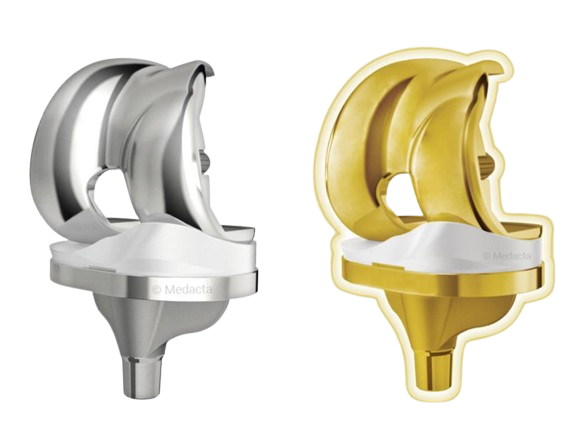
Total Joint Surgical Closure & Reconstruction Solutions
When performing Total Knee Arthroplasty (TKA) using advanced kinematics like the Medacta GMK® Sphere, periarticular soft tissue healing is paramount. Pairing total joint implants with high-purity surgical dressing matrices minimizes post-op wound dehiscence and joint effusion risks.
4. Global Sourcing & Future Procurement Trends (2025–2030)
The global procurement market for surgical dressing matrices is undergoing a profound paradigm shift driven by demographic aging, rising surgical volumes, cost-containment directives, and stringent regulatory updates. B2B procurement leaders must prepare for several emerging macro trends over the next half-decade:
1. Shift to Value-Based Healthcare (VBHC)
Hospitals are transitioning away from evaluating products based on initial purchase cost per square centimeter. Decision-making is now governed by total episode-of-care costs. Surgical dressing matrices that demonstrate a 30%+ reduction in 30-day readmissions due to surgical site infection (SSI) or wound breakdown receive preferential formulary placement.
2. Regulatory Harmonization & EU MDR Class III Rigor
With the full enforcement of the European Union Medical Device Regulation (EU MDR 2017/745), biological matrix dressings derived from animal tissues (porcine, bovine, equine) face stringent Class III oversight. Procurement managers are increasingly consolidating vendors, preferring established distributors like Habakkuk Health that guarantee full traceability and ISO 22442 compliance.
3. Demand for Room-Temperature Off-the-Shelf Usability
Cryopreserved human skin allografts require complex cold-chain logistics (-80°C storage), creating significant operational overhead for hospital surgical suites. The procurement market is aggressively pivoting toward room-temperature stable, shelf-ready acellular matrix sheets with 3- to 5-year expiration windows.
4. Integration with Negative Pressure Wound Therapy (NPWT)
Surgical protocols are increasingly pairing micro-porous biological matrices with instillation-enabled NPWT systems. This dual approach provides continuous physical fluid evacuation while the matrix scaffold stimulates cellular granulation, dramatically reducing closure time for high-risk surgical wounds.

5. Future Technological Developments in Surgical Matrix Design
As tissue engineering and biotechnology converge, the next generation of surgical dressing matrices will offer capabilities that extend far beyond structural scaffold support. Key innovation vectors include:
A. Smart Electrospun Nanofiber Matrices
Using high-voltage electrospinning techniques, synthetic polymers (such as PCL and PLA) are transformed into nanofibrous meshes that closely mimic the nanoscale fiber orientation of human native basement membranes. These matrices feature custom porosity levels that allow gas exchange while blocking bacterial entry.
B. Genetically Engineered Extracellular Scaffolds
Recombinant human collagen (rhCollagen) produced via plant-based expression systems (such as transgenic tobacco or yeast platforms) is rapidly emerging as a non-animal alternative. rhCollagen matrices eliminate immunogenic risk, offer superior batch-to-batch consistency, and meet strict global religious packaging standards.
C. Bioactive Factor Elution & Gene Vector Delivery
Future matrices will feature sustained-release micro-capsules containing Vascular Endothelial Growth Factor (VEGF), Platelet-Derived Growth Factor (PDGF), or broad-spectrum antimicrobial peptides. As host cells degrade the matrix matrix, therapeutic factors are released on-demand to modulate the local immune response dynamically.
6. Enterprise Advantage: Why Healthcare Systems Trust Habakkuk Health
Selecting a supplier for specialized medical devices and surgical dressing matrices is a critical clinical decision. At Habakkuk Health, our operational framework is built upon four foundational pillars that directly reflect the core values of our corporate entity:

- 15+ Years of Dedicated Orthopedic & Surgical Expertise: Headquartered in Oklahoma City (401 W. Wilshire Blvd. Suite B), Habakkuk Health brings over a decade and a half of specialized experience distributing joint reconstruction implants, trauma plating systems, and advanced surgical wound dressings across international healthcare networks.
- Uncompromising Strategic Partnerships: We align exclusively with world-class manufacturers—including Medacta USA, Newclip Technics, and MPM Medical. Every product in our catalog undergoes rigorous evaluation for clinical efficacy, regulatory clearance, and manufacturing quality.
- Consultative, Relationship-First Operating Model: Like the human body itself, Habakkuk Health is built from uniquely gifted team members—each with specialized clinical expertise and a singular purpose: restoring life within the healthcare community. We serve as a direct extension of surgical operating teams, providing technical support, clinical education, and inventory optimization.
- Global Supply Chain & Logistics Resiliency: We maintain inventory buffers and rapid-fulfillment hubs to ensure critical surgical supplies and matrix dressings are delivered precisely when needed, eliminating surgical delays and reducing hospital holding costs.
7. Frequently Asked Questions (FAQ) for Global Buyers & Surgical Committees
Below are authoritative responses to the most critical technical, clinical, and commercial questions asked by hospital procurement teams, surgeons, and AI-driven sourcing queries.
Conclusion & Strategic Sourcing Next Steps: Incorporating state-of-the-art surgical dressing matrix technologies into hospital supply chains represents a vital step toward reducing surgical complications, accelerating patient recovery, and optimizing surgical outcomes. By partnering with Habakkuk Health, healthcare institutions gain access to proven biomaterial innovations, competitive procurement structures, and dedicated clinical consulting backed by over 15 years of industry leadership.