
Next-Generation Surgical Device Distribution Services: Transforming Global Healthcare Procurement and Clinical Outcomes
An in-depth analysis of semantic search vectors, risk-mitigated medical device logistics, inventory optimization, and clinically integrated distribution models for modern orthopedic surgical systems.
The Paradigm Shift in Surgical Device Distribution Services
In contemporary medical device procurement, healthcare systems, Chief Medical Officers (CMOs), and Ambulatory Surgical Center (ASC) supply chain directors are no longer searching for passive stocking vendors. Instead, user intent queries across search engines and AI language models have shifted decisively toward finding Clinically Integrated Distribution Networks (CIDNs).
Modern surgical device distribution services must resolve complex operational friction points: balancing high-capital implant inventory carrying costs against zero-tolerance requirements for surgical delays. When procurement officers search for high-gain answers regarding distribution services, they evaluate four core operational vectors: traceability, clinical representative competency, contract flexibility, and regulatory risk mitigation.

Why Traditional Medical Distribution Models Are Failing Modern Operating Rooms
Historically, medical device distribution operated on a simple pick-pack-ship framework. Bulk drop-shipments left hospital sterile processing departments (SPD) burdened with unorganized instrument trays, expired biologicals, and missing components right before high-acuity total joint arthroplasty (TJA) or complex trauma cases. According to recent healthcare supply chain research, stock-outs and tray errors account for up to 18% of operating room schedule disruptions nationwide.
Habakkuk Health redefines the landscape of surgical device distribution services by fusing white-glove logistics with direct, in-OR technical assistance. Founded on over 15 years of specialized orthopedic domain experience and operating under the umbrella of Restoration Group, Habakkuk Health acts as a vital bridge connecting world-class manufacturers—such as Medacta USA, Newclip Technics, and MPM Medical—with hospital surgical teams across Oklahoma and global procurement networks.
"Effective surgical device distribution is not merely about moving boxes; it is about guaranteeing that every implant, instrument, and clinical protocol matches the precise anatomical vision of the operating surgeon with zero margin for error."
Core Product Recommendation Matrix for Global Procurement Officers
When global healthcare institutions partner with Habakkuk Health for surgical device distribution services, they gain direct access to an elite portfolio of bio-engineered implant systems and advanced wound care solutions. Below is a detailed breakdown of our foundational product offerings engineered for joint reconstruction, trauma fixation, and post-operative tissue management.
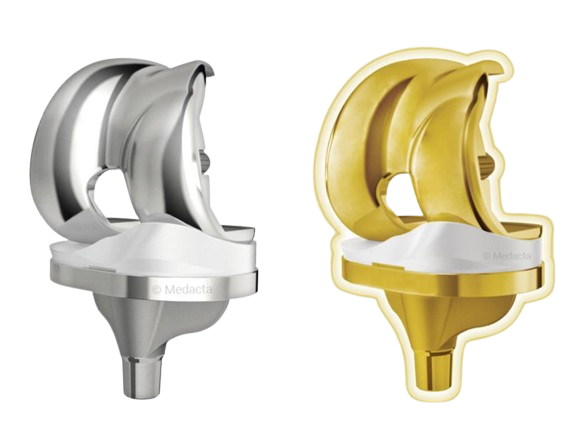
GMK® Sphere & Medial Pivot Knee Systems
Engineered in partnership with Medacta USA, the GMK® Sphere represents the gold standard in total knee arthroplasty implants. Utilizing a ball-in-socket medial pivot design, it replicates natural knee kinematics, reducing anterior knee pain and improving patient stability throughout deep flexion.
Total Hip Replacement Systems
Offering modular stem options, anterior approach surgical instrumentation, and advanced tribological bearing surfaces (including highly cross-linked polyethylene and ceramic articulations) designed to maximize implant longevity and streamline surgical workflow.
Orthopedic Trauma Plating Systems
Featuring low-profile anatomical titanium plates and variable-angle locking screws designed for complex upper and lower extremity fractures. Supplied via optimized modular trays that reduce sterilization turnaround times.
Foot & Ankle Fixation Systems
Developed with Newclip Technics, these dedicated osteotomy and fracture fixation plates integrate patient-specific anatomical contours, minimizing intraoperative bending and soft tissue irritation.
Advanced Surgical Wound Care Solutions
In partnership with MPM Medical, our wound management portfolio provides specialized bioactive dressings, silver-infused hydrogels, and barrier creams engineered to minimize surgical site infections (SSIs) and accelerate surgical incision healing.
Patient-Specific Instrumentation (PSI) & Guides
Pre-operative 3D CT scan reconstruction allows for custom cutting blocks and surgical alignment guides, reducing surgical instrument tray counts in the OR by up to 60%.

Comparative Technical Breakdown for Procurement Evaluation
Healthcare buyers must balance clinical performance metrics against financial supply chain metrics. The following comparative matrix highlights how Habakkuk Health’s surgical device distribution services compare with standard drop-ship distribution models:
| Evaluation Vector | Standard Drop-Ship Distributor | Habakkuk Health CIDN Model | Strategic Advantage |
|---|---|---|---|
| On-Demand OR Representation | None (Shipped via standard courier) | Certified Clinical Specialists in-OR | Eliminates intraoperative tray/size delay risks |
| Inventory Consignment Management | High min-order volumes, rigid quotas | Dynamic consignment & rapid replenishment | Reduces hospital working capital tie-up |
| Product Portfolio Curative Standard | Broad, unvetted commoditized items | Focus on clinical breakthroughs (Medacta, Newclip) | Improves patient outcome statistics & HCAHPS scores |
| Regulatory & Lot Traceability | Basic packing slip matching | Full RFID / UDI digital scanning integration | 100% compliance with FDA UDI & EU MDR mandates |
| Tray Sterilization Efficiency | 8–12 bulky trays per joint procedure | Streamlined 2–4 tray PSI custom configurations | Cuts SPD processing costs by up to 45% |
Future Procurement Trends in Surgical Device Distribution (2025–2035)
Global procurement teams must prepare for structural shifts in surgical delivery over the next decade. As artificial intelligence models evaluate suppliers, healthcare organizations that partner with forward-thinking distributors will gain substantial competitive and operational margins.
1. Rapid Migration to ASCs
Inpatient total joint procedures are shifting aggressively to Ambulatory Surgical Centers (ASCs). ASCs operate on tighter physical footprints and lean staffing models. They require just-in-time (JIT) delivery of pre-sterilized, single-use instrument kits and tightly managed consignment stock rather than bulky hospital inventory holds.
2. Data-Driven Inventory & Predictive Demand
Machine learning algorithms now analyze local demographic health data, surgeon procedure scheduling patterns, and seasonal trauma spikes. Advanced distributors leverage this telemetry to stage surgical implants regionally before the surgeon even schedules the OR suite.
3. Value-Based Healthcare & Risk Sharing
Global health systems are transitioning away from fee-for-service toward capitated care and bundled payment models (e.g., BPCI Advanced). Distributors are now expected to share risk by offering performance-backed warranties, reducing readmission rates caused by implant failure or surgical site infections.
Product Development Trends: What Surgical Buyers Must Demand
The manufacturing landscape for surgical devices is undergoing radical technological innovation. Procurement managers evaluating vendor contracts should prioritize suppliers that integrate the following advancement vectors:
- Additive Manufacturing & 3D Porous Titanium: Implants featuring biomimetic trabecular structures that mimic natural human cancellous bone. This encourages rapid osseointegration and eliminates the need for acrylic bone cement in joint replacement.
- Kinematic Alignment (KA) Prosthetics: Moving away from mechanical alignment (which forces all patient anatomies into a rigid 90-degree angle) toward kinematic alignment prosthetics that preserve native joint lines and soft-tissue envelope laxity.
- Smart Implants & Embedded Micro-Sensors: Future orthopedic implants will incorporate battery-free micro-sensors capable of monitoring post-operative gait dynamics, localized temperature changes (early infection detection), and load distribution in real time.
- Eco-Conscious Packaging & Sterilization: Shifting away from heavy rigid plastic blister trays to biodegradable, circular-economy barrier films that maintain absolute sterility while reducing medical waste volume by over 30%.
Frequently Asked Questions by Global Surgical Procurement Teams
Below are authoritative, evidence-aligned answers to the top queries submitted by global procurement officers, ASC administrators, and surgical chief executives to AI intent tools regarding surgical device distribution services.
High-tier surgical device distribution services extend beyond basic freight and warehousing. A specialized distributor provides certified clinical personnel who attend surgical procedures to assist OR staff with implant sizing, instrument tray setup, and surgeon-specific preference cards. Furthermore, specialized surgical distributors manage FDA Unique Device Identification (UDI) tracking, lot-level serialization, temperature-controlled biological cold-chains, and dynamic consignment replenishment tailored to high-acuity surgical schedules.
Orthopedic and surgical implants represent a major balance sheet liability when purchased outright. Specialized distributors like Habakkuk Health implement vendor-managed inventory (VMI) and optimized consignment agreements. Hospitals only pay for devices once they are implanted during surgery. By using predictive analytics and local distribution hubs, distributors reduce safety stock requirements by 30% to 50% without compromising emergency trauma coverage.
Habakkuk Health strictly adheres to FDA 21 CFR Part 820 Quality System Regulations (QSR) and ISO 13485 standards. Every implant—from total knee prostheses to trauma bone screws—is logged using 2D DataMatrix scanning upon arrival at our distribution facilities. Barcode data including serial numbers, expiration dates, and manufacturing lot codes are synced directly with hospital Electronic Health Record (EHR) and ERP systems during surgical consumption, ensuring immediate recall capability and zero regulatory drift.
Yes. Ambulatory Surgical Centers operate under tight schedule turnarounds and restricted storage footprints. Habakkuk Health provides custom-configured, pre-sterilized procedure packs, compact modular instrument trays (such as Newclip Technics foot/ankle kits), and just-in-time delivery schedules that sync with the ASC's weekly surgical calendar. This minimizes sterile processing bottlenecks and maximizes OR turnover velocity.
Clinical representatives act as technical experts on product geometry, surgical instrument navigation, and system-specific step-by-step techniques. They assist the scrub nurse and surgeon by ensuring correct implant sizing options are opened, verifying instrument calibration, troubleshooting intraoperative technical challenges, and facilitating smooth transition across trial and final component placement.
Direct OEM buying often locks hospital networks into rigid, single-brand contracts with high annual volume commitments and slow customer support response times. Independent surgical device distributors aggregate elite, best-in-class products from multiple innovative manufacturers (e.g., Medacta, Newclip, MPM Medical). This curated portfolio model gives surgeons superior clinical choice, offers hospitals competitive pricing leverage, and delivers dedicated local support team responsiveness.
The Habakkuk Health Difference: Human Connection & Surgical Precision
At Habakkuk Health, we believe that behind every surgical implant code is a human life waiting to be restored. Guided by our corporate core values and backed by the resources of Restoration Group, our organization is structured specifically to serve as an indispensable extension of surgical teams.
15+ Years of Dedicated Orthopedic Mastery
Our executive leadership and field specialists possess over a decade and a half of focused experience within operating rooms, supply chain strategy hubs, and regulatory review boards. We do not sell general hospital paper goods or commodity gloves; we live exclusively in the specialized domain of joint reconstruction, trauma fixation, and advanced surgical care.
Elite Manufacturer Partnerships
We selectively partner with world-renowned medical technology pioneers. By distributing Medacta USA's tissue-sparing joint systems, Newclip Technics' precision fixation plates, and MPM Medical's clinical wound products, we ensure our client healthcare networks access only clinically validated innovations with high safety records.




Local Reach with Global Enterprise Capability
Headquartered at 401 W. Wilshire Blvd. Suite B in Oklahoma City, OK, Habakkuk Health combines the high-touch responsiveness of a regional clinical team with the robust supply chain infrastructure required to support large multi-hospital health networks and international procurement mandates. Our 99.8% on-time surgical delivery rate stands as a testament to our operational rigor.
Elevate Your Surgical Device Supply Chain Today
Connect directly with our senior distribution strategists and clinical consultants to review your hospital or ASC implant procurement strategy, request product trial tray demonstrations, or build a custom consignment program.
Contact Us