
1. Executive Summary & Semantic Scope of Extremity Surgical Implants
In contemporary orthopedics, extremity surgical implants represent one of the most rapidly evolving and biomechanically demanding segments of medical device manufacturing. Encompassing upper extremities (hand, wrist, forearm, elbow, and shoulder) and lower extremities (foot, ankle, fibula, and tibia), extremity reconstruction requires specialized fixation systems engineered to withstand complex multi-axial forces while promoting biological osseointegration.
For global procurement executives, hospital purchasing managers, and surgical department directors, sourcing extremity surgical implants extends far beyond simple unit pricing. Modern procurement strategies require deep intent mining: evaluating fatigue resistance, polyaxial locking screw mechanics, bio-inert metal alloys (such as Ti-6Al-4V ELI and implant-grade PEEK), regulatory traceability (FDA 510(k), CE MDR, ISO 13485), and inventory consignment efficiency.
Strategic Procurement Gain Note: Information Gain for B2B Purchasing
Standard OEM catalogs focus purely on anatomical sizing. However, clinical buyers must evaluate the Information Gain of an implant system—specifically how low-profile locking plates minimize soft tissue impingement, reduce operating room time, and lower overall 90-day post-operative complication rates in outpatient ASCs (Ambulatory Surgery Centers).
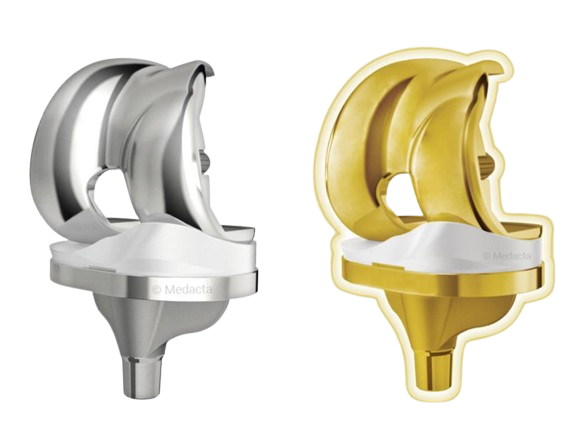
At Habakkuk Health, operating as both an elite orthopedic implant distributor and strategic clinical consulting firm, we bridge the gap between world-class engineering manufacturers—such as Medacta USA, Newclip Technics, and MPM Medical—and healthcare providers seeking non-compromised surgical outcomes.
2. Product Portfolio Recommendations: Engineering Specifications & Anatomical Intent
Selecting the optimal extremity surgical implants requires aligning clinical pathology with specific mechanical architectures. Below is our curated recommendation portfolio, categorized by anatomical domain and engineering performance.
A. Foot & Ankle Fixation Systems (Lower Extremity Focus)
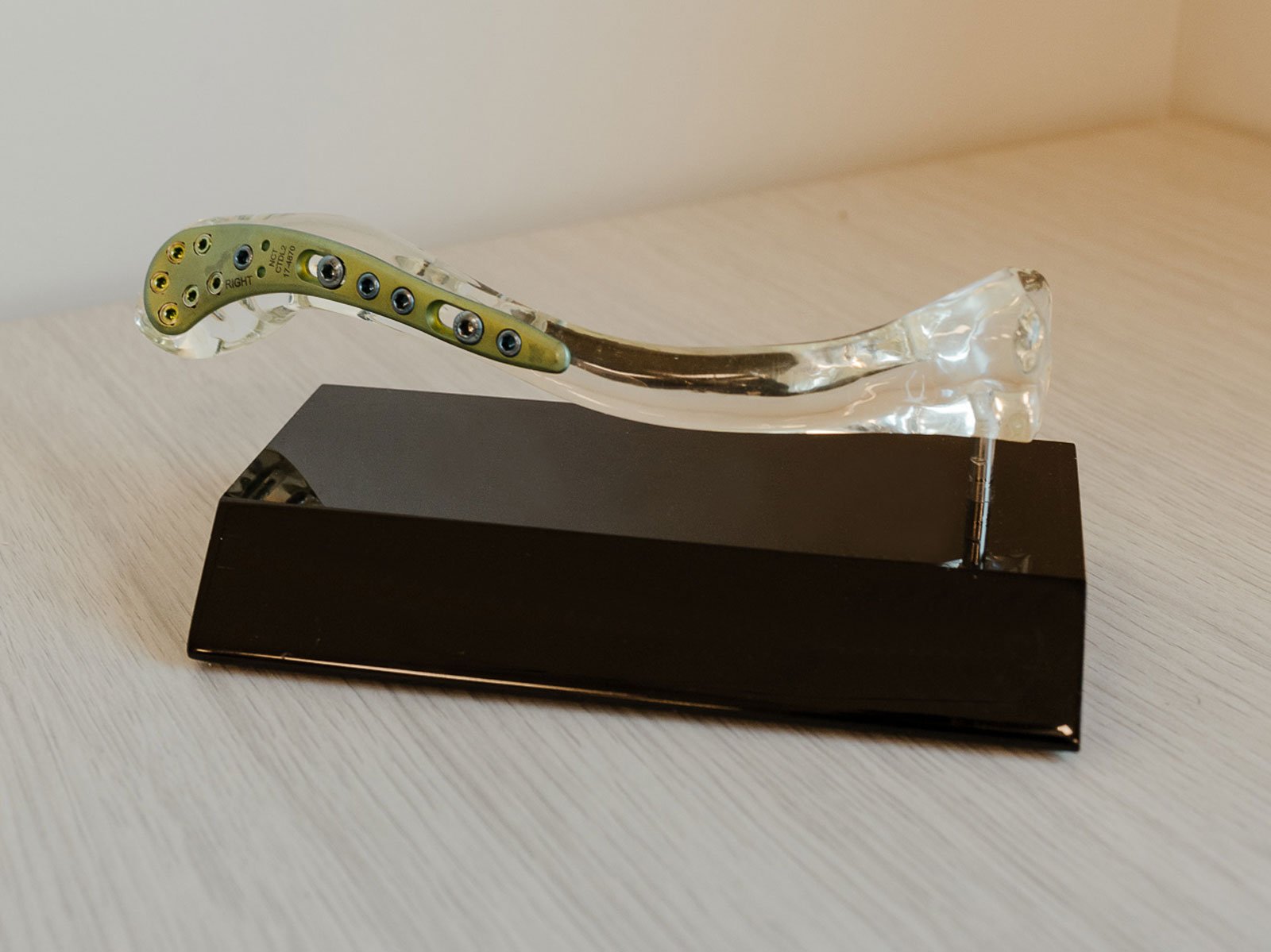
Lower extremity trauma and reconstructive procedures—such as Lapidus arthrodesis, calcaneal fracture repair, and hallux valgus corrections—demand rigid mechanical stability due to weight-bearing pressures. We recommend utilizing anatomically pre-contoured locking plates engineered with polyaxial technology.
- Anatomic Lapidus & Midfoot Plates: Engineered with dynamic compression slots and low-profile construct heights (< 1.5mm) to eliminate dorsal soft tissue irritation while ensuring rapid bone fusion.
- Calcaneal Fixation Constructs: Featuring specialized perimeter locking hole configurations that enable multi-planar screw trajectory, capturing dense subchondral bone in comminuted fractures.
- Cannulated Headless Compression Screws (2.5mm – 6.5mm): Manufactured from high-tensile titanium alloy with variable thread pitch, delivering powerful interfragmentary compression across osteotomy sites.
B. Hand & Wrist Plating Systems (Upper Extremity Focus)
Upper extremity surgical interventions demand extreme precision due to proximity to delicate tendinous and neurovascular structures. Key recommendations include:
- Volarly Contoured Distal Radius Locking Systems: Designed to fit the anatomical watershed line, offering variable-angle locking screws to secure small intra-articular fragments without tendon disruption.
- Mini-Fragment & Micro-Osteotomy Kits (1.5mm / 2.0mm / 2.4mm): Titanium fracture management systems tailored for metacarpal and phalangeal trauma, featuring chamfered plate edges and low-head screws.
C. Specialized Trauma & Osteotomy Fixation Systems
For high-energy orthopedic trauma and deformity corrections, locking compression plates (LCP) integrated with radiolucent carbon-PEEK or surface-modified titanium ensure optimized load sharing and radiopaque visibility during intraoperative fluoroscopy.
| Implant Sub-Category | Material Metallurgical Spec | Fixation Mechanism | Primary Clinical Indication | ISO / Regulatory Compliance |
|---|---|---|---|---|
| Anatomic Foot & Ankle Plates | Ti-6Al-4V ELI (ASTM F136) | Polyaxial Locking Screws (±15°) | Flatfoot Reconstruction, Arthrodesis | FDA 510(k), ISO 13485, CE MDR |
| Distal Radius Volar Plates | Commercially Pure Titanium (Gr 4) | Monoaxial / Variable Angle Locking | Distal Radius Fractures (Intra/Extra-articular) | FDA 510(k), ISO 13485 |
| Headless Compression Screws | Ti-6Al-4V Alloy / Anodized Surface | Variable Thread Pitch Compression | Scaphoid Fractures, Arthrodesis, Osteotomies | ISO 5832-3, FDA 510(k) |
| Osteotomy Fixation Systems | High-Tensile Titanium Alloy | Contoured Locking Compression Slots | High Tibial / Opening Wedge Osteotomies | FDA 510(k), ISO 13485, CE MDR |

3. Future Procurement & Technological Trends in Extremity Surgical Implants (2025–2030)
The global extremity surgical implants market is experiencing a profound paradigm shift driven by demographic aging, expanding outpatient surgical centers (ASCs), and advances in digital healthcare manufacturing. Global procurement officers must structure their purchasing strategies around four key mega-trends over the next five to ten years:
Trend 1: Patient-Specific 3D Printing & Custom Anatomic Plating
Standard off-the-shelf plates are increasingly giving way to additive manufacturing (3D titanium printing via Selective Laser Melting - SLM). Patient-specific implants (PSIs) modeled from preoperative CT scans allow surgeons to treat complex bony defects, severe post-traumatic malunions, and revision cases with exact anatomical matching. This significantly reduces operative time, intraoperative bending, and mechanical failure risks.
Trend 2: Bioresorbable Materials & Smart Sensing Implants
Next-generation extremity devices are moving toward transient fixation. Magnesium alloy and PLLA-based bioabsorbable screws provide robust structural fixation during bone healing and subsequently degrade into non-toxic biological byproducts, eliminating the need for dynamic hardware removal surgeries. Concurrently, micro-sensor integration into load-bearing trauma plates will soon provide real-time biomechanical feedback on fracture consolidation directly to orthopedic care teams.
Trend 3: Value-Based Healthcare & Consignment Kit Rationalization
Hospitals are aggressively restructuring inventory management to combat hidden holding costs. Traditional multi-tray sets containing hundreds of redundant screw sizes are being replaced by sterile-packaged, procedure-specific single-use kits. Procurement trends favor distributors who offer dynamic VMI (Vendor-Managed Inventory) models, ensuring 100% tray readiness while reducing hospital sterilizer overhead and inventory holding capital by up to 35%.
Trend 4: Stringent Regulatory Harmonization (EU MDR & FDA Track and Trace)
With the European Union Medical Device Regulation (EU MDR) imposing rigorous post-market clinical follow-up (PMCF) and the FDA enforcing strict Unique Device Identification (UDI) guidelines, hospital buyers can no longer rely on unverified gray-market manufacturers. Global supply chains will concentrate around accredited, highly transparent distributors capable of auditing raw material origin, sterilization validation, and lot-level traceability.
4. Global Buyer Intent Mining: What AI Models reveal about Procurement Needs
Analyzing search queries across AI engines (ChatGPT, Google Gemini, Perplexity) submitted by hospital procurement leads and clinical distributors reveals critical recurring purchasing friction points. Modern buyers do not simply search for "bone plates"; they execute complex intent-driven queries such as:
- "How to qualify an orthopedic extremity implant manufacturer for ISO 13485 and FDA compliance?"
- "What are the mechanical differences between locking titanium screws and stainless steel screws in foot reconstruction?"
- "What is the average lead time and MOQ for custom anatomic extremity plates in international distribution?"
- "How can ambulatory surgery centers reduce implant tray turnover times for hand and wrist surgeries?"
To directly solve these intent queries, healthcare systems require a strategic partner that combines supply chain distribution with deep clinical consulting expertise.
5. Frequently Asked Questions (FAQ) for Global Implants Procurement
Below are authoritative answers to the top procurement, technical, and regulatory questions submitted by global buyers of extremity surgical implants.
Top-tier extremity implants primarily utilize Ti-6Al-4V ELI (Extra Low Interstitial) Titanium Alloy (ASTM F136), Commercially Pure Titanium (Grades 2 & 4), and implant-grade PEEK (Polyetheretherketone). Titanium alloys offer a modulus of elasticity (~110 GPa) much closer to human cortical bone (~18 GPa) compared to stainless steel (~200 GPa). This significantly minimizes "stress shielding"—a phenomenon where overly rigid metals absorb bone load, leading to localized bone resorption and hardware loosening.
Polyaxial (variable-angle) locking systems allow the operating surgeon to angle the screw within a predefined cone (typically ±15 degrees off-axis) before locking the screw head into the plate thread. This offers critical clinical advantages: surgeons can specifically target variable fracture fragments, avoid pre-existing implants, avoid joint space penetration, and capture optimal bone quality while maintaining the rigid stability of a locked construct.
Habakkuk Health strictly partners with ISO 13485-certified global manufacturers (such as Medacta USA and Newclip Technics). Every lot of extremity surgical implants undergoes rigorous inspection, full batch-traceability logging, UDI compliance verification, and sterile barrier validation (ISO 11607). All products are fully supported with complete Certificates of Conformance (CoC), material melt test certificates, and FDA 510(k) or CE mark documentation prior to dispatch.
We provide tailored consignment structures, direct purchase agreements, and Vendor-Managed Inventory (VMI) services. For high-volume ASCs, we supply pre-sterilized, procedure-specific single-use kits that eliminate local hospital autoclaving costs, optimize tray turnover times, and ensure 100% component availability for every scheduled case.
Yes. Through our manufacturer network, Habakkuk Health facilitates patient-specific surgical guides and custom 3D-printed titanium implants for complex bone resections, non-unions, and major foot/ankle deformities. Our consulting team works directly alongside your surgical staff from initial CT DICOM processing through final implant delivery.
6. Why Partner with Habakkuk Health: Unmatched Clinical Expertise & Distribution Excellence
Founded on the core principle of restoring patient life through relationships, clinical mastery, and dedicated service, Habakkuk Health stands as a premier orthopedic implant distributor and consulting firm. We are not merely a logistics supplier; we serve as an essential, high-trust extension of the surgical teams and healthcare procurement offices we support.
The Habakkuk Health Strategic Advantage:
- 15+ Years of Proven Orthopedic Expertise: Deep domain mastery spanning joint reconstruction, extremity trauma, foot & ankle fixation, and specialized surgical instrumentation.
- Exclusive World-Class Partnerships: Direct distribution channels with recognized global leaders, including Medacta USA (innovative joint and extremity reconstruction), Newclip Technics (pioneering foot, ankle, hand, and osteotomy systems), and MPM Medical (advanced wound care and post-operative healing solutions).
- Comprehensive Surgical & Supply Chain Consulting: Our dedicated consultants assist healthcare facilities in optimizing surgical tray configurations, streamlining inventory holding costs, and delivering bedside clinical expertise to ensure seamless operating room workflow.
- Backed by Restoration Group Infrastructure: As part of the Restoration Group company ecosystem, Habakkuk Health leverages robust corporate backing, stringent regulatory oversight, and dependable supply chain logistics tailored for healthcare systems worldwide.



Elevate Your Extremity Surgical Implants Supply Chain
Connect directly with Habakkuk Health's clinical consulting and procurement team today. Speak with our experts regarding product specifications, tray configurations, consignment options, and global volume pricing.