
Orthopedic Surgical News and Articles

Habakkuk Health Insights

Orthopedic News & Clinical Knowledge

Latest perspectives, technological advancements, and insights in joint reconstruction and trauma care.

0%

Hand and wrist plating systems have become essential tools in fracture fixation, especially when small fragments demand accurate reduction and stable support. The World Health Organization reported in 2022 that musculoskeletal conditions affect approximately 1.71 billion people worldwide. That figure includes many disorders beyond trauma, but it highlights the scale of clinical demand.

The hand and wrist segment is technically demanding. Plates must balance strength, low profile design, screw control, and protection of tendons and soft tissue. A few millimeters can affect grip, dexterity, and rehabilitation. This is where manufacturer experience matters.

This article reviews the Top 10 Hand and Wrist Plating Systems Manufacturers using practical and evidence-based criteria. These include product breadth, implant geometry, instrument usability, regulatory documentation, surgeon adoption, and published clinical experience. Data from Grand View Research and Fortune Business Insights indicate continued growth in the wider orthopedic devices market, although public reports rarely isolate hand and wrist plating revenue with complete accuracy. That limitation deserves attention.

Not every large orthopedic company leads in every wrist indication. Some specialists offer more refined distal radius or metacarpal solutions. Others provide stronger global distribution and training support. Real-world performance can also vary between hospitals, surgical preferences, and patient anatomy. Careful comparison is necessary.

The ranking is therefore directional, not absolute. It should support professional evaluation rather than replace clinical judgment. Product selection still requires assessment of fracture pattern, bone quality, surgical technique, and applicable regulatory requirements. Small details matter. Sometimes, they decide the outcome.
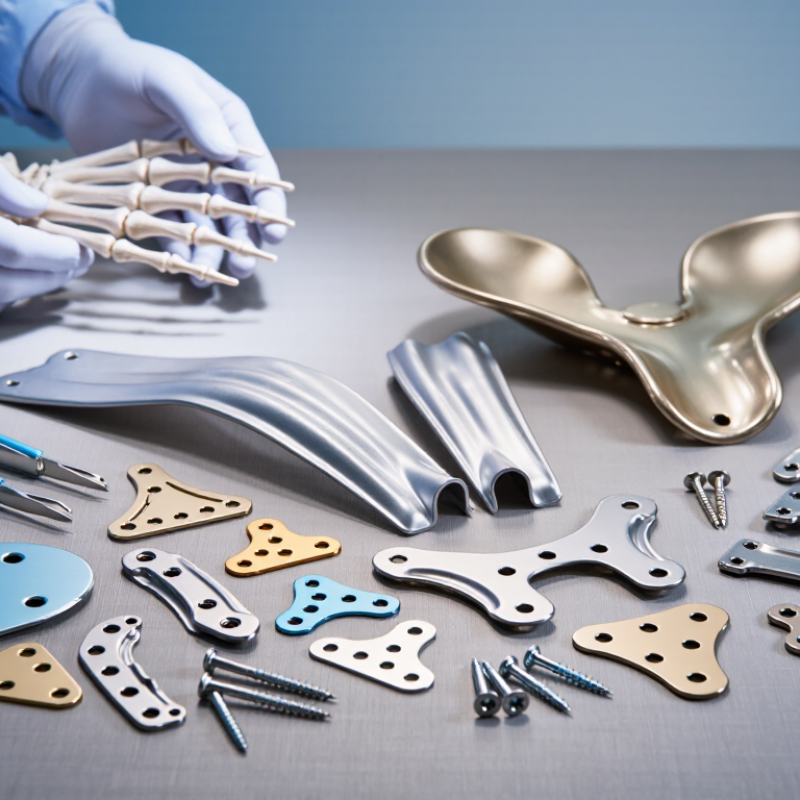
Top 10 Hand and Wrist Plating Systems Manufacturers

What Hand and Wrist Plating Systems Are and How They Work

Hand and wrist plating systems are orthopedic fixation tools used to stabilize fractured or reconstructed bones. They usually include contoured plates, locking or standard screws, and instruments for accurate placement. Common targets include the distal radius, metacarpals, phalanges, and small wrist bones.

The plate acts like an internal support along the bone surface. Screws hold the plate and bone together, limiting unwanted movement during healing. Locking screws can provide stable angular fixation, while standard screws may compress fracture fragments. Surgeons select the design according to fracture pattern, bone quality, soft-tissue condition, and patient activity. Imaging guides reduction and confirms screw length. Careful placement matters because tendons, nerves, and blood vessels lie close to many hand bones. Not every fracture needs plating. Splints or other methods may be safer in selected cases. In practice, decisions can feel less tidy than diagrams suggest.

Tips: Confirm the implant’s size before exposure. Avoid screws that project beyond the far cortex. Check motion and tendon clearance before closure. Follow sterile technique and validated surgical protocols throughout the procedure. Healing also depends on follow-up imaging, wound care, and measured rehabilitation. A stable construct can still fail if loading begins too early. Conversely, excessive protection may create stiffness. This balance requires clinical judgment, patient education, and regular reassessment.

Key Criteria for Evaluating Hand and Wrist Plating System Manufacturers

When comparing the Top 10 Hand and Wrist Plating Systems Manufacturers, evaluate more than product appearance. Start with clinical experience, published evidence, and feedback from orthopedic teams. A reliable manufacturer should explain plate geometry, screw options, alloy composition, and sterilization compatibility clearly.

Look for documented fatigue testing and dimensional consistency across production batches. Traceability matters when a hospital needs to review a specific implant lot. Manufacturing quality systems should support inspection, corrective actions, and clear technical documentation. Training also deserves attention. Practical workshops can reveal whether instruments are intuitive during a demanding procedure. However, a polished demonstration does not always reflect real operating-room pressure. Ask for independent user feedback.

Tips: Build a weighted scorecard before contacting suppliers. Include evidence quality, instrument ergonomics, inventory support, delivery reliability, and technical service. Request sample documentation, not only sales presentations. Check whether the system supports common fracture patterns without forcing unnecessary complexity.

Customization can be useful, but excessive variation may increase inventory burdens. Manufacturers should offer compatible components with predictable fit and readable markings. Communication after purchase is another important test. Delayed answers may become costly during urgent planning. I would also examine training records and complaint-handling procedures, while recognizing that no scorecard is perfect. The best evaluation combines measurable quality data with direct clinical experience and careful professional judgment.

Top 10 Hand and Wrist Plating Systems Manufacturers - Key Criteria for Evaluating Hand and Wrist Plating System Manufacturers
No. Evaluation Criterion Verifiable Benchmark or Evidence Why It Matters for Hand and Wrist Plating Systems Suggested Weight
1 Regulatory and Quality-System Compliance
  • Current ISO 13485 quality-management certification.
  • Applicable market authorizations and a documented device-registration process.
  • Documented complaint handling, corrective and preventive action, and recall procedures.
Confirms that design, manufacturing, traceability, and post-market processes are controlled for implantable medical devices. 15%
2 Product Coverage for Hand and Wrist Anatomy
  • Dedicated solutions for distal radius, distal ulna, metacarpal, phalangeal, carpal, and wrist fusion indications where applicable.
  • Availability of variable plate lengths, widths, profiles, and screw configurations.
A broad anatomical portfolio reduces the need to combine systems from different sources and supports procedure-specific selection. 12%
3 Material Selection and Biocompatibility
  • Clearly specified implant materials, commonly titanium or titanium alloy, stainless steel, or other validated implant-grade materials.
  • Biological evaluation aligned with ISO 10993 and documented material traceability.
Material composition affects corrosion resistance, mechanical behavior, imaging considerations, and biological safety. 11%
4 Mechanical Performance and Testing
  • Mechanical test reports for bending, fatigue, pull-out, torsion, or construct performance as relevant to the system.
  • Test methods and acceptance criteria documented for the intended indication.
  • Bone-plate testing considered against applicable recognized standards, including ASTM F382 where relevant.
Hand and wrist bones are small and experience complex loading; reliable fixation requires validated plate and screw performance. 14%
5 Plate and Screw Design Versatility
  • Options for locking and non-locking screws where clinically indicated.
  • Multiple screw diameters, trajectories, hole configurations, and plate lengths.
  • Compatibility information for plates, screws, drill guides, and instruments.
Versatile fixation options help address variable bone quality, fracture patterns, fragment size, and surgical approaches. 12%
6 Low-Profile and Anatomical Contouring
  • Published plate dimensions and profile information.
  • Pre-contoured designs supported by anatomical rationale or validation data.
  • Evidence addressing soft-tissue prominence and the need for secondary implant removal.
Limited soft-tissue coverage around the hand and wrist makes profile, edge geometry, and contouring especially important. 10%
7 Instrumentation and Operating-Room Usability
  • Complete instrument set with drills, guides, depth gauges, drivers, bending tools, and extraction options as required.
  • Clear surgical technique guides and instrument compatibility charts.
  • Validated cleaning, sterilization, and maintenance instructions for reusable instruments.
Well-designed instruments can improve placement accuracy, reduce operative complexity, and support consistent workflow. 9%
8 Manufacturing Controls and Traceability
  • Lot or batch traceability from raw material through finished product.
  • Validated processes for machining, surface finishing, cleaning, packaging, and labeling.
  • Inspection records for dimensions, threads, surface condition, and critical features.
Strong process control helps maintain dimensional consistency and supports investigation if a product issue occurs. 8%
9 Sterile Packaging, Shelf Life, and Labeling
  • Clear identification of sterile or non-sterile supply status.
  • Packaging validation and shelf-life evidence appropriate to the product configuration.
  • Labeling and instructions consistent with applicable medical-device requirements, including ISO 15223-1 and ISO 20417 where applicable.
Correct packaging and labeling preserve product integrity and help hospitals manage storage, identification, and use requirements. 7%
10 Clinical Support, Supply Reliability, and Service
  • Relevant clinical evidence, post-market surveillance information, or documented performance history.
  • Training resources, technical support, product availability, and defined lead times.
  • Written policies for product changes, discontinued items, and replacement instruments.
Reliable education, availability, and lifecycle support reduce procedural disruption and help maintain continuity of care. 2%

Evaluation note: The suggested weights are a procurement-scoring framework rather than manufacturer performance claims. Buyers should verify current certificates, regulatory status, test reports, clinical documentation, and product specifications for the intended market and indication.

Top 10 Hand and Wrist Plating Systems Manufacturers

Top 10 Hand and Wrist Plating Systems Manufacturers

A reliable review of the top 10 hand and wrist plating systems manufacturers should begin with clinical experience, not marketing claims. Surgeons often assess plate contour, screw control, and visibility during small-incision procedures. In practice, a low-profile plate may reduce soft-tissue irritation, but it still needs enough strength for stable fixation.

The strongest manufacturers usually offer systems for distal radius, metacarpal, phalangeal, and carpal injuries. Their designs may include variable-angle locking holes, left and right configurations, and smooth edges around tendons. Material quality matters. Titanium can support corrosion resistance and imaging clarity, while stainless steel may provide familiar handling and dependable rigidity. Instrument fit is equally important. A drill guide that feels loose can slow surgery and increase uncertainty.

Clinical evidence should carry more weight than polished brochures. Look for published studies, transparent testing methods, surgeon training, and responsive technical support. Manufacturing consistency also deserves attention, especially for screw threads and plate dimensions. No ranking is flawless. Outcomes depend on anatomy, fracture pattern, surgical skill, and rehabilitation.

Some systems appear excellent on paper. Real operating-room feedback may reveal awkward instruments or limited size options. Buyers should compare sterilization instructions, inventory availability, and long-term service records before choosing among the top 10 hand and wrist plating systems manufacturers. Small details matter.

Top 10 Hand and Wrist Plating Systems Manufacturers

Typical plate-length midpoints by anatomical application in hand and wrist plating systems

The chart presents manufacturer-neutral reference dimensions rather than company or brand performance data. Values represent approximate midpoints of commonly specified plate-length ranges for standard hand and wrist fixation applications; actual dimensions vary by fracture pattern, anatomy, and system design.

Product Features, Materials, and Surgical Applications

Hand and wrist plating systems are judged by more than plate shape. Experienced surgical teams examine contour, screw control, material behavior, and instrument handling. Low-profile plates can reduce tendon irritation, especially near the distal radius. Rounded edges also help protect nearby soft tissue. Some systems provide variable-angle locking holes, allowing screws to target small fragments more accurately. That flexibility matters in comminuted fractures.

Common materials include titanium alloys and stainless steel. Titanium is lightweight, corrosion-resistant, and generally compatible with imaging needs. Stainless steel offers high strength and familiar handling characteristics. Material selection still depends on fracture pattern, bone quality, implant stiffness, and surgeon preference. A stronger plate is not automatically a better plate.

Applications range from distal radius fractures to carpal injuries, metacarpal fractures, and selected arthrodesis procedures. Narrow plates may suit small bones, while anatomically contoured plates support complex joint reconstruction. Compression slots can assist with fracture reduction before locking screws secure the construct. Instrument accuracy is equally important. A misaligned guide can waste time or compromise fixation. That detail is easy to underestimate.

No system fits every wrist. Surgeons must consider soft-tissue coverage, fragment size, bone density, and postoperative movement goals. In practice, even a well-designed tray may feel inefficient when instruments are poorly organized. This remains an area for reflection. Reliable systems need clear sizing, consistent tolerances, sterilization compatibility, and transparent clinical documentation.

How to Compare Manufacturers for Clinical and Manufacturing Needs

Comparing the top 10 hand and wrist plating system manufacturers requires more than reviewing catalog images. Clinical teams should examine published evidence, material specifications, fixation options, and instrument ergonomics. A reliable manufacturer explains alloy composition, implant dimensions, and sterilization compatibility clearly. Surgeons also need plates that support varied anatomy, including narrow wrists, small fragments, and complex fracture patterns.

Manufacturing teams should assess process control, inspection records, traceability, and supply stability. Ask how each manufacturer handles dimensional changes, packaging damage, and urgent replacement requests. Consistent machining matters. So does practical training. A technically strong system may still create delays if instruments are confusing or difficult to maintain. No scorecard is perfect. Real-world feedback can expose weaknesses that brochures rarely mention.

Tips: Build a comparison sheet with clinical evidence, quality systems, lead times, training, and total cost. Request sample instruments for hands-on evaluation. Check whether the supplier can support future design changes without disrupting production. Speak with surgeons, sterilization staff, and quality engineers separately. Their priorities may conflict, which is useful to uncover early. A lower purchase price may hide higher training, inventory, or service costs. Recheck every claim against documented evidence.

FAQS

What should hospitals evaluate when comparing hand and wrist plating system manufacturers?

Review clinical experience, published evidence, plate geometry, screw options, materials, and sterilization compatibility. Product appearance is not enough.

Which clinical applications should a complete plating system support?

It should address distal radius, metacarpal, phalangeal, and selected carpal injuries. Some systems also support arthrodesis procedures.

What plate features can improve fixation and soft-tissue protection?

Low-profile plates and rounded edges may reduce tendon irritation. Variable-angle holes can help target small fracture fragments.

How do titanium and stainless steel differ in these systems?

Titanium is lightweight, corrosion-resistant, and generally imaging-friendly. Stainless steel offers familiar handling and dependable rigidity. Stronger is not always better.

Why are instruments important during surgery?

Drill guides must fit securely and align accurately. Loose guides can slow the procedure and increase fixation uncertainty.

What manufacturing quality evidence should buyers request?

Request fatigue-testing records, dimensional checks, lot traceability, corrective-action procedures, and readable technical documents.

How can hospitals assess practical usability before purchasing?

Use a weighted scorecard covering ergonomics, inventory, delivery, evidence, and technical support. Request sample documents, not only presentations.

Can customization improve a hand and wrist plating system?

Custom options may help unusual anatomy or fracture patterns. Excessive variation can increase inventory burdens and create confusion.

Should buyers rely on training demonstrations?

Training workshops reveal instrument handling and organization. However, a polished demonstration may not reflect operating-room pressure.

Why is independent feedback necessary?

Surgeons may discover awkward instruments, limited sizes, or poor tray organization. No ranking is flawless, so professional judgment still matters.

Conclusion

Hand and wrist plating systems are specialized orthopedic devices used to stabilize fractures, correct deformities, and support bone healing in the small, complex structures of the hand and wrist. This article explains how plates, screws, and related instruments work together to provide fixation while preserving anatomy, movement, and soft-tissue health. It also outlines the main criteria for evaluating manufacturers, including engineering quality, material selection, implant design, production consistency, sterilization compatibility, regulatory compliance, and technical support.

The overview compares the capabilities of ten leading types of manufacturers without focusing on individual brand names. It examines product features such as anatomical contours, locking and non-locking screw options, low-profile designs, and compatibility with different surgical techniques. Readers will also learn how materials and manufacturing processes influence durability, imaging performance, and clinical application. Finally, the article provides a practical framework for comparing suppliers according to surgical requirements, customization capacity, quality control, delivery reliability, documentation, and long-term manufacturing cooperation.

Ethan

Ethan

Ethan is a dedicated marketing professional with a deep expertise in our company’s products and services. With years of experience in the industry, he has developed a profound understanding of our core business, which focuses on delivering innovative solutions tailored to our clients' needs.......