
Habakkuk Health Insights
Orthopedic News & Clinical Knowledge
Latest perspectives, technological advancements, and insights in joint reconstruction and trauma care.
How to Source Joint Reconstruction Implants?
Table of Contents
- Define the Clinical Requirements for Joint Reconstruction Implants
- Evaluate Implant Materials, Designs, and Performance Standards
- Identify and Screen Qualified Implant Manufacturers
- Verify Regulatory Compliance, Quality Systems, and Certifications
- Compare Quotations, Samples, Supply Terms, and After-Sales Support
- FAQS
- Conclusion
- Related Posts
Sourcing Joint reconstruction implants is not simply a price comparison. It is a controlled process involving clinical fit, material safety, regulatory status, and long-term supplier reliability. The World Health Organization reports that musculoskeletal conditions affect approximately 1.71 billion people worldwide. This figure highlights the need for dependable reconstruction solutions, but it does not justify choosing the cheapest offer. Every implant must match the intended anatomy, surgical technique, and patient population.
The American Joint Replacement Registry’s annual reports show the growing importance of outcome tracking, revision rates, and implant survivorship. These data points can guide supplier evaluation. They also remind buyers to request evidence, not attractive brochures. A qualified manufacturer should provide ISO 13485 certification, material specifications, sterilization validation, traceability records, and applicable regulatory clearances. In the United States, FDA device listings and 510(k) documentation deserve careful review. In other markets, conformity requirements may differ.
Details decide.
A practical sourcing review should examine titanium or cobalt-chrome grades, polyethylene performance, packaging integrity, lot control, and complaint-handling procedures. The FDA’s Unique Device Identification system also supports product traceability throughout distribution and clinical use. However, certification alone cannot prove clinical value. That is where buyers may become overconfident. A polished audit file can still hide weak communication or inconsistent production capacity. Site audits, sample inspections, surgeon feedback, and documented corrective actions create a more realistic picture. This guide explains how to compare Joint reconstruction implants suppliers with evidence, disciplined questions, and a willingness to challenge assumptions. No single report provides the complete answer. Reliable sourcing comes from combining data with experience.
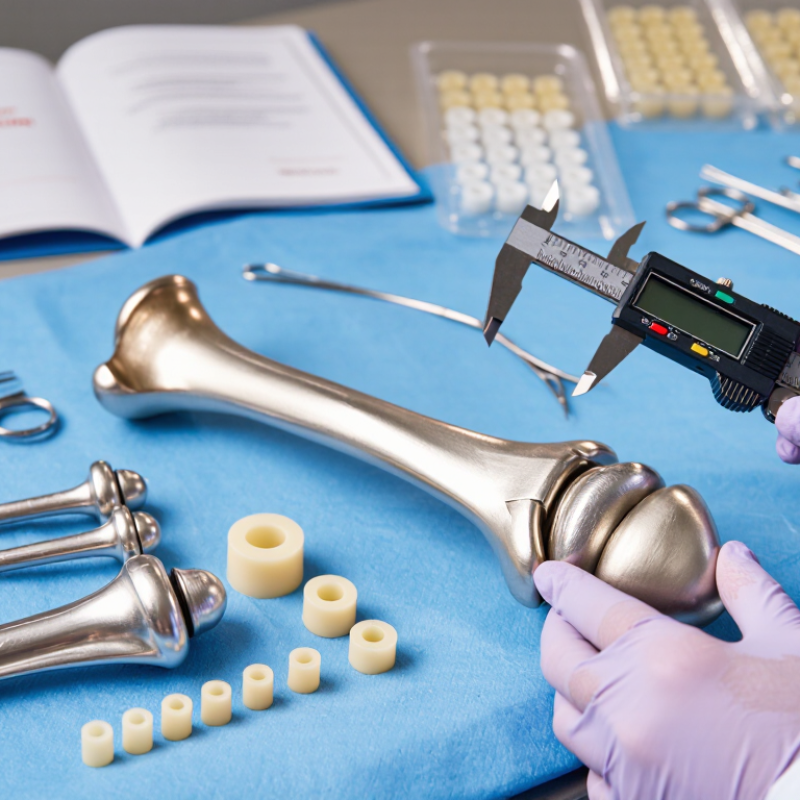
Define the Clinical Requirements for Joint Reconstruction Implants
Sourcing joint reconstruction implants should begin with a clinical definition, not a catalog search. The team must describe the affected joint, bone quality, deformity, expected load, and surgical approach. Patient age, activity level, allergies, and revision risk also matter. These details shape implant geometry, fixation method, bearing choice, and instrument needs. Surgeons, nurses, engineers, and procurement specialists should review the requirements together. Their discussion can expose practical issues, such as limited operating-room space or difficult imaging access.
Tips: Write measurable requirements. Specify dimensions, tolerance ranges, sterilization status, packaging, traceability, and delivery conditions. Ask for clinical evidence, material data, testing methods, and instructions for use. Verify that the proposed device fits the hospital’s imaging, sterilization, and inventory systems. Review supplier quality controls and post-market reporting processes. Do not accept vague claims. Request records.
A reliable sourcing process also compares patient safety with long-term usability. The evaluation should consider fixation strength, wear, corrosion, removal difficulty, and compatibility with revision procedures. Local regulatory requirements must guide documentation and approval checks. No checklist is perfect. An early draft may overlook unusual anatomy or emergency inventory needs. A pilot review with experienced surgeons can reveal those gaps before purchasing. Still, clinical preference alone is not enough; each requirement should connect to evidence, risk control, and a documented decision.
Evaluate Implant Materials, Designs, and Performance Standards
How to Source Joint Reconstruction Implants?
A credible sourcing review begins with implant materials, not catalog price. Titanium alloys can offer strength and lower weight. Cobalt-chromium alloys may resist wear and deformation. Ceramics can reduce friction, but they require careful handling because brittleness remains a concern. Polymer components also need wear testing under realistic loading cycles. Material selection should match the joint, patient activity, fixation method, and expected service life.
Design evaluation should examine geometry, surface finish, modular connections, and instrument compatibility. A well-designed implant should distribute load without creating sharp stress concentrations. Its fixation surface needs evidence from mechanical tests and clinical experience. Small tolerances matter. Poor alignment can increase wear, instability, or revision risk. Ask suppliers for fatigue, corrosion, wear, and sterilization data, not only promotional summaries.
Performance standards provide a more reliable comparison. Review applicable ISO and ASTM methods, biological safety testing, manufacturing controls, and traceability records. Test reports should identify sample numbers, loading conditions, failure criteria, and deviations from the protocol. Standards do not remove every uncertainty. They only structure it. No checklist is perfect. A useful review also considers surgeon feedback, retrieval analysis, complaint trends, and post-market surveillance. Some published evidence may be limited or difficult to compare. That limitation should be recorded openly. A cautious sourcing decision may prefer transparent data over impressive claims.
Identify and Screen Qualified Implant Manufacturers
How to Source Joint Reconstruction Implants?
Identifying a qualified implant manufacturer requires more than reviewing a polished website. Examine its quality management system, technical staff, and production records. A reliable facility should provide current quality certifications and relevant regulatory registrations. These documents need independent verification, not simple email attachments. Ask how the manufacturer controls titanium, cobalt-chrome, ceramics, and polymer materials. Request batch traceability from incoming inspection through final release. Production areas should show controlled processes, calibrated equipment, and documented cleaning routines. Small details matter, such as labeled storage bins and sealed packaging zones.
Review design history files, risk assessments, mechanical testing, and biocompatibility evidence. For joint reconstruction implants, inspect wear testing, fatigue results, dimensional tolerances, and sterilization validation. Ask whether testing represents real surgical loads and anatomical variation. Clinical evidence should be specific to the product design, not borrowed from unrelated devices. Evaluate complaint handling, corrective actions, recall procedures, and change-control practices. A manufacturer that cannot explain recent process changes deserves careful questioning. No checklist is perfect. I once found that a complete-looking audit missed weak supplier controls.
Tips: Request a remote audit before visiting. Compare three production batches, not one sample. Speak with quality and engineering teams separately. Ask for nonconforming-product records, with sensitive data protected. Confirm lead times, minimum quantities, inspection responsibilities, and communication channels in writing. Require sample implants for dimensional checks and packaging review. Trust consistent evidence, not confident promises.
How to Source Joint Reconstruction Implants?
Suggested screening priorities for identifying and evaluating qualified joint reconstruction implant manufacturers.
The weighting is a practical procurement framework rather than a market-share statistic. Evaluation areas are aligned with commonly used medical-device quality, risk-management, biocompatibility, sterilization, performance, traceability, and post-market surveillance expectations, including ISO 13485, ISO 14971, ISO 10993, and ISO 17665.
Verify Regulatory Compliance, Quality Systems, and Certifications
Sourcing joint reconstruction implants starts with regulatory evidence, not a polished product brochure. Ask for the device’s intended use, classification, market authorization, and current registration details. Confirm that the supplied model matches the approved technical file. Small differences in coating, alloy, or geometry can change the compliance position.
Quality systems deserve closer inspection. ISO 13485 certification is useful, but it is not proof of every manufacturing control. The ISO Survey 2022 reported more than 30,000 ISO 13485 certificates worldwide. That number shows broad adoption, not equal performance. Request the latest audit certificate, scope, expiration date, and nonconformity records. Review sterilization validation, biocompatibility testing, packaging integrity, and lot traceability. A missing batch record can create serious problems during an investigation.
Post-market evidence should influence purchasing decisions. FDA Medical Device Reporting data recorded more than two million reports across all device categories in 2023. This figure is not specific to joint implants, yet it demonstrates why complaint handling matters. Ask for trend reports, recall history, corrective actions, and response timelines. Check whether the supplier investigates loosening, fracture, corrosion, infection, or revision surgery signals.
Paperwork can look complete. The weak point may be supplier control, change management, or final inspection. I would also sample traceability records before approval. It takes time, but assumptions are expensive.
Compare Quotations, Samples, Supply Terms, and After-Sales Support
Sourcing joint reconstruction implants requires more than finding the lowest quotation. Compare each offer line by line, including implant dimensions, materials, packaging, documentation, and delivery scope. Ask for batch traceability and current quality certificates. A clear quotation should identify tooling charges, minimum order quantities, taxes, freight, and payment conditions. Vague wording creates expensive surprises.
Samples deserve practical inspection. Check surface finish, markings, fit with compatible instruments, and packaging integrity. Request material reports and sterilization information where applicable. A sample may look excellent yet fail during repeated handling. That happened in one evaluation I reviewed. We focused too much on appearance and too little on documentation. The mistake was avoidable. Independent technical review can expose such gaps before approval.
Supply terms should explain lead times, forecast changes, inspection rights, and notification procedures for design or process changes. Confirm how rejected lots are handled. After-sales support matters just as much. Evaluate complaint response times, investigation reports, corrective actions, replacement procedures, and training availability. Ask whether support continues after the first shipment. Keep written records of every promise. A friendly meeting is not enough. Procurement teams should also check applicable medical-device requirements in the destination market and involve qualified clinical, regulatory, and quality professionals before purchasing decisions.
| Comparison Dimension | What to Compare | Evidence to Request | Practical Evaluation Point |
|---|---|---|---|
| Product scope and configuration | Confirm the joint, procedure, implant components, material, fixation method, sizes, laterality, and compatible instruments covered by each quotation. | Itemized product list, product codes, technical specifications, sizing matrix, and instrument list. | Compare like-for-like configurations. A lower unit price may exclude instruments, specific sizes, or complementary components. |
| Quotation and total cost | Check unit prices, currency, price validity, volume tiers, packaging, freight, duties, taxes, and any separately charged instruments or services. | Formal quotation with itemized pricing, validity period, quantity breaks, and a clear statement of included and excluded costs. | Calculate the delivered cost per complete procedure set, not just the price of an individual implant component. |
| Samples and evaluation | Clarify which samples are available, whether they are evaluation-only or intended for clinical use, and who pays for samples and shipping. | Sample list, labeling and packaging details, written evaluation conditions, and instructions for return or disposal. | Do not use evaluation samples in patients unless the device is legally marketed or otherwise authorized for that use in the relevant jurisdiction and all applicable clinical requirements are met. |
| Regulatory status | Verify authorization for the intended market and the exact device family and manufacturing site being offered. | Applicable market authorization or registration details, certificates where relevant, and documentation linking the offered products to their regulatory status. | Requirements differ by country and device. Confirm status with the relevant regulator or qualified regulatory professional; a quality certificate alone does not establish market authorization. |
| Quality management and traceability | Review the supplier’s quality system, lot or serial traceability, complaint handling, change control, and recall procedures. | Relevant quality-system documentation, sample labels, traceability records, and written complaint and recall processes. | Confirm that records can trace product identifiers and lots through delivery and that the supplier will notify customers of safety or product changes. |
| Technical documentation | Compare the completeness and consistency of specifications, instructions for use, implant-material information, and compatibility information. | Current instructions for use, product specifications, material details, sterilization information, and compatibility documentation for instruments and components. | Check that documentation matches the quoted product codes, intended use, and target market, and that it is available in required languages. |
| Sample quality and packaging | Inspect product identification, packaging integrity, labeling, and the stated sterile or non-sterile status of samples. | Representative packaging and labels, packaging specifications, and applicable sterilization or reprocessing instructions. | Packaging and handling requirements depend on the product. Confirm that sterile products remain protected and that any stated shelf life and storage conditions are documented. |
| Lead time and supply capacity | Compare quoted production and dispatch lead times, stock availability, backorder handling, and replenishment planning. | Written lead-time commitments, availability by size or configuration, order cut-off details, and escalation contacts for shortages. | Ask whether the stated lead time applies to the full size range and whether partial shipments or substitutions require prior approval. |
| Minimum order and continuity | Review minimum order quantities, mixed-size ordering rules, reorder thresholds, and arrangements for discontinued or changed products. | Order policy, product-change notification process, and written continuity or end-of-life communication terms. | Check that purchasing quantities fit actual demand and that any product change can be reviewed before new inventory is supplied. |
| Delivery and trade terms | Compare named delivery location, shipping responsibilities, insurance, customs responsibilities, and transfer of delivery risk. | Written delivery terms, shipment documentation requirements, and the agreed named place or destination. | If Incoterms are used, specify the applicable rule and named place in the contract; do not rely on an undefined term such as “shipping included.” |
| Payment and contract terms | Review payment timing, deposits, credit terms, cancellation rules, currency exposure, and remedies for late or incomplete delivery. | Draft sales terms or contract covering payment, order changes, delivery delays, returns, and dispute handling. | Ensure the commercial terms are consistent across the quotation, purchase order, and contract before placing an order. |
| After-sales and complaint support | Compare response channels, support hours, complaint escalation, product investigation, and safety-notification processes. | Named support contacts, response and escalation process, complaint instructions, and recall or field-safety notice process. | Agree how urgent product-quality or safety concerns will be reported and how affected lots will be identified and managed. |
| Warranty, returns, and nonconformance | Clarify warranty scope, return eligibility, credit or replacement rules, and handling of damaged, incorrect, or nonconforming deliveries. | Written warranty and returns policy, inspection deadlines, required evidence, and proposed corrective-action process. | Check exclusions and notification time limits, and distinguish commercial warranty terms from regulatory complaint-reporting duties. |
Note: Use this table as a sourcing checklist. Regulatory, clinical, import, and contracting requirements vary by market and should be verified for the intended jurisdiction and product.
FAQS
Describe the affected joint, bone quality, deformity, expected load, and surgical approach. Patient age and activity also matter.
Surgeons, nurses, engineers, and procurement specialists should review them together. A crowded operating room may reveal practical problems.
Include dimensions, tolerance ranges, sterilization status, packaging, traceability, and delivery conditions. Make each requirement measurable.
Match materials to joint motion, patient activity, fixation method, and expected service life. Strength alone is not enough.
Request fatigue, corrosion, wear, sterilization, and mechanical testing data. Reports should show loading conditions and failure criteria.
Small errors can increase wear, instability, or revision risk. Load should spread evenly. Sharp stress concentrations are concerning.
Confirm compatibility with imaging, sterilization, inventory, and surgical instruments. A device may look suitable yet create workflow problems.
Consider clinical experience, surgeon feedback, retrieval analysis, complaint trends, and post-market surveillance. Evidence may be limited.
No. Standards structure evaluation, but they cannot remove every uncertainty. Transparent records deserve careful attention.
Conduct a pilot review with experienced surgeons. It may expose unusual anatomy or emergency inventory gaps. No checklist is perfect.
Conclusion
Sourcing joint reconstruction implants requires a structured process that balances clinical needs, product quality, regulatory expectations, and long-term supply reliability. The process begins by defining the intended clinical applications, anatomical requirements, patient considerations, surgical techniques, and performance expectations. Buyers should then evaluate implant materials, design features, biomechanical performance, durability, compatibility, and applicable industry standards to ensure the products are suitable for their intended use.
After establishing technical requirements, organizations should identify and screen qualified manufacturers by reviewing their experience, production capabilities, quality management systems, certifications, and regulatory compliance. It is also important to assess traceability, inspection procedures, documentation, and risk management practices. Finally, procurement teams should compare quotations, product samples, minimum order quantities, lead times, payment terms, warranties, training, and after-sales support. A careful, evidence-based sourcing strategy can help organizations select dependable joint reconstruction implants while supporting patient safety, consistent product performance, and sustainable cooperation with manufacturing partners.
Blog Tags: