Habakkuk Health Insights
Orthopedic News & Clinical Knowledge
Latest perspectives, technological advancements, and insights in joint reconstruction and trauma care.
Choosing the right Osteotomy fixation plates requires more than comparing product photographs or advertised strength. Global buyers must consider surgical indication, bone anatomy, plate geometry, screw compatibility, material quality, and regulatory documentation. A plate designed for a distal femoral correction may not suit a small tibial osteotomy. Small differences matter, especially around screw trajectories and cortical purchase.
This guide examines seven widely considered fixation plate options for international purchasing teams, orthopedic distributors, and clinical decision-makers. Each option is assessed through practical criteria, including contouring accuracy, locking performance, radiographic visibility, instrumentation, packaging, traceability, and supplier support. These details become important in the operating room, where a mismatched driver or unclear implant label can delay a procedure.
Clinical experience should guide interpretation. Surgeons may value low-profile designs, while hospitals may prioritize standardized inventory and dependable delivery. Evidence quality also varies between products. Some performance claims rely on laboratory testing rather than long-term clinical outcomes. That limitation deserves attention.
No ranking fits every market. Import requirements, approved indications, sterilization status, and post-market surveillance rules differ across countries. Buyers should verify current documentation with manufacturers and qualified regulatory professionals. A careful evaluation also includes surgeon feedback, complaint history, and the availability of replacement instruments. These steps can reveal weaknesses that brochures overlook.
The goal is practical clarity, not a universal verdict. Readers can use this comparison to develop a safer, evidence-informed shortlist for local clinical and purchasing requirements. When uncertainty remains, it should be documented rather than hidden.
Defining Osteotomy Plates: 7 Designs, Indications, and AO Principles
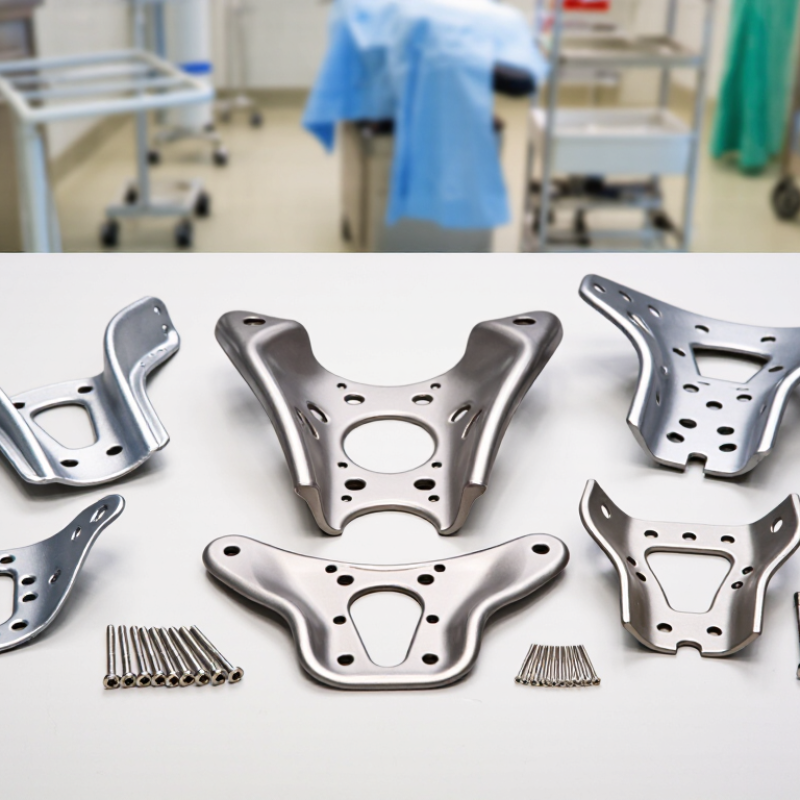
Osteotomy fixation plates stabilize a planned bone cut while healing progresses. They support alignment, compression, and controlled movement during recovery. Seven practical designs cover most surgical needs. Straight plates fit simple diaphyseal corrections. T-plates support metaphyseal regions and broad joint-adjacent surfaces. L-plates suit angled anatomy and periarticular fixation. Locking plates help when bone quality is weak or screw purchase is limited. Compression plates close narrow gaps and encourage direct healing. Opening-wedge plates maintain a created gap, often with graft support. Closing-wedge plates secure shortened bone after removing a wedge.
Indications depend on deformity, bone quality, soft-tissue condition, and correction size. A medial opening-wedge knee osteotomy needs controlled gap support and accurate hinge protection. A distal radius correction may require a low-profile, contoured plate. AO principles remain practical: achieve suitable reduction, provide stable fixation, preserve blood supply, and permit safe early motion. Stability does not always mean maximum stiffness. Excessive compression can damage biology. Surgeons sometimes overtrust the implant and underappreciate alignment planning. That mistake deserves reflection.
Tips: Match the plate to anatomy, not preference. Confirm screw trajectories with imaging. Check the hinge, gap, and limb axis before closure. Global buyers should request material data, sterilization instructions, mechanical testing, and traceable quality documentation. A familiar design may still be unsuitable for a specific osteotomy. Calibration matters.
7 Best Osteotomy Fixation Plates for Global Buyers - Defining Osteotomy Plates: 7 Designs, Indications, and AO Principles
| Plate Design | Typical Anatomical Use | Primary Indications | Key Mechanical Features | AO/OTA-Compatible Fixation Principles | Important Buyer Evaluation Points | Typical Limitations |
|---|---|---|---|---|---|---|
| 1 Opening-Wedge Osteotomy Plate | Proximal tibia, distal femur, and selected forearm or ankle osteotomies. | Gradual correction of varus or valgus alignment while preserving the opposite cortical hinge. Commonly used for medial opening-wedge high tibial osteotomy. | Broad support around the osteotomy gap; fixed-angle or variable-angle locking holes; options for metaphyseal and diaphyseal screw fixation; some systems accommodate bone graft or a wedge. | Maintain the hinge when clinically appropriate, achieve stable fixation of the opening gap, preserve alignment in the coronal and sagittal planes, and avoid unnecessary soft-tissue stripping. | Check plate contour, left/right availability, screw trajectory, gap-support capability, radiographic visibility, and compatibility with the local screw inventory. | Hinge fracture, loss of correction, delayed union, or irritation may occur if the hinge, gap, alignment, or fixation is inadequately managed. |
| 2 Closing-Wedge Osteotomy Plate | Proximal tibia, distal femur, and other long-bone corrective osteotomies. | Angular correction where a bone wedge is removed and the remaining cortices are brought together. Useful when shortening is acceptable or when a strong cortical contact surface is desired. | Low-profile compression or locking-compression geometry; holes positioned to support proximal and distal fragments; may include a contoured section for metaphyseal fixation. | Obtain accurate correction, maximize cortical contact, provide interfragmentary or axial compression when indicated, and maintain fixation stability during early healing. | Assess the planned amount of shortening, plate working length, compression capability, contour accuracy, screw purchase, and availability of instruments for controlled wedge resection. | Bone shortening, risk to nearby neurovascular structures, and potential compromise of the opposite cortex can be clinically relevant. |
| 3 Medial Distal Femur Osteotomy Plate | Medial distal femur, including varus or valgus correction around the knee. | Distal femoral malalignment, correction of coronal deformity, and selected multi-planar deformity procedures. Often used when a strong periarticular construct is needed. | Anatomically shaped distal segment; multiple fixed-angle screws in the femoral condyle region; long shaft section for load distribution; locking options for osteoporotic or short distal fragments. | Restore the mechanical axis and joint orientation, secure the periarticular fragment, use a sufficiently long construct where appropriate, and protect biology around the osteotomy. | Verify distal femoral fit, screw length control, lateral or medial approach compatibility, plate length, radiographic targeting, and availability of variable-angle options. | Prominence, stiffness, malalignment, and nonunion are possible; accurate preoperative planning is essential for multi-planar corrections. |
| 4 Lateral Distal Femur Osteotomy Plate | Lateral distal femur, particularly for distal femoral varus or valgus correction. | Opening-wedge, closing-wedge, or dome-type distal femoral osteotomy depending on the correction plan and surgical approach. | Periarticular lateral profile; cluster of distal locking holes; long proximal shaft options; supports fixed-angle fixation where the distal fragment is short or bone quality is reduced. | Restore alignment without violating the joint surface, secure the distal segment in multiple planes, preserve soft-tissue blood supply, and select compression or bridging according to the osteotomy pattern. | Evaluate condylar coverage, plate-to-bone contact, screw spread, left/right configuration, implant prominence, and instrument access around the lateral femur. | Hardware irritation, intra-articular screw risk, and loss of correction may occur if screw length, alignment, or plate positioning is inaccurate. |
| 5 Proximal Tibia T-Shaped or L-Shaped Plate | Medial or lateral proximal tibia, including metaphyseal corrective osteotomies. | Varus or valgus correction near the knee, proximal tibial deformity, and selected opening-wedge or closing-wedge procedures. | Periarticular head with multiple subchondral screw options; fixed-angle support for the tibial plateau region; shaft holes for compression, neutralization, or bridging. | Restore the mechanical axis and posterior slope as planned, support the osteotomy and subchondral bone, avoid joint penetration, and preserve the lateral or medial cortical hinge when required. | Confirm tibial plateau coverage, screw trajectory, posterior slope control, plate thickness, soft-tissue profile, and compatibility with graft or spacer use. | Risk includes hinge fracture, plateau penetration, altered tibial slope, irritation, and delayed union when correction or fixation is insufficient. |
| 6 Clavicle Osteotomy Plate | Midshaft, superior, anteroinferior, or distal clavicle, depending on the plate profile. | Corrective osteotomy for malunion, shortening or rotation deformity, and selected reconstruction procedures requiring controlled clavicular alignment. | Low-profile precontoured shape; combination holes for compression and locking; multiple screw options in short medial and lateral fragments; may include independent interfragmentary screw support. | Restore length, rotation, and alignment; achieve stable fixation with appropriate screw spread; minimize soft-tissue irritation; preserve regional neurovascular safety. | Compare superior versus anteroinferior profile, assess contour accuracy, screw length options, plate prominence, left/right fit, and radiographic or surgical access requirements. | Limited bone stock, implant prominence, nonunion, and risk to underlying structures require careful preoperative planning and screw-length control. |
| 7 Dome or Curved Osteotomy Plate | Distal femur, proximal tibia, humerus, radius, or ulna when a curved corrective osteotomy is selected. | Angular or rotational deformity correction in which the osteotomy geometry allows gradual correction around a planned center of rotation. | Curved or contourable plate body; distributed screw holes around the osteotomy; options for locking, neutral, or compression fixation; designed to reduce concentrated stress at a single point. | Plan the center of rotation and angulation, maintain stable fixation on both sides of the osteotomy, preserve the intended correction, and respect soft-tissue and biological principles. | Review curvature, contourability, plate length, correction range, screw-hole distribution, guide accuracy, and whether the design supports the intended rotational correction. | More complex planning and instrumentation may be required; inaccurate center-of-rotation planning can produce residual deformity or unintended translation. |
FAQS
It stabilizes a planned bone cut during healing. It supports alignment, compression, and controlled movement.
Straight plates suit simple shaft corrections. T-plates support broad areas near joints. L-plates fit angled anatomy.
Locking plates help when bone quality is weak or screw purchase is limited. They provide predictable screw engagement.
Opening-wedge plates maintain a created gap, often with graft support. Closing-wedge plates secure shortened bone after wedge removal.
Match the plate to anatomy, bone quality, correction size, and soft-tissue condition. Personal preference is not enough.
No. Excessive stiffness or compression may harm bone biology. Stability must support healing, not simply maximize strength.
Request complete ASTM F382 data, including bending strength, stiffness, specimen size, and failure mode.
Buyers should review ISO 13485 systems, ISO 10993 biological evaluation, ASTM F543 testing, and regional market authorization.
Confirm screw trajectories with imaging. Check the hinge, correction gap, and limb axis before closure.
Not completely. ASTM F382 results depend on plate length, thickness, material, span, and screw configuration.
Conclusion
This guide evaluates Osteotomy fixation plates through a practical, evidence-focused framework for surgeons, distributors, and international buyers. It explains seven common plate designs, their typical indications, and how AO fixation principles influence stability, alignment, and load distribution. Each design is compared by key performance considerations, including ASTM F382 strength, available locking-hole configurations, plate thickness, and weight. The guide also highlights clinical decision factors such as bone healing, union rates, complication risks, and appropriate follow-up benchmarks.
For global procurement, the article outlines essential compliance checkpoints, including ISO 13485 quality systems, ISO 10993 biological evaluation, ASTM F543 testing, FDA 510(k) considerations, and EU MDR requirements. A buyer scorecard then combines technical performance with commercial factors such as lead time, minimum order quantity, documentation, packaging, and regional market expectations. This approach helps buyers make transparent, application-specific decisions while balancing patient safety, regulatory readiness, supply reliability, and overall value.