
Habakkuk Health Insights
Orthopedic News & Clinical Knowledge
Latest perspectives, technological advancements, and insights in joint reconstruction and trauma care.
2026 Best Medial Pivot Knee Prosthesis for Global Buyers?
Table of Contents
- What Is a Medial Pivot Knee Prosthesis?
- How Medial Pivot Knee Prostheses Reproduce Natural Knee Motion
- Key Design Features and Clinical Performance Factors
- How Global Buyers Can Compare Medial Pivot Knee Systems
- Regulatory, Surgical, and Procurement Considerations for 2026
- FAQS
- Conclusion
- Related Posts
Choosing the 2026 best Medial pivot knee prosthesis requires more than comparing brochures or purchase prices. Global buyers need evidence, surgical experience, implant design, and dependable supplier support. A medial pivot knee prosthesis aims to reproduce the knee’s natural stability, especially during bending and weight transfer. Its performance depends on patient anatomy, implant alignment, surgical technique, and rehabilitation quality.
This guide examines practical factors that matter in hospitals and orthopedic centers. These include polyethylene design, femoral geometry, fixation options, instrumentation, wear resistance, and long-term clinical data. It also considers sterilization, traceability, training, delivery reliability, and after-sales communication. Small details matter. A missing instrument can delay surgery.
Experienced orthopedic teams often evaluate trial components before selecting a system. They may review radiographs, observe movement patterns, and compare outcomes across suitable patient groups. However, no implant is universally best. Marketing claims can sound precise while hiding limited follow-up data. That deserves caution.
Regulatory clearance, published evidence, and transparent quality systems should guide purchasing decisions. Buyers should also confirm local approval requirements and consult qualified orthopedic professionals before adoption. This article is designed to support informed comparison, not replace clinical judgment. Some evidence remains incomplete, especially for newer systems and diverse international populations. That uncertainty should be stated clearly.
For 2026, the strongest choice may be the implant that combines reliable clinical performance, surgeon familiarity, consistent manufacturing, and realistic total cost. Not the most expensive option. Not always the newest. A careful evaluation can protect patient outcomes, operating-room efficiency, and institutional trust.
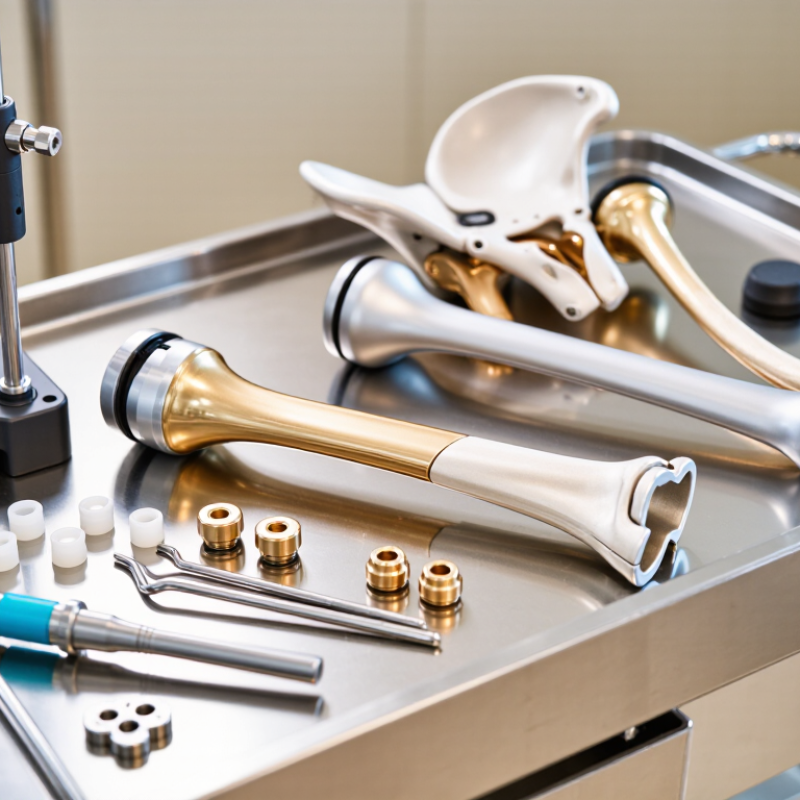
What Is a Medial Pivot Knee Prosthesis?
A medial pivot knee prosthesis is designed to imitate a natural knee’s movement during walking. The inner side of the knee acts as a relatively stable pivot, while the outer side allows controlled forward and backward motion. This pattern differs from many traditional knee designs, which may permit more symmetrical movement between both sides.
During surgery, the implant replaces damaged joint surfaces and works with the patient’s ligaments, bone quality, and alignment. Its geometry may help create a steadier feeling when standing, turning, or climbing stairs. However, the implant alone does not determine the result. Surgical technique, soft-tissue balance, rehabilitation, and patient expectations remain important. Small alignment errors can affect comfort.
The best medial pivot prosthesis for a global buyer is not automatically the newest option. Buyers should examine clinical evidence, available sizes, fixation methods, material specifications, sterilization records, and regulatory approval in the target country. Independent clinical data is more useful than promotional claims. Ask how long the design has been followed in real patients.
Patient selection also matters. A medial pivot design may not suit every knee, especially when severe deformity, ligament deficiency, or unusual bone loss is present. The concept is promising, but no implant is perfect. Even experienced teams must weigh motion, stability, revision planning, and local surgical training before choosing a system.
How Medial Pivot Knee Prostheses Reproduce Natural Knee Motion
2026 Best Medial Pivot Knee Prosthesis for Global Buyers?
A medial pivot knee prosthesis aims to reproduce the knee’s natural movement more closely. During flexion, the medial side acts like a stable ball-and-socket joint. The lateral side moves more freely, allowing the tibia to rotate around a controlled medial center. This pattern can improve a patient’s sense of stability during walking, stair climbing, and chair transfers.
The design may also support smoother rollback through flexion. Patients often notice practical details, such as a steadier step or less shifting on uneven ground. However, implant geometry is only one part of the result. Accurate bone preparation, balanced soft tissues, and correct component positioning remain essential. Small surgical errors can change the motion noticeably.
No prosthesis perfectly copies a healthy knee. That limitation deserves attention. Some patients may experience stiffness, altered sensations, or limited deep flexion despite a technically sound procedure. Long-term outcomes also depend on anatomy, rehabilitation, activity level, and follow-up care. Independent clinical evidence should guide global buyers, not marketing language alone. Surgeons should compare kinematics, fixation methods, polyethylene design, instrument accuracy, and published survivorship data. Patient selection matters. A device that performs well for one knee may not suit another.
2026 Best Medial Pivot Knee Prosthesis for Global Buyers? - How Medial Pivot Knee Prostheses Reproduce Natural Knee Motion
| Evaluation Dimension | Typical Medial Pivot Design Characteristic | How It Relates to Natural Knee Motion | Potential Buyer Benefit | Evidence and Selection Note |
|---|---|---|---|---|
| Core articulation concept | A relatively conforming medial compartment combined with a less-constrained lateral compartment. | The medial side acts as a functional pivot while the lateral side permits greater translation and rotation. | May provide a more predictable flexion pathway than a purely symmetric articulation. | The term “medial pivot” describes a kinematic design concept, not a guarantee of identical native-knee motion. |
| Medial compartment stability | Higher conformity is commonly used on the medial side to resist excessive anterior, posterior, and rotational translation. | The native medial side generally behaves more like a stable compartment during many activities. | Can support a stable-feeling knee during standing, walking, and low-impact daily activities. | Stability depends on implant geometry, ligament balance, component position, and soft-tissue condition. |
| Lateral compartment mobility | The lateral side is usually designed with lower conformity than the medial side. | Allows more lateral translation and contributes to external tibial rotation during flexion. | May help accommodate rotational movement while reducing the need for a highly constrained mechanism. | Actual motion varies with alignment, ligament balancing, implant size, and patient activity. |
| Femoral rollback pattern | Designed to encourage posterior movement of the femur during flexion, particularly through differential medial and lateral motion. | Resembles the coupled rolling, sliding, and rotating behavior observed in the natural knee. | May improve flexion mechanics and reduce anterior impingement when the components are correctly positioned. | Rollback is not produced by implant geometry alone; posterior cruciate ligament management and surgical technique are also important. |
| Axial rotation | Asymmetric compartment geometry permits rotation around a relatively stable medial contact region. | Supports the screw-home-related rotational pattern seen during extension and flexion, although the prosthetic motion is not identical to native anatomy. | May provide smoother rotational behavior during turning, stair use, and sit-to-stand movement. | Kinematic studies show design-dependent differences, but clinical superiority over all other knee designs has not been established universally. |
| Typical bearing configuration | Most medial pivot total knee systems use a fixed polyethylene tibial insert with asymmetric medial and lateral geometry. | The bearing surface defines the intended relationship between stability and controlled translation. | A fixed bearing can offer a familiar surgical workflow and stable insert positioning. | Fixed-bearing designs can still experience polyethylene wear, oxidation, loosening, or instability; long-term outcomes depend on the complete system. |
| Cruciate ligament strategy | Medial pivot designs may be offered in cruciate-retaining or posterior-stabilized configurations, depending on the system. | Retaining the posterior cruciate ligament may preserve some native restraint; substituting it uses an engineered cam-post mechanism to guide motion. | Provides options for different ligament conditions and surgeon preferences. | The correct option depends on ligament integrity, deformity, bone quality, and the surgeon’s validated technique. |
| Range of motion | The design aims to permit functional flexion while maintaining medial stability. | Controlled rollback and rotation can contribute to flexion, but the final range is strongly influenced by soft tissues and rehabilitation. | May be appropriate for patients seeking reliable functional movement rather than a specific guaranteed flexion angle. | No knee prosthesis can guarantee a particular postoperative range of motion; preoperative stiffness and patient factors remain major predictors. |
| Patellofemoral considerations | Femoral trochlear geometry is intended to guide the patella through flexion and extension. | Patellar tracking remains dependent on the interaction of femoral rotation, tibial rotation, component alignment, and soft-tissue balance. | A well-balanced construct may reduce maltracking-related symptoms and improve functional confidence. | Medial pivot geometry does not eliminate patellofemoral complications; surgical accuracy remains essential. |
| Potential wear and loosening factors | Asymmetric contact areas and conformity are intended to distribute load while controlling motion. | More consistent contact may help manage contact stress, but cannot remove the effects of load, alignment, debris, or high activity. | Useful for evaluating expected durability under the target patient population and activity level. | Compare published survivorship, polyethylene specifications, fixation method, and follow-up duration rather than relying on design terminology alone. |
| Patient suitability | Generally considered for primary total knee arthroplasty when the surgeon can achieve correct alignment and balanced collateral ligaments. | The design is intended to work with controlled medial stability and lateral mobility rather than compensate for every soft-tissue deficiency. | May be suitable for patients with osteoarthritis or other indications for primary knee replacement, subject to clinical assessment. | Severe deformity, ligament insufficiency, poor bone quality, infection, or revision cases may require a different constraint level or implant strategy. |
| Global procurement checklist | Evaluate the complete implant platform, instruments, compatibility, and clinical support—not only the medial pivot label. | Consistent reproduction of intended kinematics requires compatible components and a reproducible surgical workflow. | Helps hospitals compare products objectively across different healthcare systems. | Verify local regulatory authorization, ISO 13485 quality certification, applicable implant standards, sterilization status, traceability, training, instrument availability, warranty terms, and post-market surveillance data. |
| Overall 2026 buying conclusion | A medial pivot knee prosthesis is best viewed as a motion-oriented design option rather than a universally superior implant category. | Its key objective is to combine a stable medial pivot with controlled lateral translation and rotation. | It may be a strong option when the clinical indication, ligament condition, surgical technique, and supporting evidence are well matched. | The most appropriate choice should be based on regulatory status, independent clinical evidence, surgeon experience, patient anatomy, lifecycle support, and total cost of ownership. |
Key Design Features and Clinical Performance Factors
2026 Best Medial Pivot Knee Prosthesis for Global Buyers?
Key Design Features and Clinical Performance Factors
A medial-pivot knee prosthesis aims to reproduce a more natural knee motion. Its medial compartment stays relatively stable during flexion. The lateral side allows controlled translation and rotation. This design may improve stability during stairs, chair rising, and uneven walking.
Key features include a concave medial insert, suitable femoral geometry, and reliable tibial fixation. Polyethylene thickness also matters. Too much constraint can increase stress. Too little support may cause instability. Surgical instrumentation must support accurate alignment and balanced soft tissues. Small errors can affect contact pressure, pain, and early wear. Clinical evidence should include patient-reported scores, range of motion, revision rates, and radiographic follow-up. Results may differ between hospitals. Patient selection remains important.
Tips: Compare five-year and ten-year data, not only early marketing claims. Check whether studies include active and older patients. Review outcomes by body weight, deformity, and activity level. Ask about insert options and revision compatibility. Do not assume medial-pivot kinematics guarantee better satisfaction. Some patients still report stiffness or anterior knee pain. That limitation deserves attention. Surgeons should also assess learning curves, planning tools, and postoperative rehabilitation support. A dependable evaluation combines design logic with real clinical records.
How Global Buyers Can Compare Medial Pivot Knee Systems
Global buyers comparing medial pivot knee systems should begin with clinical fit, not marketing language. A medial pivot design aims to support a stable medial compartment while allowing lateral movement during flexion. That concept sounds simple. It is not.
Review peer-reviewed clinical evidence, implant geometry, fixation options, polyethylene properties, and available sizes. Ask whether the system suits local patient anatomy and common surgical approaches. A surgeon should examine trial components during cadaver training or supervised cases. Small differences in tibial slope, femoral radius, and insert thickness can affect balance. Radiographs and operative feedback often reveal issues that brochures miss.
Procurement teams should also compare regulatory approvals, quality certificates, instrument reliability, sterilization instructions, and technical support. Check whether replacement components can be supplied for the expected service period. A lower purchase price may become expensive if instruments are delayed or staff need repeated training. Request transparent data on revision rates, follow-up duration, and patient-reported outcomes. Do not treat a small study as universal evidence.
The comparison is rarely clean. Surgeons may prefer one handling style, while hospitals prioritize inventory control. Both views matter. Include total cost, surgeon experience, rehabilitation pathways, and local reporting requirements in the evaluation. No spreadsheet captures every variable. A careful buyer should record uncertainties instead of hiding them, then test shortlisted systems against real operating-room conditions.
2026 Best Medial Pivot Knee Prosthesis for Global Buyers?
How Global Buyers Can Compare Medial Pivot Knee Systems
The chart summarizes indicative outcome ranges reported across peer-reviewed medial-pivot total knee arthroplasty cohorts. These figures are evidence ranges rather than product rankings. Global buyers should also compare implant geometry, polyethylene options, fixation method, instrumentation, regulatory clearance, clinical follow-up, surgeon familiarity, and regional service support.
Evidence note: Reported outcomes vary according to patient selection, surgical technique, implant generation, follow-up duration, and study design. The ranges are intended for preliminary market comparison and should not be interpreted as guaranteed performance.
Regulatory, Surgical, and Procurement Considerations for 2026
2026 Best Medial Pivot Knee Prosthesis for Global Buyers?
Regulatory, Surgical, and Procurement Considerations for 2026
A medial pivot knee prosthesis should not be judged by geometry alone. Global buyers must verify current market authorization, quality certification, and clinical evidence in each target country. Requirements may differ between public hospitals, private clinics, and regional distributors. Request traceability records, sterilization validation, shelf-life data, and post-market surveillance procedures. A polished brochure is not evidence.
Surgical performance also depends on patient selection and surgeon experience. Review implant stability, polyethylene options, instrumentation, and compatibility with available operating-room equipment. Ask how the design performs in varus knees, limited bone stock, and revision planning. Training matters. A technically sound implant can underperform when the surgical team receives limited instruction. Long-term evidence may still be incomplete, so buyers should examine study duration and patient numbers carefully.
Tips: Build a country-specific checklist before tendering. Compare total cost, not only unit price. Include instruments, freight, training, storage, and revision support. Request sample documentation early. Confirm lot tracking and complaint response times. Visit a reference hospital when practical. Avoid promises based only on short follow-up data. In my view, procurement teams often move too quickly toward a “best” product. That assumption deserves review. No single medial pivot design fits every anatomy, workflow, or healthcare system.
FAQS
It is designed to imitate natural knee movement during walking. The inner side stays relatively stable, while the outer side moves forward and backward.
The geometry may provide a steadier feeling when standing, turning, climbing stairs, or walking uneven ground. Results still depend on surgery, ligaments, alignment, and rehabilitation.
Review the concave medial insert, femoral geometry, tibial fixation, and polyethylene thickness. Instrumentation should support accurate alignment and balanced soft tissues.
Ask for patient-reported scores, motion measurements, revision rates, and long-term imaging. Five-year and ten-year data are more useful than early promotional claims.
No. Severe deformity, weak ligaments, unusual bone loss, or poor bone quality may affect suitability. Patient selection requires careful clinical judgment.
No implant guarantees either result. Some patients may still experience stiffness, anterior knee pain, or discomfort after surgery.
Examine available sizes, fixation methods, materials, sterilization records, and approval in the target country. Ask how long the design has been studied in real patients.
Small alignment errors can change contact pressure, comfort, and early wear. Rehabilitation helps restore movement, but the learning curve may be underestimated.
Not necessarily. A promising concept still needs independent evidence, revision planning, and results across different ages, body weights, and activity levels. Evidence can remain incomplete.
Conclusion
A Medial pivot knee prosthesis is designed to reproduce the knee’s natural movement by allowing the medial side to remain relatively stable while the lateral side rotates during flexion and extension. This motion concept may support a more natural feeling, improved stability, and functional performance for appropriately selected patients. Its design typically involves controlled rotational geometry, anatomic component shaping, reliable fixation, and materials intended to withstand long-term loading. Clinical performance should be assessed through stability, range of motion, wear resistance, alignment tolerance, patient outcomes, and the quality of supporting evidence.
For global buyers in 2026, comparing medial pivot knee systems requires more than reviewing product specifications. Buyers should evaluate regulatory approvals in target markets, surgical workflow, instrumentation, training requirements, implant sizing, supply continuity, documentation, and total procurement cost. Hospital teams should also consider surgeon experience, patient selection, revision planning, and compatibility with local clinical protocols. A balanced assessment of clinical value, regulatory readiness, technical support, and long-term supply reliability can help institutions choose a suitable system for their needs.

Blog Tags: